Senator Fetterman Defends His Stance on Israel Amid Growing Democratic Division
Washington, Thursday, 6 August 2026.
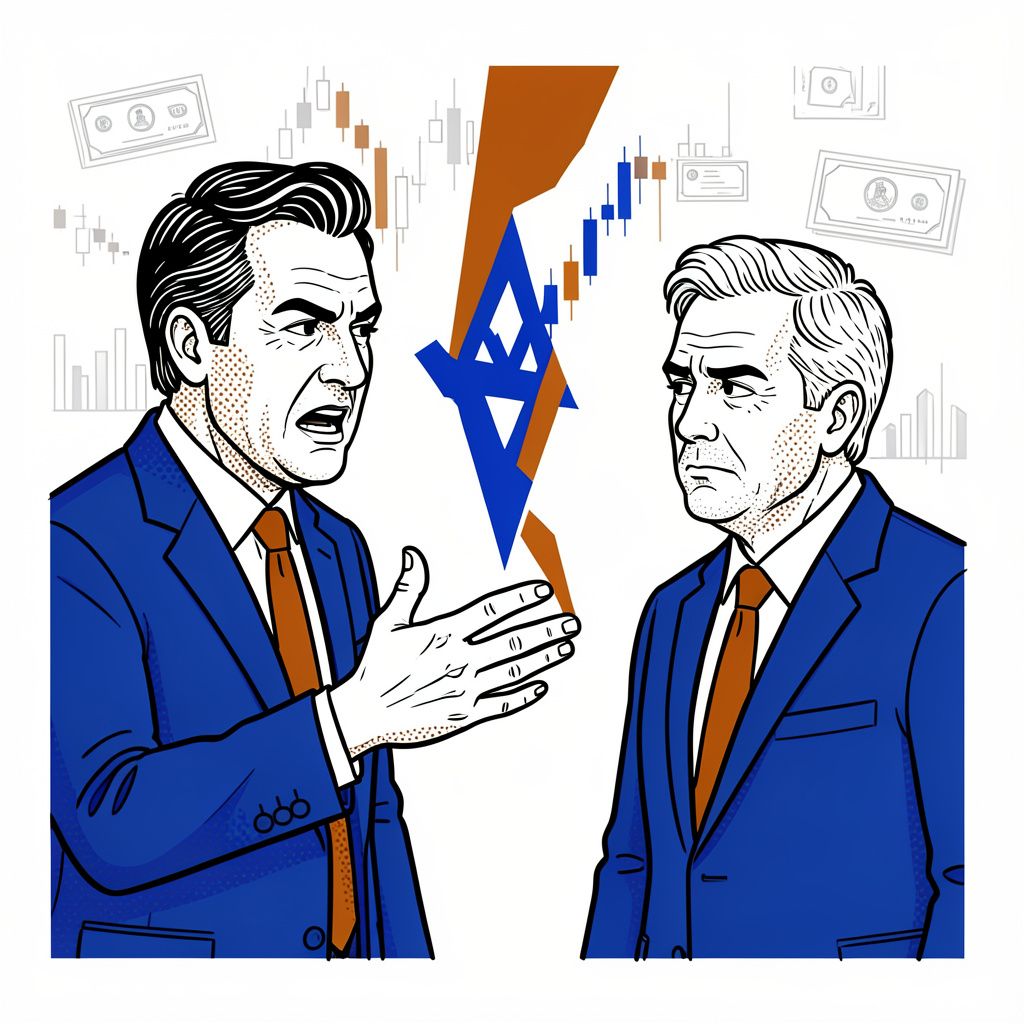
In a heated interview with Jon Stewart, Senator John Fetterman defended his unwavering support for Israel, highlighting deepening policy rifts that threaten unity within the Democratic Party.
Senator Fetterman Defends His Stance on Israel Amid Growing Democratic Division
In a heated interview with Jon Stewart, Senator John Fetterman defended his unwavering support for Israel, highlighting deepening policy rifts that threaten unity within the Democratic Party [1]. The Pennsylvania Senator appeared on ‘The Weekly Show’ podcast, released on 2026-07-29, where he addressed criticism regarding his strong support for Israel and public clashes with the party’s progressive wing [1]. Fetterman rejected arguments that his positions validate conservative political narratives, emphasizing instead his commitment to specific beliefs despite potential political costs [1]. For business leaders and policymakers, the exchange underscores the deepening policy divide within the Democratic coalition over foreign policy and economic populism ahead of upcoming legislative sessions [2].
Foreign Policy Red Lines and Party Loyalty
During the interview, Fetterman clarified his position on Israel, stating that if the Democratic Party becomes official anti-Israel, that would be his red line for leaving the party [2]. This stance follows a meeting with Israeli Prime Minister Benjamin Netanyahu in Washington on 2026-07-30, just one day after the podcast was released [1]. Fetterman maintains that targeting Hamas leadership is necessary and characterizes civilian Palestinian deaths as collateral damage rather than genocide, a position that has drawn sharp criticism from segments of his party [1]. Jon Stewart challenged this view, noting that the Jewish community and Israel are not the same thing, but Fetterman remained firm in his assessment [1].
Internal Party Dynamics and Polling Data
Fetterman acknowledges that his divergence from the Democratic Party line has caused him to lose support among his base, as evidenced by public polling data released on 2026-07-15 [1]. While his overall favorability hovers slightly below 50% due to Republican support, his approval ratings among Pennsylvania Democrats are currently dismal, with a strong majority disapproving [2]. Despite speculation about leaving the party, Fetterman publicly vowed not to switch parties on 2026-07-31, contradicting previous speculation [2]. He defended his record by claiming he votes with the Democratic line 90-some percent of the time and maintains core progressive positions on LGBTQ rights and abortion [2].
Economic Populism and Strategic Shifts
On economic issues, Fetterman opposed government shutdowns as a strategic tool for leverage, specifically regarding immigration enforcement reforms in a spending bill vote on 2026-01-29 [1]. Jon Stewart challenged Fetterman’s softening stance toward President Donald Trump, noting Fetterman previously sold shirts labeling Trump a jagoff in 2016 [1]. Fetterman rejected Democratic Party strategies following losses in the 2024 election, characterizing the party’s current direction as extreme and arguing that his approach aims to improve electoral success in battleground states like Pennsylvania [1]. He further stated that the market will eventually address certain economic concerns, distancing himself from more aggressive progressive economic proposals [2].
Reactions and Future Electoral Implications
Reaction to the interview was swift, with former Congressman Conor Lamb, a potential 2028 challenger, criticizing Fetterman’s performance on the show via social media as completely vapid [2]. Fetterman is not up for reelection until 2028, but the ideological rift highlighted during the 90-minute interview suggests continued friction within the party infrastructure [2]. The podcast episode was promoted on social media platforms including Instagram on 2026-08-04, confirming the discussion focused on the Democratic Party, Israel, and issues shaping his politics [3]. As the Democratic Party navigates these internal conflicts, the balance between foreign policy stances and economic populism remains a critical focal point for future campaigning [4].