How Trump’s Tariffs Are Rewriting Global Trade Rules and Raising Prices
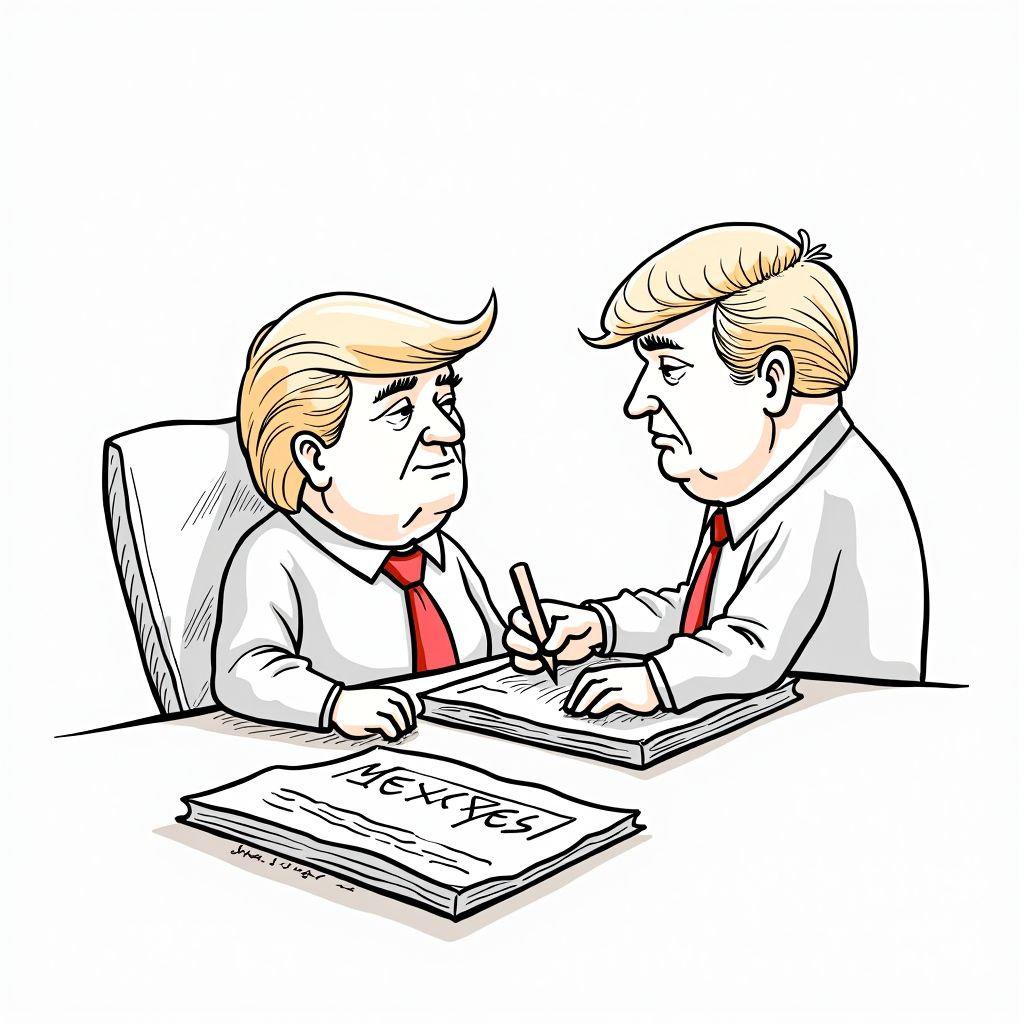
Washington D.C., Saturday, 28 February 2026.
Despite protectionist goals, the U.S. hit a record $1.23 trillion trade deficit in 2025, while shifting supply chains drove a 90 percent surge in computing imports from Mexico.
Executive Authority Curtailed
This report serves as an update to our ongoing coverage of the administration’s trade disputes. For context on the initial legal challenges, please refer to our previous analysis: “Supreme Court Limits Executive Tariff Power, Triggering Global Trade Strategy Shift” (https://wsnext.com/1b11740-Trade-Policy-Executive-Power/). On February 20, 2026, the U.S. Supreme Court fundamentally altered the trajectory of American trade policy by ruling against President Trump’s use of the International Emergency Economic Powers Act (IEEPA) to impose sweeping duties [1][2]. The decision, which invalidated billions of dollars in levies, immediately triggered a pivot in executive strategy. In response to the ruling, the President signed a new executive order—invoking alternative statutory authorities—to impose a 10 percent global tariff for a duration of 150 days [2]. Official documents confirmed this rate remained in effect as of February 24, though U.S. Trade Representative Jamieson Greer has indicated the administration may raise this figure to 15 percent “where appropriate” in the immediate future [2].
A Record Deficit and Supply Chain Realignments
Despite the administration’s stated goal of reducing foreign dependence, 2025 concluded with the United States posting its largest goods trade deficit on record, totaling $1.23 trillion [1]. The data illustrates a significant reshaping of trade flows rather than a repatriation of manufacturing. While imports from China plummeted by 30 percent to $308 billion—the lowest level since 2009—neighboring partners absorbed much of the demand [1]. Notably, U.S. imports of computing equipment from Mexico surged by nearly 90 percent in 2025, reaching close to $90 billion [1]. Conversely, Canadian exporters faced headwinds in the American market; Canadian exports to the U.S. declined by 5.8 percent, forcing a diversification that saw their exports to the rest of the world jump by 17.2 percent [1].
Inflationary Pressures Without Recession
The economic fallout has defied the recessionary predictions made by many economists following the implementation of the “Liberation Day” tariffs in 2025 [4]. While the average tariff rate spiked from approximately 3 percent to over 20 percent, the U.S. economy did not contract [4]. However, consumer prices have reacted sharply. Researchers at the Federal Reserve Bank of St. Louis noted in October 2025 that prices for durable goods had “increased noticeably,” directly aligning with the timing of the tariff hikes [1]. This echoes patterns from the first Trump administration, where specific levies, such as those on washing machines, passed costs directly to consumers—adding approximately $90 to the price of each unit [4].
The $175 Billion Refund Rush
The Supreme Court’s February 20 ruling has created a massive financial liability for the federal government, estimated at $175 billion in potential refunds [3]. This legal turning point has generated a windfall for the legal and financial sectors. Major corporations, including FedEx, L’Oreal, and Dyson, have already filed suits to reclaim paid duties [3]. Simultaneously, a secondary market for these claims has emerged; in one instance, toymaker Kids2 sold the rights to its $15 million tariff claim to a Boston hedge fund for an upfront payment of $2 million [3]. Legal experts caution that the refund process could be entangled in litigation for up to five years, prompting some firms to pay flat fees of $10,000 to $15,000 just to file their cases [3].
Fiscal Realities vs. Political Rhetoric
In his State of the Union address on February 17, 2026, President Trump reiterated his belief that tariffs could “substantially replace” the federal income tax system [5][6]. However, fiscal data from the Treasury Department suggests a stark disparity between these revenue streams. For the fiscal year 2026 (beginning October 1, 2025), the federal government collected approximately $924 billion in individual income taxes by January 31, compared to roughly $118 billion in customs duties [5]. Economists note that even with aggressive tariff policies, the revenue generated remains a fraction of what is required to fund the government, with individual income taxes accounting for nearly 51 percent of total revenue in fiscal year 2025 [5]. As the administration navigates the legal aftermath of the Supreme Court ruling, the disparity between tariff revenue and income tax receipts remains a central point of contention in economic policy analysis [5].
Sources
- www.theglobeandmail.com
- www.bbc.com
- www.theguardian.com
- www.vox.com
- www.cnbc.com
- www.chathamhouse.org