Trump Executive Order Seeks to Centralize AI Oversight and Block State Rules
Washington, Saturday, 13 December 2025.
The December 11 directive aims to centralize control, notably empowering federal agencies to withhold broadband funding from states that enforce conflicting local AI regulations.
Federal Preemption Through Financial Leverage
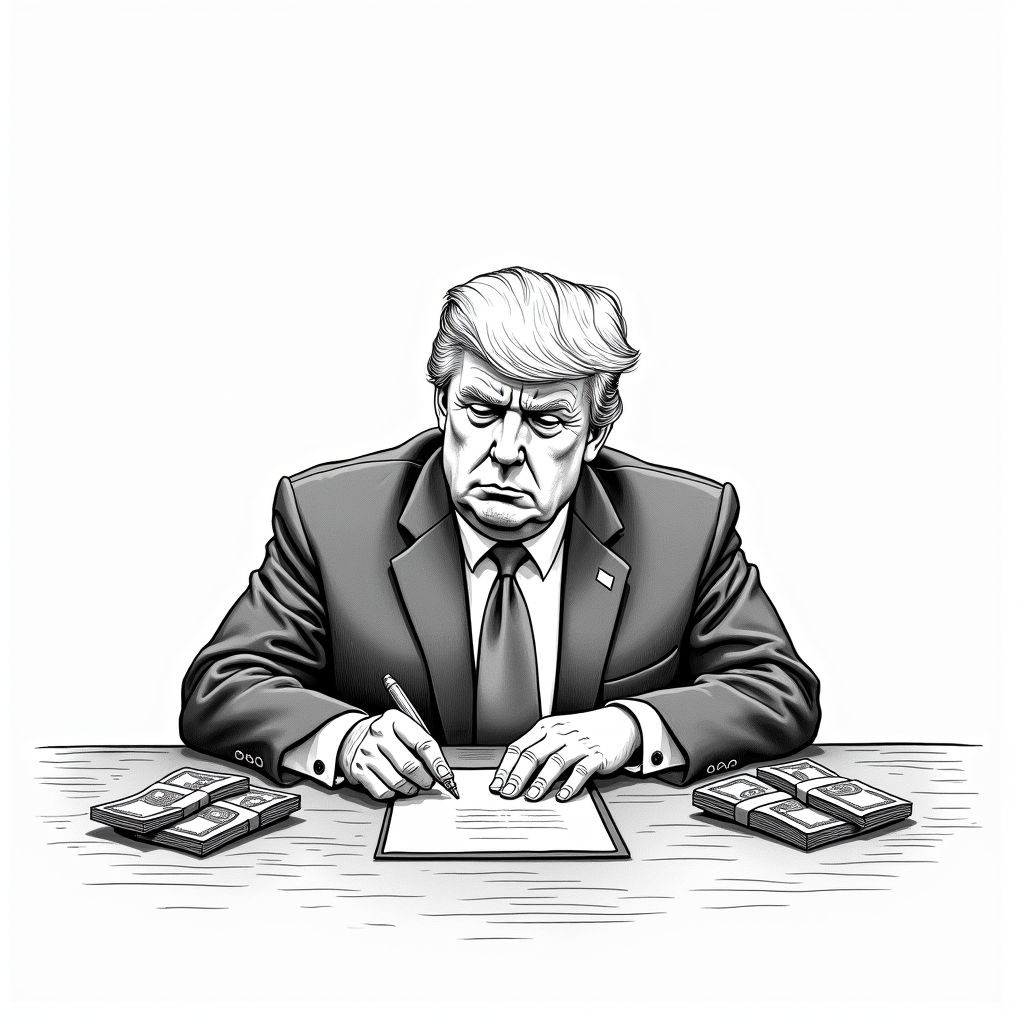
On Thursday, December 11, 2025, President Donald Trump signed the executive order titled “Ensuring A National Policy Framework for Artificial Intelligence,” aiming to establish a unified federal standard by preempting inconsistent state regulations [1][4]. The directive empowers the administration to challenge state laws deemed “onerous” to American innovation, specifically instructing Attorney General Pam Bondi to form an “AI Litigation Task Force” within 30 days to pursue legal action against conflicting state statutes [7][8]. Beyond litigation, the order leverages federal purse strings to enforce compliance. It directs the Secretary of Commerce to issue a policy notice within 90 days regarding the $42.5 billion Broadband Equity, Access and Deployment (BEAD) Program [1][4]. This provision could restrict non-deployment funds to states with AI laws considered burdensome, effectively threatening to withhold critical rural internet infrastructure investment from non-compliant jurisdictions [2][5]. As of December 10, 24 states and territories were still awaiting final approval for their BEAD funding proposals, heightening the immediate stakes of this policy shift [8].
The “One Rulebook” Strategy
The administration argues that a patchwork of state regulations stifles the economic activity intended for federal oversight. David Sacks, the administration’s “AI and crypto czar,” has championed this “One Rulebook” approach, asserting that AI development and deployment constitute interstate commerce falling under federal jurisdiction [1][2]. President Trump echoed this sentiment earlier in the week on X, stating that companies cannot be expected to secure “50 Approvals” for their operations, positioning the U.S. against centralized competitors like China [1][2]. While the order takes an aggressive stance on commercial regulation, it explicitly carves out exceptions. The framework directs officials to prepare legislative recommendations that do not preempt state laws concerning child safety protections or physical data center infrastructure [1][8]. This distinction aims to address bipartisan concerns regarding minor safety while maintaining a pro-innovation posture for the broader industry [2].
Bipartisan Pushback and Legal Uncertainty
The move has triggered immediate pushback from state leaders and federal lawmakers across the political spectrum. California Governor Gavin Newsom characterized the order as an attempt to enrich administration associates and dismantle protections against unregulated technology [3]. Similarly, Republican Governors Ron DeSantis of Florida and Spencer Cox of Utah expressed concern over the erosion of state authority, with Cox arguing that states must retain the ability to protect families [2]. Senator Amy Klobuchar (D-Minn.) denounced the order as “most likely illegal,” predicting it will face significant court challenges [7]. This executive action follows failed legislative attempts to secure federal preemption. Earlier in 2025, Congress rejected provisions in the National Defense Authorization Act (NDAA) and the “One Big Beautiful Bill Act” that would have overridden state AI laws [1][8]. With 38 states having adopted approximately 100 AI regulations in 2025 alone—including an Illinois disclosure law set to take effect on January 1, 2026—the executive order represents a unilateral attempt to halt a rapidly crystallizing decentralized regulatory landscape [2][3].
Sources
- www.bhfs.com
- www.npr.org
- www.bbc.com
- www.cnbc.com
- www.nytimes.com
- www.axios.com
- www.cnbc.com
- www.americanprogress.org