Convenience Stores Routinely Overcharge Customers at Checkout, Investigations Reveal
New York, Thursday, 24 September 2026.
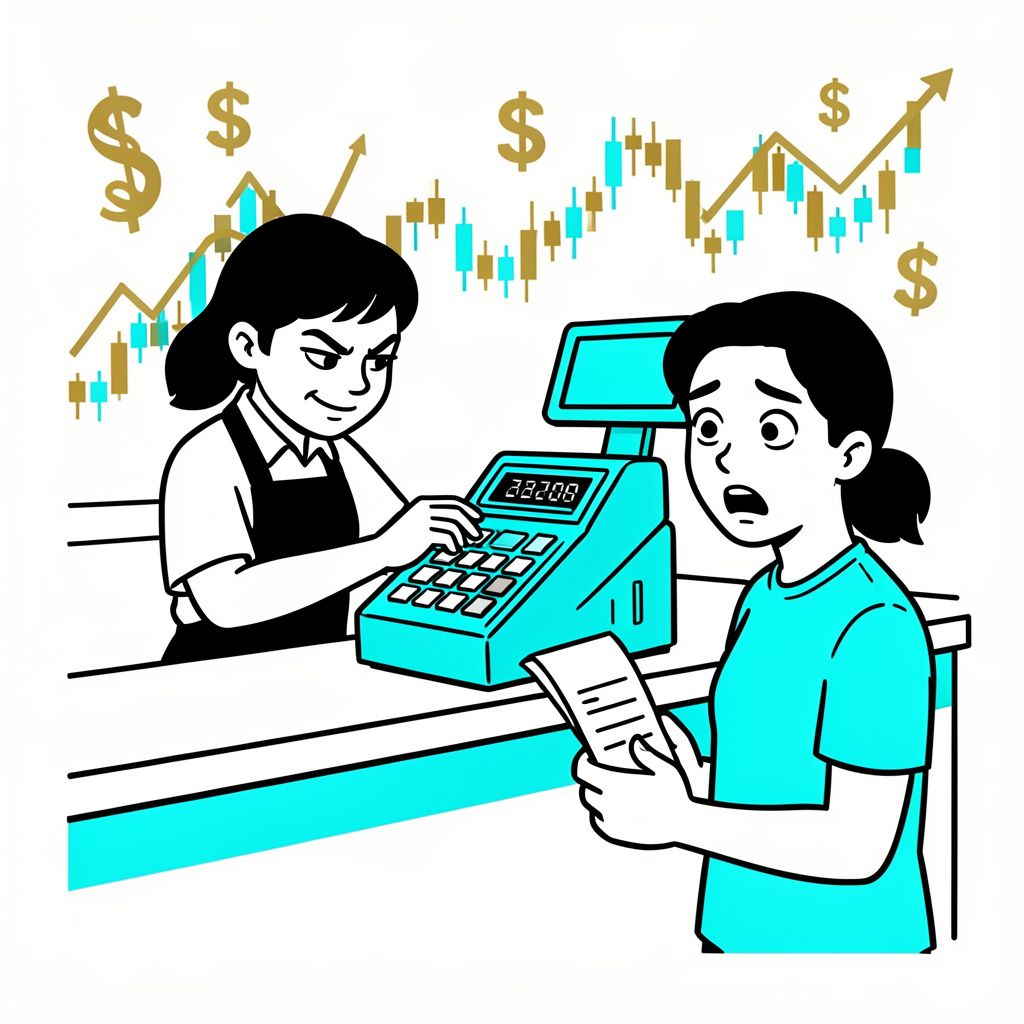
Recent investigations reveal convenience store chains routinely overcharge customers, with some locations failing up to 82 percent of government price-accuracy inspections.
Regional Inspection Failures and Data Analysis
Between 2023 and 2025, government inspections revealed significant discrepancies in price accuracy at major convenience store chains. Circle K locations failed 35% of inspections in Florida, 62% in North Carolina, and 82% in Columbus, Ohio [1][2]. When analyzing the average failure rate across these three specific regions, the data indicates a substantial compliance issue, calculated as 59.667 percent [1][2]. Similarly, 7-Eleven locations failed 47% of inspections in Colorado and Utah, and 79% in Ontario County, New York during the same period [1][2]. These figures highlight a systemic pattern rather than isolated incidents, suggesting operational flaws in how prices are updated across digital and physical mediums [1].
Consumer Impact and Specific Incidents
The financial impact on consumers extends beyond minor discrepancies, with specific cases highlighting the severity of the issue. In February 2026, a 7-Eleven in Casa Grande, Arizona, recorded a 48% error rate during an inspection, where 12 out of 25 items scanned higher than the shelf price [1][2]. One customer, Marco Cruz, reported a consistent issue at a Circle K in McAllen, Texas, where beef and jalapeño cheese sticks priced at $3.99 scanned at $4.19 in November 2025 [1][2]. Additionally, Alexander Stout filed a formal complaint regarding a $0.14 per gallon discrepancy at a 7-Eleven in Somerset, Texas, though the state agency later closed the case citing insufficient evidence [1]. These incidents occurred against a backdrop of record high gas prices, with regular gas reaching $4.15 per gallon on Labor Day, September 7, 2026 [1].
Regulatory Challenges and Technological Context
Regulatory bodies face significant challenges in monitoring these discrepancies due to resource constraints. In Arizona, the state office of weights and measures employs only 14 inspectors to monitor retail outlets across 295,259 square kilometers [1]. This lack of oversight is compounded by the rise of algorithmic pricing tools that allow companies to adjust prices dynamically, sometimes referred to as ‘just-in-time pricing’ [3]. While more than 25 US states have introduced or passed legislation aimed at restricting algorithmic pricing practices, enforcement remains inconsistent [3]. Legal scholars argue that modern inventory management technology should render such technical errors unjustifiable, straining the credibility of corporate claims regarding investment in sophisticated systems [1][2].