President Trump Declares Economic Success Ahead of Independence Day
Washington, Sunday, 5 July 2026.
Marking Independence Day, President Trump credited tax cuts for a soaring economy, despite recent labor reports showing a sharp slowdown in U.S. job growth for June.
A Tale of Two Economic Indicators
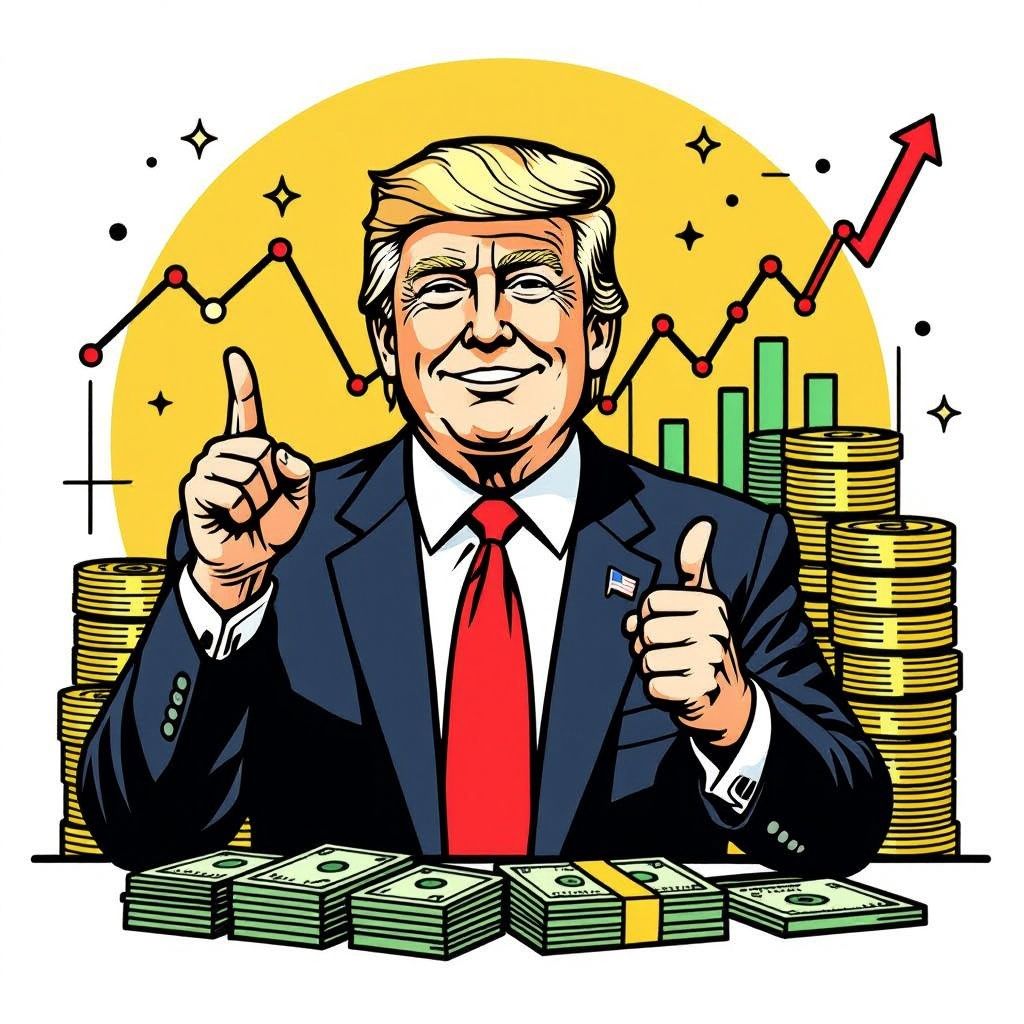
On Friday, July 3, 2026, just a day before the United States celebrated its landmark 250th anniversary of Independence [1], President Donald Trump took to his Truth Social platform to declare that the American economy is “soaring” [1]. In his address, Trump pointed to record stock market performance, rising exports, and increased corporate investment as clear indicators of a new period of economic growth [1]. He specifically lauded his administration’s “Working Families Tax Cuts” for putting more money into the pockets of everyday Americans, while asserting that the S&P 500, Nasdaq, and Dow Jones Industrial Average are all experiencing massive surges that are boosting retirement savings across the nation [1].
The Stock Market and the Golden Age Narrative
Despite these labor market headwinds, the administration has focused its messaging on financial market resilience and long-term industrial policy [1][GPT]. In his pre-holiday remarks delivered at Mount Rushmore, President Trump claimed the country is entering a “Golden Age” of prosperity and self-government [1]. He noted that the recently completed second quarter of 2026 was the strongest for U.S. stock markets since his previous term in office [1]. This market optimism has been further bolstered by major corporate milestones earlier in the summer, such as SpaceX’s initial public offering, which led to Elon Musk becoming the world’s first trillionaire on June 12, 2026 [2].
Monetary Policy and Fiscal Pressures
The divergence between soaring stock indices and slowing job growth presents a complex landscape for the Federal Reserve, which is now led by Chair Kevin Warsh [2]. Warsh, who recently succeeded Jerome Powell, presided over a central bank meeting on June 17, 2026, where the Federal Reserve decided to maintain current interest rates [2]. The decision to hold rates steady follows a pattern of pause that was also observed earlier in the spring, as the central bank balances the need to curb persistent inflation—which stood at 3.8% in April 2026—against signs of cooling in the labor market [2].