Diplomat at the Podium: Marco Rubio's Unusual Press Briefing Highlights Administration Staffing Gaps
Washington, Thursday, 7 May 2026.
Placing the nation’s top diplomat at the White House press podium sparked a chaotic briefing, raising critical questions about the administration’s internal communication strategies and staffing logistics.
A Diplomat in the Press Room
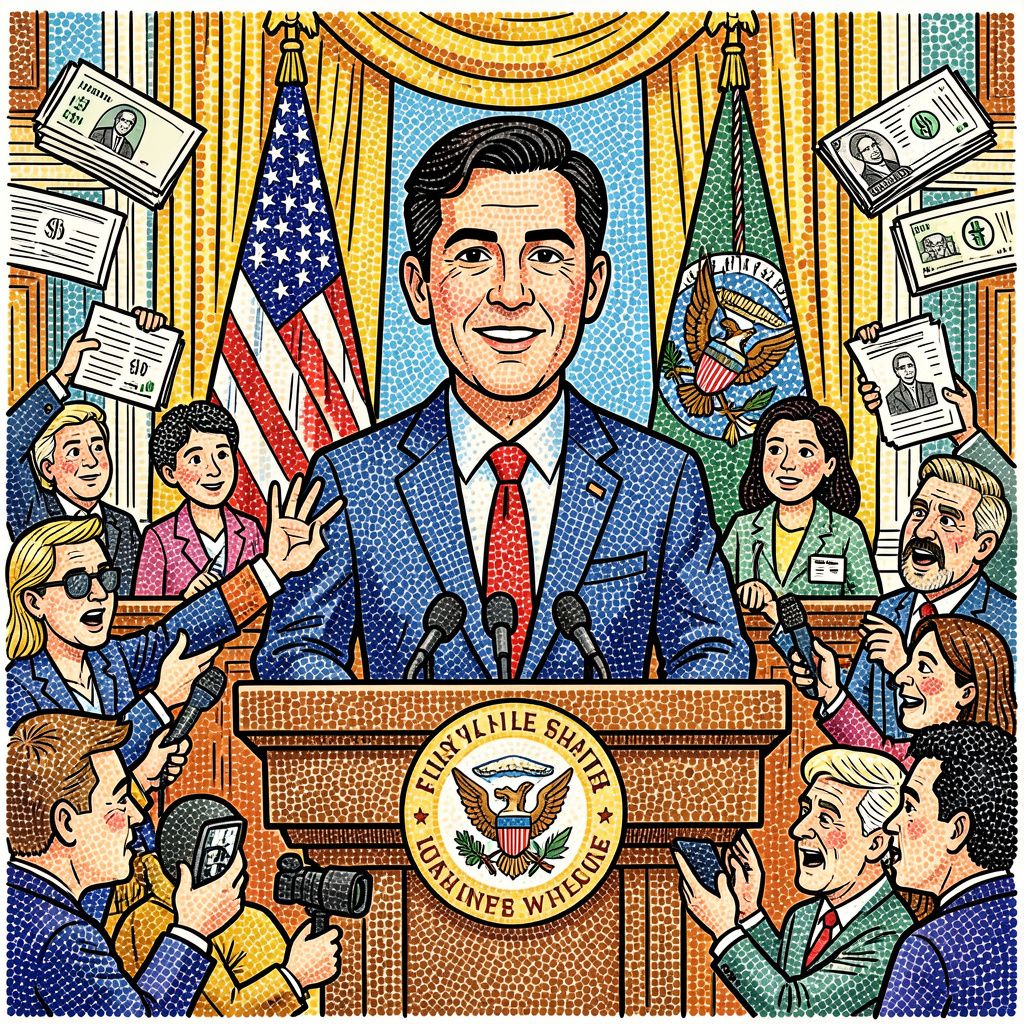
On May 5, 2026, Secretary of State Marco Rubio took to the White House briefing room podium, stepping in for Press Secretary Karoline Leavitt [1][3]. The session quickly gained attention for its chaotic nature, as Rubio fielded intense questioning regarding the ongoing United States blockade of the Strait of Hormuz [1][2]. During the briefing, Rubio firmly characterized the U.S. military presence as a defensive measure, clarifying that American forces would only engage if fired upon first [4]. He emphasized that the primary responsibility for ‘Project Freedom’—the operation intended to free stranded vessels—falls on the United States due to its unique power projection capabilities in the region [4].
The Economics of the Strait
The economic ramifications of the conflict in the Middle East have been profound, directly influencing the administration’s recent tactical pauses. On May 5, 2026, President Trump announced a temporary suspension of Project Freedom [1][6]. This decision coincided with reports on May 6 that Washington and Tehran were nearing a 14-point memorandum to end the conflict [6]. Financial markets reacted immediately to the prospect of de-escalation; Wall Street equities climbed, and global oil benchmarks experienced significant sell-offs [6]. Brent crude fell 9.3 percent to $99.64 per barrel, while West Texas Intermediate dropped 10.7 percent to $91.33 per barrel [6]. The broader geopolitical strain is also evident in allied nations; prior to the Iran war, Russia saw its oil and gas revenues decline by 47 percent, leaving them with only 53 percent of their previous revenue streams in that sector [5].
Diplomatic Maneuvering and Nuclear Ultimatums
Behind the scenes of the chaotic press briefings, a structured diplomatic effort is reportedly underway. The proposed one-page memorandum currently under review by Iranian officials demands a moratorium on Iranian uranium enrichment, a pledge to cease operations at underground facilities, and the transfer of enriched uranium stockpiles to the United States [6]. In exchange, the U.S. would lift sanctions and unfreeze Iranian funds [6]. The stakes remain remarkably high; Axios reported on May 6 that Washington was awaiting Tehran’s response within a 48-hour window [alert! ‘It is unclear if Iran has formally responded by the May 7 deadline’] [6].