Trump Considers Military Action to Topple Cuban Government
Washington, Sunday, 15 November 2026.
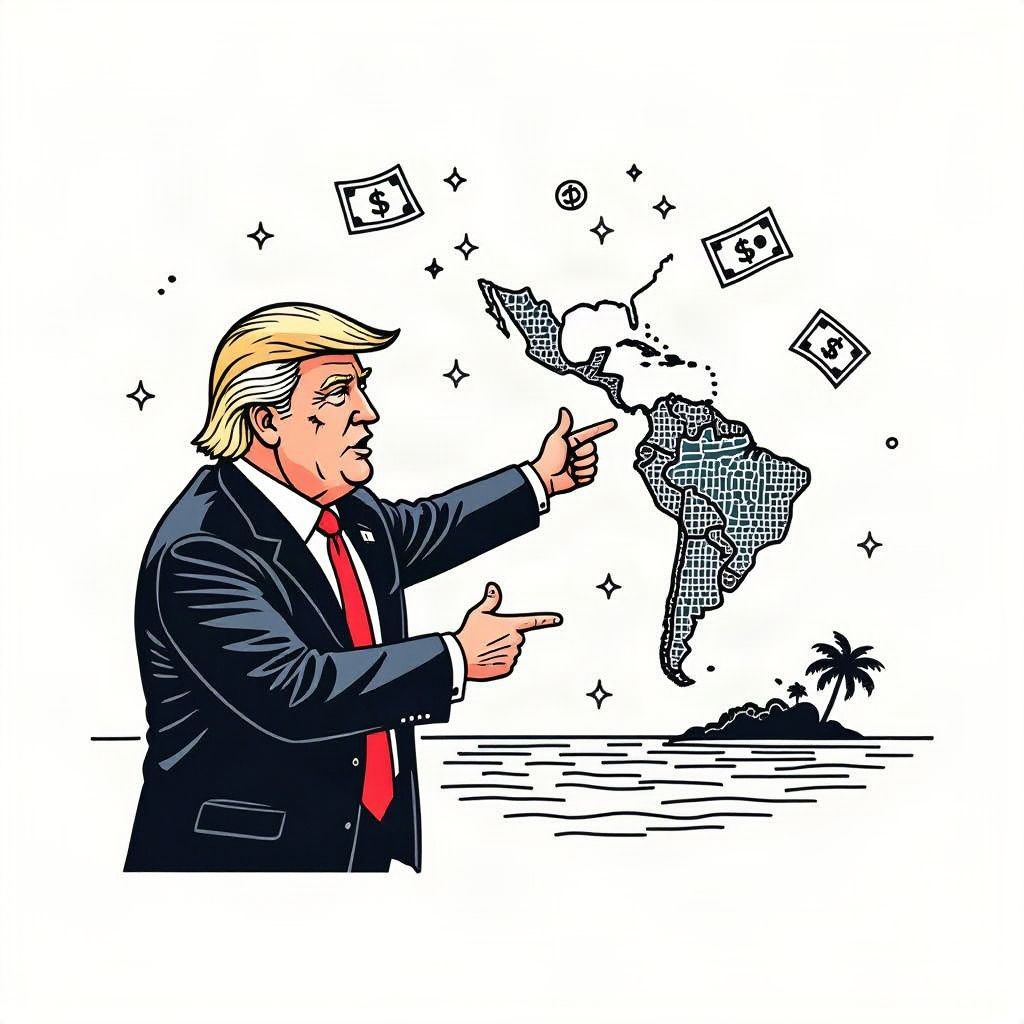
President Donald Trump confirmed he would consider military force to oust Cuba’s communist regime before exiting office in January 2029, escalating economic pressures and Caribbean geopolitical risks.
Trump’s Intent to Reshape U.S.-Cuba Policy by 2029
President Donald Trump, a Republican, has stated his intent to fundamentally overhaul U.S. policy toward Cuba before concluding his second term in January 2029 [1][2][4][5]. Speaking on November 13, 2026, Trump told conservative radio host Hugh Hewitt, ‘I want to get Cuba done before I leave,’ signaling both diplomatic and potential military avenues to address what he describes as a ‘failed’ communist regime [1][2][5]. The administration has framed Cuba as a strategic priority, with Secretary of State Marco Rubio—whose parents are Cuban immigrants—identified as the lead architect of the policy [1][2][5][8]. Rubio has publicly advocated for a ‘discrete partnership with the CIA’ to facilitate change in Cuba, underscoring the administration’s preference for regime change over negotiation [4].
Military Option: A Viable Path or Political Rhetoric?
Trump’s remarks have raised questions about the feasibility and legality of military intervention. In response to inquiries about using force to ‘free’ Cuba, Trump stated he would ‘certainly consider’ such action, framing it as a humanitarian endeavor for Cuban exiles and dissidents [1][2][5]. This represents a shift from earlier rhetoric in February 2026, when Trump suggested a ‘friendly takeover’ through diplomatic channels [4]. The president’s comments follow a pattern of escalating pressure, including a comprehensive economic and fuel blockade imposed in January 2026, which prohibits Cuba from importing oil and has contributed to severe blackouts, water shortages, and economic stagnation [3]. A blackout in Havana on September 18, 2026, highlighted the humanitarian toll of these policies [3][8]. While Trump has repeatedly suggested that Cuba’s communist government is on the brink of collapse, analysts note that the regime has demonstrated resilience despite sustained U.S. pressure [3][8]. Cuban Ambassador to the U.N. Ernesto Soberón Guzmán dismissed the threats of military action as ‘an international crime,’ emphasizing the island’s sovereignty [8].
Domestic and Geopolitical Implications
The Trump administration’s Cuba policy is unfolding against a backdrop of domestic political turbulence. The Republican Party’s heavy losses in the November 4, 2026, midterm elections—where Democrats flipped over 400 seats nationwide, including 17 in Florida’s state legislature—have weakened Trump’s political standing and raised doubts about the viability of his foreign policy agenda [3][8]. Democrats, now in control of both the House and Senate, have signaled skepticism toward Trump’s ‘maximum pressure’ approach, which includes the oil blockade and sanctions targeting government officials and military entities [3][6]. Analysts suggest that a Democratic Congress could challenge the administration’s Cuba policy by denying funding for military action or investigative oversight of potential interventions [3]. Meanwhile, regional allies such as Brazil and Mexico may provide economic or diplomatic support to Cuba in response to the U.S. blockade, further isolating Washington diplomatically [8].
Historical Context and Future Scenarios
Trump’s Cuba policy is not an isolated initiative but part of a broader strategy to reshape U.S. foreign policy, including conflicts in Iran, Ukraine, and Venezuela [2][4]. The administration’s approach to Cuba mirrors its stance on Venezuela, where U.S. pressure contributed to the removal of President Nicolás Maduro in January 2026 [3][8]. However, Cuba’s political and military structure differs significantly from Venezuela’s, raising questions about the potential outcomes of military intervention [alert! ‘Cuban military and security forces’ responses to mass protests remain uncertain, as no major incidents have occurred under the current regime’]. Historically, Cuba has demonstrated resilience to external pressures, as seen during the ‘Special Period’ in the 1990s following the collapse of the Soviet Union [8]. Experts like Theodore Henken of Baruch College warn that Trump may seek a ‘quick win’ through military action, particularly given his weakened political position [8]. Meanwhile, Trump’s claim of winning 94% of the Cuban vote in Florida during the 2026 elections contrasts with broader public sentiment, as polling suggests a majority of Americans favor a more respectful relationship with Cuba [8].
Sources
- www.politico.com
- thehill.com
- theconversation.com
- www.nbcnews.com
- www.newsweek.com
- www.cnbc.com
- www.facebook.com
- www.facebook.com
- www.reddit.com