Peru Selects Leftist José María Balcázar as Eighth President in a Decade of Instability
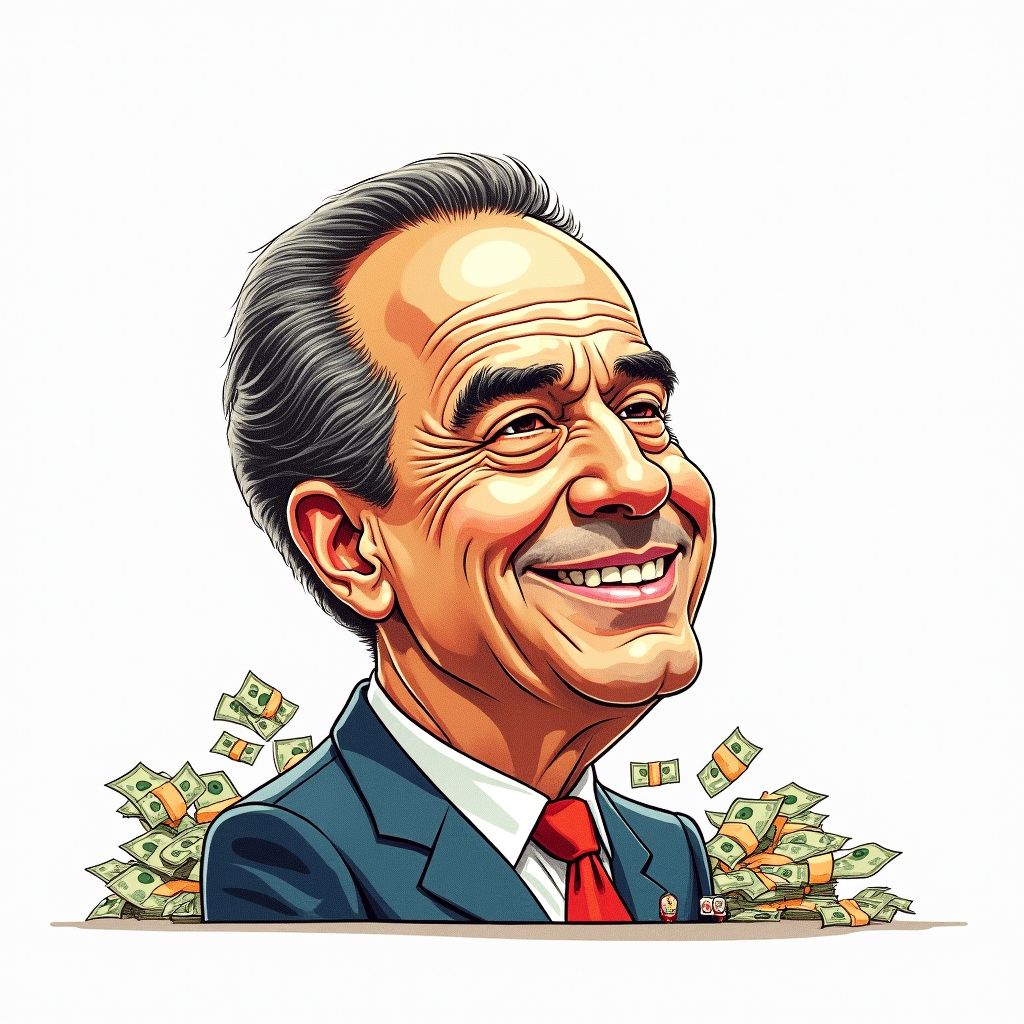
Lima, Thursday, 19 February 2026.
Amid persistent volatility, Congress appointed 83-year-old leftist José María Balcázar as interim president, becoming Peru’s eighth leader in a decade after his predecessor was ousted for corruption.
A Rapid Succession of Power
On Wednesday, February 18, the Peruvian Congress elected José María Balcázar as the nation’s interim president, ending a tense 24-hour period during which the executive branch remained formally leaderless [5][7]. Balcázar, an 83-year-old former judge and member of the leftist Perú Libre party, secured the presidency in a second round of parliamentary voting, defeating centrist contender María del Carmen Alva by a margin of 60 votes to 46 [1][5]. This appointment makes him the eighth person to hold the office in just ten years, highlighting the severe institutional fragility plaguing the Andean nation [4][5][8]. The vote became necessary after neither candidate achieved the required simple majority of 59 votes in the first round, where Alva received 43 votes against Balcázar’s 46 [1][5].
Corruption Allegations Topple Jerí
The vacancy arose on Tuesday, February 17, when lawmakers voted 75 to 24 to remove interim President José Jerí from office [6]. Jerí, who is 39 years old, had served a mere four months—approximately 130 days—after replacing Dina Boluarte in October 2025 [1][4][6]. His dismissal was precipitated by corruption allegations and a preliminary investigation by the Public Prosecutor’s Office regarding undisclosed meetings with Chinese business figures, including a state contractor and businessman Zhihua Yang [4][8]. While Jerí asserted he was merely coordinating a cultural festival and denied any wrongdoing, the allegations of influence peddling regarding a hydroelectric project proved fatal to his tenure [4][8].
A Delicate Transition to April Elections
Balcázar’s mandate is explicitly transitional and strictly limited in duration. He is scheduled to govern until July 28, 2026, at which point he must transfer power to the winner of the general elections slated for April 12, 2026 [3][7][8]. If no presidential candidate secures more than 50% of the vote in April, a runoff election will take place in June [3][4]. Despite the short timeline, the political atmosphere remains charged; the conservative Fuerza Popular party had attempted to block a leftist presidency by endorsing Alva, arguing the country could not withstand further “improvisation,” yet the parliamentary arithmetic ultimately favored the Perú Libre lawmaker [7].
Controversies and Geopolitical Tensions
The new president’s background presents potential friction points for both domestic civil society and international observers. Balcázar belongs to the same party as former President Pedro Castillo, who is currently serving a prison sentence of more than 11 years for his 2022 self-coup attempt [3][5]. Furthermore, Balcázar has faced significant public scrutiny for past comments regarding child marriage, specifically a controversial statement suggesting that early sexual relations could aid a woman’s future psychological development [1][5][7]. This political turnover also occurs against a backdrop of geopolitical tension regarding foreign capital; the U.S. Department of State recently issued warnings that Chinese investment in the port of Chancay could leave Peru “powerless,” a sentiment echoed in the scrutiny over Chinese business ties that led to Jerí’s downfall [3].
Sources
- elpais.com
- www.aljazeera.com
- www.npr.org
- english.elpais.com
- bnonews.com
- en.mercopress.com
- www.aa.com.tr