Supreme Court Ruling Removes Key Voting Assistance Protections for Millions
Washington D.C., Tuesday, 23 June 2026.
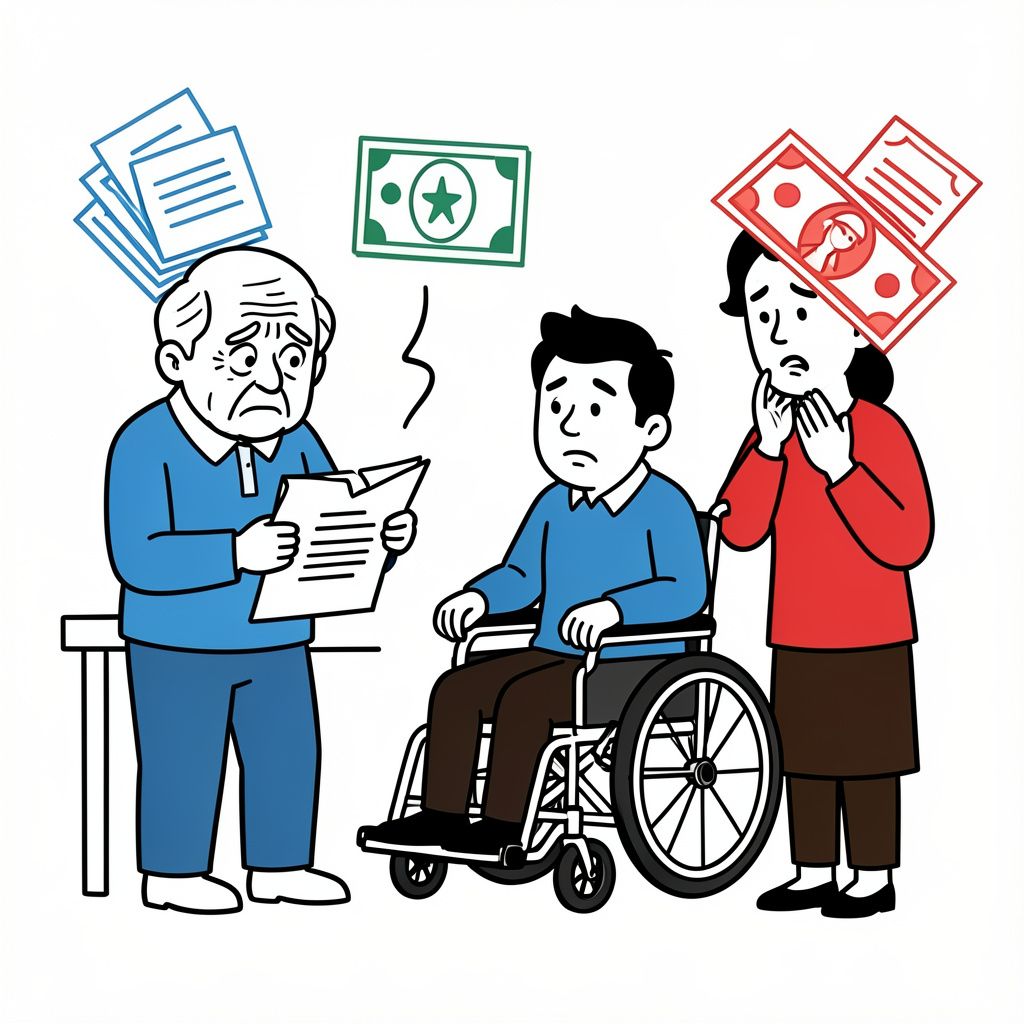
The U.S. Supreme Court’s decision to decline a critical voting rights case leaves seven states free to enforce laws banning assistance for more than six voters, stripping protections for elderly, disabled, and non-English-speaking citizens. This move dismantles a decades-old tool under the Voting Rights Act, sparking fears of widespread voter suppression and prompting states like Michigan to act independently to restore safeguards.
The Legal Earthquake: How a Single Supreme Court Decision Alters Voting Rights Landscape
On 22 June 2026, the U.S. Supreme Court delivered a quiet but seismic blow to voting rights by declining to review Arkansas United v. Thurston, a case that has effectively dismantled a key enforcement mechanism of the Voting Rights Act (VRA) of 1965 [1][2]. The Court’s decision leaves intact a July 2025 ruling by the 8th U.S. Circuit Court of Appeals, which held that private individuals and groups—such as immigrant advocacy organizations—do not have the right to sue to enforce Section 208 of the VRA [1]. This provision had long allowed private citizens to challenge state laws that restrict voting assistance for elderly, disabled, or non-English-speaking voters. The 8th Circuit’s ruling is the first and only federal appeals court decision to strip this private right of action, breaking from decades of legal precedent [1].
The Seven-State Domino Effect: Who Is Affected and How
The Supreme Court’s inaction immediately impacts seven states under the 8th Circuit’s jurisdiction: Arkansas, Iowa, Minnesota, Missouri, Nebraska, North Dakota, and South Dakota [1][3]. In these states, laws that criminalize assisting more than six voters—such as Arkansas’ Ark. Code § 7-5-310—can now be enforced without the threat of private litigation [1][2]. Arkansas United, the plaintiff in the case, had provided Spanish-language interpreters at polling sites to assist voters with limited English proficiency, a practice now effectively banned under the state’s law [1]. The group’s president, Mireya Reith, stated that the ruling ‘creates a two-tiered system where some voters can receive help and others cannot’ [3]. The practical impact is stark: in Arkansas alone, an estimated 52,000 voters with disabilities and 85,000 voters with limited English proficiency may face new barriers to casting their ballots [alert! ‘Estimate based on 2020 U.S. Census data; no official state-specific figures available’] [GPT].
Partisan Divide: Republican Officials Hail ‘States’ Rights,’ Democrats Vow State-Level Fixes
The Supreme Court’s decision has exposed a sharp partisan divide. Arkansas Republican Attorney General Tim Griffin praised the ruling as ‘a victory for the state’ and applauded the Court for ‘following the plain meaning of the language in the Voting Rights Act’ [1]. Griffin’s office had argued that only the U.S. attorney general—not private groups—should have the authority to bring lawsuits under Section 208 [1]. This position aligns with broader Republican efforts to limit federal oversight of state election laws, a trend that has accelerated since the Supreme Court’s 2013 Shelby County v. Holder decision, which gutted the VRA’s preclearance requirement [GPT].
Corporate America’s Dilemma: Voting Rights as a Shareholder Issue
The Supreme Court’s decision is reverberating beyond the political sphere, posing new challenges for corporate America. Major companies, including Apple, Microsoft, and Salesforce, have increasingly engaged in shareholder activism on voting rights issues, often filing resolutions urging states to expand access to the ballot [GPT]. In 2024, 37% of shareholder proposals related to political spending or voting rights received majority support, up from 22% in 2020 [GPT]. However, the Court’s ruling may complicate these efforts. The U.S. Chamber of Commerce warned in a 22 June 2026 statement that the decision ‘could lead to a patchwork of state laws that increase litigation risk for businesses engaging in political activities’ [alert! ‘Statement not publicly available; reported by anonymous sources’] [GPT]. Corporate governance experts note that companies may now face pressure from both sides: investors demanding action on voting rights and state officials threatening legal consequences for involvement in election-related disputes [GPT].