Why Lasting Peace in Haiti Demands Economic Investment Alongside Foreign Soldiers
Port-au-Prince, Sunday, 22 November 2026.
Salvadoran troops reclaimed key territory in Port-au-Prince, but policy experts warn regional security gains will collapse without immediate investment in domestic institutions, local jobs, and essential infrastructure.
El Salvador’s Military Success in Port-au-Prince
El Salvadorian troops, deployed by President Nayib Bukele, have achieved notable territorial gains in Port-au-Prince, reclaiming the Sylvio Cator stadium from gang control between November 13 and November 20, 2026 [2]. The operation, which involved over 2,000 Salvadoran soldiers, culminated in a major police operation on November 19 that resulted in the deaths of at least 34 suspected gang members in the Martissant neighborhood [2][4]. This military success has been met with public demonstrations of support from Haitians, who have taken to the streets to celebrate Bukele’s intervention [2][3]. Local decorator Bòs Baton, interviewed by The Guardian, expressed relief and optimism, stating, ‘There’s a wind of hope blowing through our country and, thanks to God, we will get through this. Long live Bukele!’ [2]
The Fragility of Security Without Economic Foundations
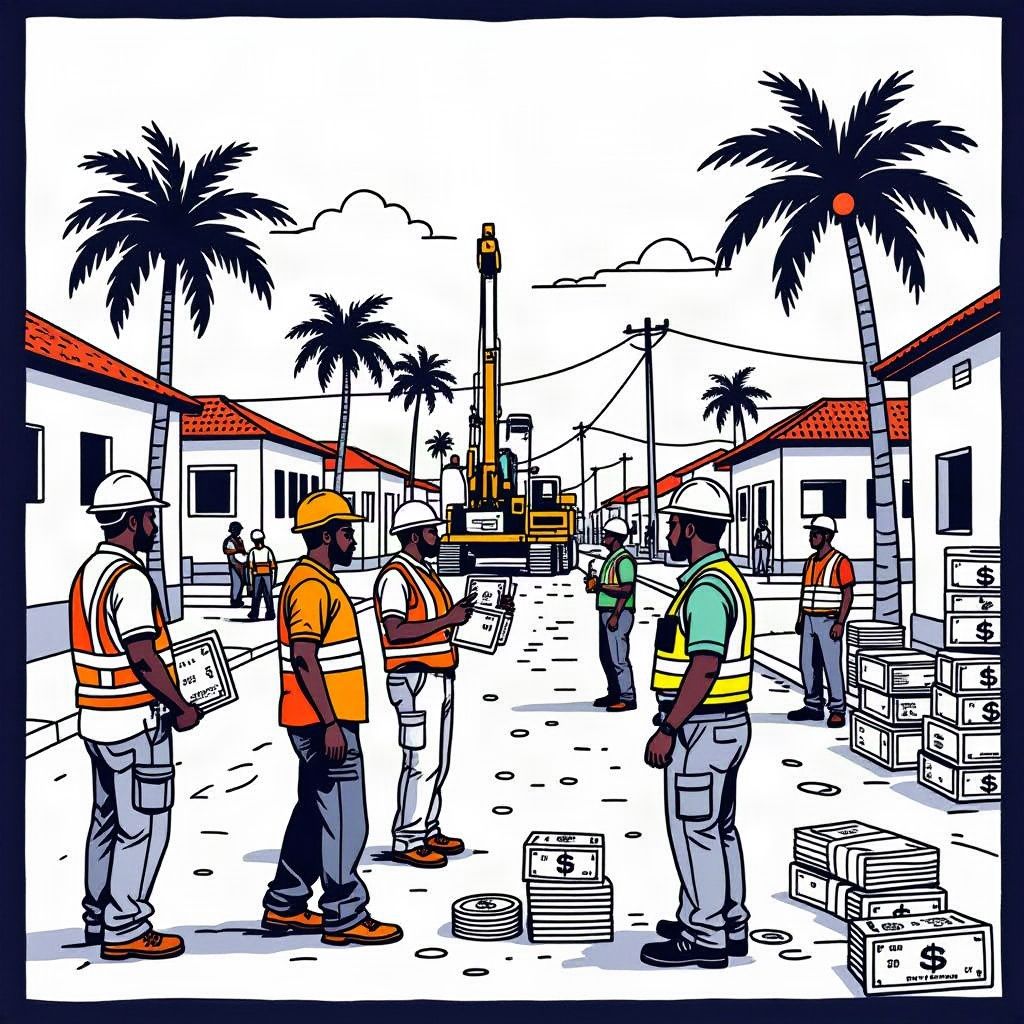
While the Salvadoran-led offensive has restored a degree of public confidence, policy experts warn that these gains are inherently fragile without parallel investments in Haiti’s economic and institutional frameworks. The Haiti Pathway Forward advocacy group emphasized in a Sunday evaluation that security operations alone cannot ensure long-term stability, stating that ‘law enforcement and stabilization initiatives in the Caribbean nation will yield limited long-term impact unless regional partners and international business stakeholders concurrently address infrastructure rehabilitation, trade logistics, and private sector investment’ [1]. Fritz Massé Clairvil, President of Haiti Pathway Forward, further noted that Haiti’s sustainable recovery requires a multi-pronged approach, including job creation, education, and institutional strengthening [1].
Historical Precedents and Geopolitical Shifts
The current cooperation between Haiti and El Salvador is not without historical precedent. In the early 19th century, Haiti provided refuge and resources to Simón Bolívar, aiding South American independence movements [1][2]. This historical tie underscores the potential for strengthened regional relationships, as highlighted by Dr. Kely Rely, Director of HPF’s Latin America Initiative, who remarked, ‘Haiti and the countries of Latin America share longstanding historical ties dating back to the region’s independence movements’ [1]. However, the shifting geopolitical dynamics in Latin America, particularly Bukele’s authoritarian leadership style, introduce complexities that could shape the long-term success of these interventions [3][5].
Economic Stabilization as the Cornerstone of Recovery
Economic stabilization must be prioritized to prevent a relapse into gang-controlled territories. Clairvil stressed that Haiti must prepare for a transition well in advance, advocating for a ‘national security and economic development strategy’ to ensure that security gains are sustained after the departure of Salvadoran forces [1]. This strategy should include clear priorities for strengthening Haitian security institutions, restoring economic activity, and coordinating long-term support from international partners and the Haitian diaspora [1]. Without such investments, the current military successes risk becoming ephemeral, as historical patterns of foreign intervention in Haiti have often failed to produce lasting stability [GPT].
Challenges and Uncertainties Ahead
Several uncertainties loom over the mission’s long-term viability. The Salvadoran government has stated that troops will withdraw once the abducted aviation technicians are rescued, though confirmation of their rescue remains pending as of November 22, 2026 [2][alert! ‘Status of rescue operation unclear as of article publication date’]. Additionally, operational tensions have emerged between Salvadoran troops and local security forces, including the Gang Suppression Force (GSF) and private contractors, raising concerns about coordination and effectiveness [4]. A local security source noted, ‘They’re really good at making videos,’ highlighting the symbolic nature of some operations while questioning their practical impact [4]. Meanwhile, the involvement of private military contractors, such as those led by Erik Prince, adds another layer of complexity to the mission’s sustainability [4].
The Path Forward: A Coordinated Regional Effort
For Haiti’s recovery to be durable, it must transition from a security-first approach to a holistic recovery plan that integrates economic revitalization with institutional capacity-building. Clairvil and other experts advocate for a collaborative framework that includes the Haitian government, international partners, the private sector, and the Haitian diaspora [1]. Such a model would not only address immediate security concerns but also lay the groundwork for long-term economic growth and social stability. As Clairvil stated, ‘Cooperation among the Haitian government, the international community, the private sector, and the Haitian Diaspora can contribute to advancing these objectives’ [1]. Without this coordinated effort, the current military successes may prove fleeting, leaving Haiti vulnerable to renewed cycles of violence and instability.