Kia Cuts Electric SUV Prices by Up to 16,000 Dollars to Drive Sales
Irvine, Thursday, 17 September 2026.
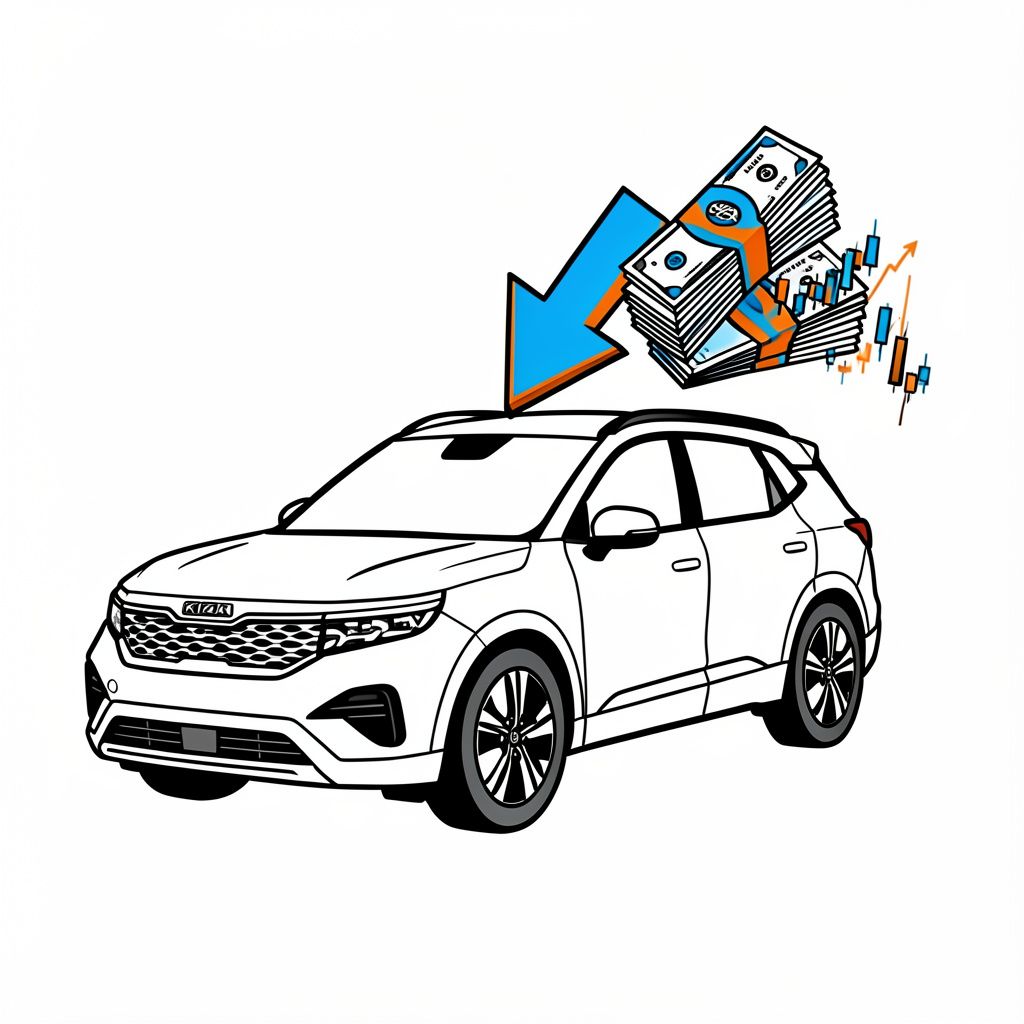
Following a 33% drop in August sales, Kia and its dealers slashed EV9 electric SUV prices by up to $16,000 in September 2026 to stay competitive.
Unprecedented Incentive Structures
Kia has implemented aggressive pricing strategies for its flagship EV9 electric SUV, with total discounts reaching up to $16,000 across United States dealerships in September 2026 [1][2]. This substantial reduction includes a nationwide $10,000 Customer Cash incentive offered directly by the manufacturer, valid through September 30, 2026 [1][2]. Additional dealer-specific discounts are layered on top of the manufacturer incentives, with some locations advertising reductions exceeding $15,000 to clear inventory [2][3]. This pricing strategy represents a reduction of approximately 29.144 percent off the starting manufacturer suggested retail price of $54,900, significantly lowering the entry point for consumers [1].
The timing of these incentives correlates with the expiration of federal subsidies that previously supported the vehicle’s market positioning. The federal clean vehicle tax credit of $7,500 expired for vehicles acquired after September 30, 2025, prompting Kia to replace the government subsidy with internal factory incentives to maintain competitiveness [1][2]. Dealerships such as Shottenkirk Kia in Texas and Liberty Auto Plaza in Illinois are actively advertising these combined discounts, indicating a broad participation rate among retail partners [1][3]. The availability of 0% APR financing for 60 months plus a $5,000 APR Bonus Cash further enhances the affordability profile for qualified buyers during this promotional period [2].
Sales Volume and Market Dynamics
The decision to slash prices follows a notable contraction in sales volume for the EV9 model. In August 2026, EV9 sales fell 33% compared to the previous year, totaling 1,789 units sold [1][3]. This decline contrasts with the model’s performance in 2024, which saw peak annual sales of 22,017 units, followed by a 32% decline to 15,051 units in 2025 [1]. Despite the recent monthly downturn, year-to-date sales from January through August 2026 show 10,474 units sold, representing a 12% increase compared to the same period in 2025 [1][2].
Inventory management appears to be a driving factor behind the discounting, as production adjustments were made to qualify for tax credits that have since lapsed. Kia moved the majority of EV9 production to West Point, Georgia, for the 2026 model year to qualify for North American assembly tax credits, but the credit expired for vehicles acquired after September 30, 2025 [1]. The current market environment reflects heightened competition in the North American electric vehicle sector, where automakers are pivoting toward aggressive discounting to sustain market share amid changing consumer demand dynamics [1]. Lease terms remain available, with advertised offers around $399 per month for 36 months on specific trims, though availability varies by dealer [1][4].
Consumer Implications and Future Outlook
For consumers, the current market conditions present a complex landscape of opportunity and uncertainty. While the immediate cost of acquisition has decreased, the expiration of federal tax credits means the net savings depend heavily on the dealer’s willingness to pass manufacturer incentives directly to the buyer [1][2]. The entry-level 2026 EV9 Light Short Range model, with an MSRP of $54,900 before destination fees, can be found at some dealerships for approximately $40,000 after all applicable discounts [2][3]. However, buyers must verify whether the advertised prices include all mandatory fees, as destination charges of $1,645 are often excluded from headline discount figures [2].
Looking ahead, the sustainability of these price points remains uncertain as Kia balances inventory levels with profitability. The launch of the smaller EV3 electric SUV on September 10, 2026, with a starting price of $29,890, suggests a strategy to capture lower price segments while the EV9 stabilizes in the premium segment [2]. Investors and industry observers will be monitoring whether these incentives successfully stem the sales decline or if further adjustments are required in the fourth quarter of 2026. The outcome of this pricing strategy will likely influence broader industry trends regarding EV affordability and subsidy reliance in the post-credit era [1][3].