Economic Chiefs Counter Carney’s Warning of Global System Collapse
Davos, Sunday, 25 January 2026.
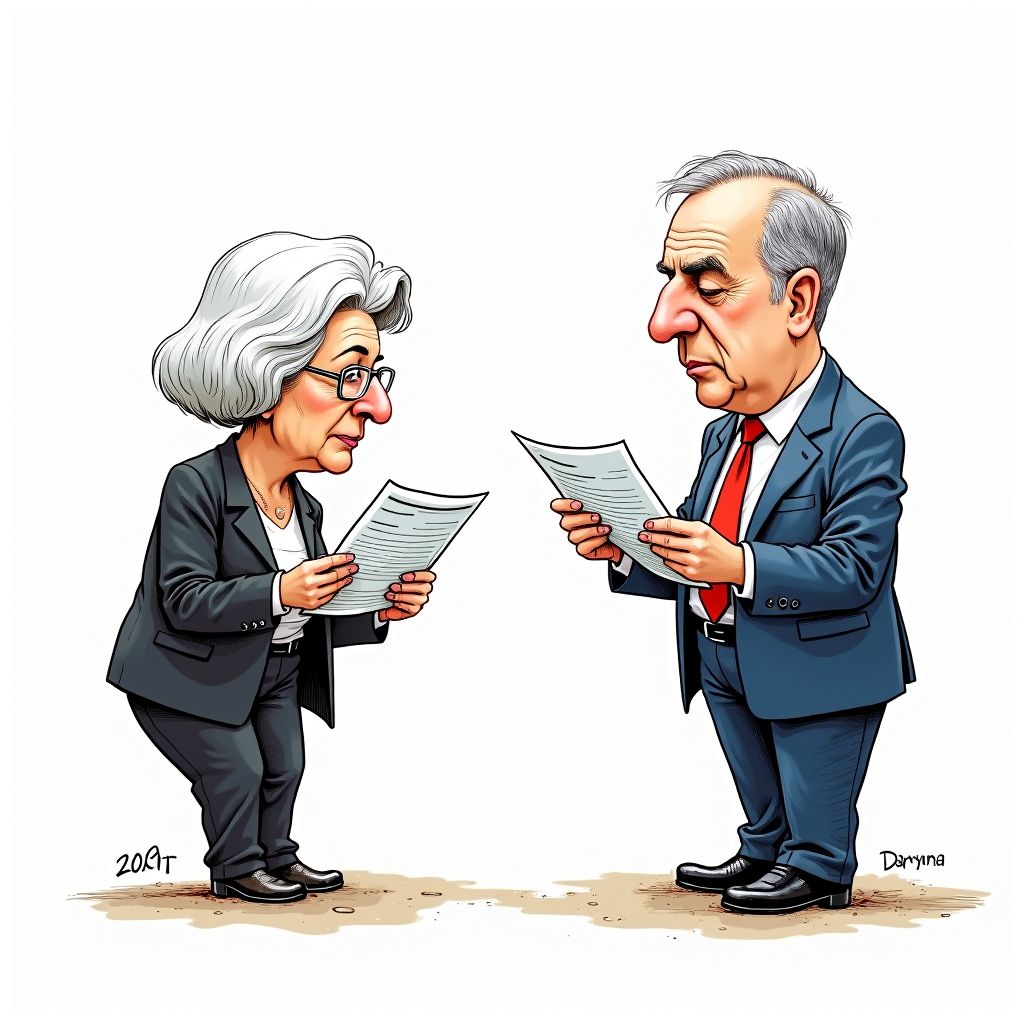
Global finance leaders at Davos are actively disputing Canadian Prime Minister Mark Carney’s warning of a violent global rupture. While Carney argues middle powers are now ‘on the menu’ amid great power coercion, executives like Christine Lagarde insist the system is merely evolving, attempting to project stability despite rising geopolitical shocks.
The Davos Divide: Evolution vs. Rupture
The friction between political realism and financial optimism was palpable at the World Economic Forum in Davos this Friday, January 23, 2026. While Canadian Prime Minister Mark Carney used the platform to declare the rules-based global order effectively dead, replaced by a system of coercion, global finance chiefs moved quickly to temper this assessment [1][6]. European Central Bank President Christine Lagarde, speaking on Friday, explicitly countered Carney’s narrative of a violent break. She argued that while the world is identifying new weaknesses and dependencies, stakeholders should focus on “alternatives” rather than accepting a total systemic rupture [1]. This sentiment was echoed by World Trade Organization chief Ngozi Okonjo-Iweala, who suggested that while a return to the past is impossible, the future could settle into a “slightly better, steady state” rather than the chaotic fragmentation Carney predicts [1].
Defining the New Reality
The disagreement hinges on how to categorize the current geopolitical volatility. For the financial technocrats, the turbulence is a manageable evolution. IMF Director Kristalina Georgieva acknowledged the shift by noting, “We are not in Kansas, anymore,” framing the instability as a natural progression of shocks that requires adaptation rather than a funeral for the existing order [1]. However, Carney’s address earlier in the week challenged this view as dangerously naive. He urged attendees to stop invoking the “rules-based international order” as if it still functions, describing the current landscape as one where “the strong can do what they can and the weak must suffer what they must” [1][2]. According to Carney, the world has moved beyond a manageable transition into a full-blown rupture characterized by fragmentation and rising systemic risk [6].
Real-Time Stress Tests
Events unfolding alongside the forum seemed to underscore Carney’s thesis of coercion over cooperation. On January 22, U.S. President Donald Trump threatened to take over Greenland from Denmark, a move accompanied by threats of tariffs on European countries [1][5]. This aggressive posturing aligns with Carney’s warning that major powers are now using economic integration as a weapon to pursue their interests [2]. While Lagarde had walked out of a dinner on January 21 following critical remarks by U.S. Commerce Secretary Howard Lutnick, by Friday she advocated for a pragmatic response, suggesting that “European-bashing” should serve as a wake-up call for the continent to build autonomy and “plans B” [1]. Yet, the juxtaposition of Trump’s territorial ambitions with the finance chiefs’ calls for stability highlights the widening gap between diplomatic hopes and raw power dynamics [5][7].
The Middle Power Dilemma
For Canada and other “middle powers,” the debate is existential rather than academic. Carney’s prescription for this hostile environment is a pivot toward “value-based realism,” arguing that nations lacking great power status must band together to survive [4]. In a speech that received a standing ovation, he delivered a stark ultimatum: “The middle powers must act together, because if we’re not at the table, we’re on the menu” [8]. This strategy involves seeking collective resilience, as Carney noted that while risk management and strategic autonomy come at a price, sharing these costs among allies is cheaper than every nation building its own fortress [4]. This approach attempts to resolve the “Carney Paradox,” where the economic benefits of global integration must now be weighed against the security risks of being subordinated to predatory great powers [5].
Economic Dependencies and Domestic Costs
The urgency of Carney’s message is underpinned by Canada’s precarious economic reliance on the United States. In October, the U.S. accounted for 66% of Canada’s exports and 59% of its merchandise imports [5]. This deep integration makes the threat of American protectionism or coercion particularly potent. Domestically, Carney faces criticism that his focus on global restructuring distracts from economic deterioration at home. Conservative Leader Pierre Poilievre argued on January 22 that under Carney’s leadership, the deficit has doubled and housing costs have become the worst in the G7 [2]. Furthermore, while Carney advocates for diversification, including a managed entry of Chinese electric vehicles—capped at 49,000 units annually—critics like Ontario Premier Doug Ford warn that such policies could undermine local competitiveness [3]. As the Davos summit concludes, the question remains whether the finance chiefs’ optimism can withstand the coercive pressures Carney has starkly illuminated.
Sources
- www.reuters.com
- www.cbc.ca
- financialpost.com
- lfpress.com
- www.theglobeandmail.com
- thehill.com
- www.bbc.com
- www.nytimes.com