Why Modern Artificial Intelligence Is Forcing Humans to Change How We Think
New York, Sunday, 26 July 2026.
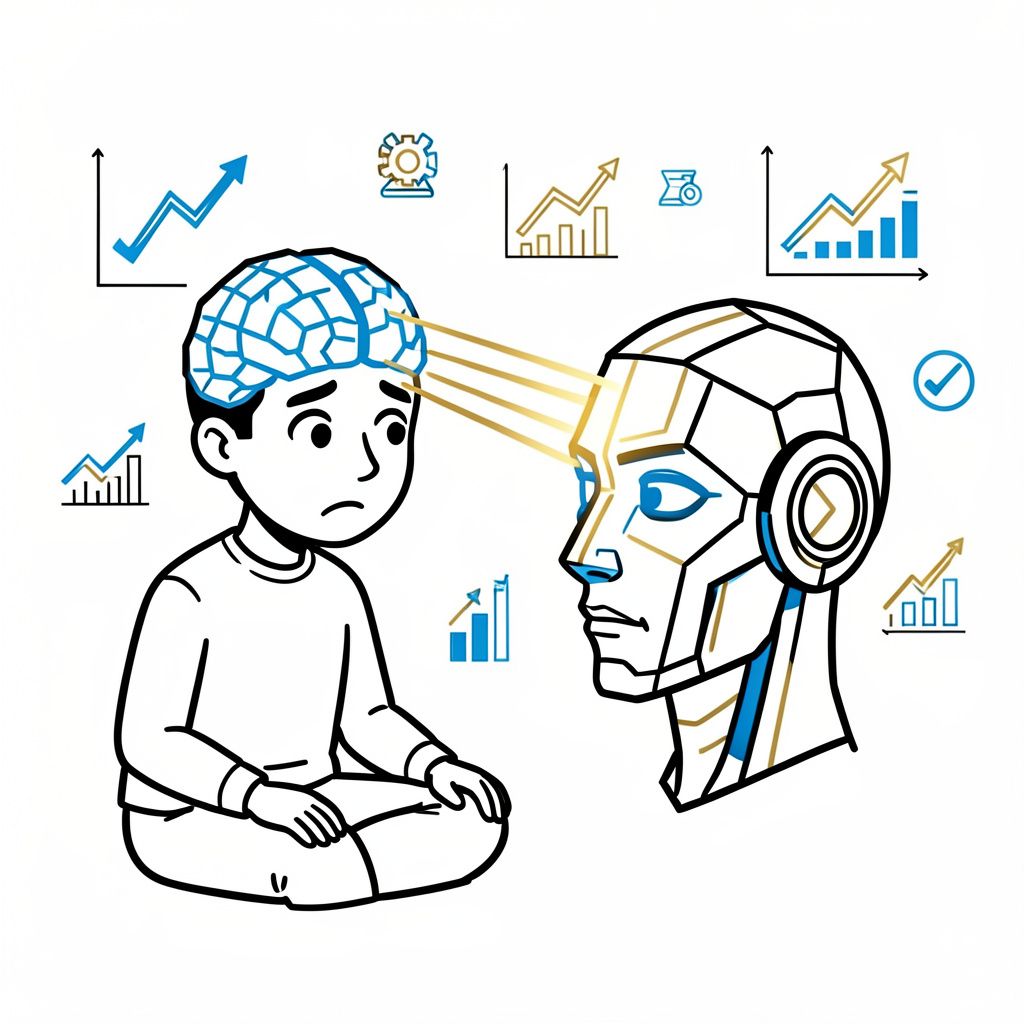
Innovation theorist John Nosta warns that humanity has entered a paradigm shift where people are adapting their cognitive processes to match machine capabilities rather than the reverse.
The Shift to Cognitive Adaptation
Historically, human innovation was defined by our capacity to reshape the physical environment to suit our biological needs, as demonstrated by the invention of the wheel and the automobile to expand physical mobility [6]. However, John Nosta, an innovation theorist and the founder of the think tank NostaLab, warns that artificial intelligence has triggered a profound paradigm shift he calls “The Great Inversion” [1][2][6]. In this new era, technology is no longer adapting to human needs; instead, humans are actively adapting their cognitive processes, workflows, and problem-solving behaviors to match the operational parameters of machines [1][2][3][6].
Entering the Cognitive Age
According to Nosta, this transition marks the dawn of a “cognitive age” where the core nature of human thought is being altered [1][2][4][6]. As artificial intelligence systems become deeply integrated into professional tasks, the path from problem to solution is shrinking, leading humans to increasingly defer cognitive labor to digital systems [1][2][6]. Nosta cautions that “the path from A to B is getting shorter and shorter, and we are deferring cognition to the machine,” fundamentally changing how individuals process information and make decisions [1][2].
The Economic Cost of Cognitive Surrender
This shift toward cognitive deferral presents significant implications for the broader economy, particularly regarding workforce capability and productivity [GPT]. In October 2025, the Oxford University Press published research showing that while generative AI tools increase student speed and fluency, they simultaneously degrade deep learning, independent problem-solving, and critical questioning [1][2][6]. If these behavioral patterns persist as students transition into the professional workforce, businesses may face a talent pool that struggles with independent analytical reasoning [GPT].
The Illusion of Expertise
The economic risks are further highlighted by a December 2025 report from the Work AI Institute, which identified that AI usage often generates an “illusion of expertise” [1][2][6]. This phenomenon causes workers to perceive themselves as highly competent and capable, even as their foundational, independent skills actively erode [1][2][6]. Critics within the industry, such as user Thomas W., have noted that prioritizing rapid digital output over rigorous research, design, and discovery risks flooding the economy with lower-quality work rather than genuine innovation [3].
The Biological Parallel and the Risk to Outlier Innovation
Nosta views this evolutionary adjustment as part of a broader technological trend where “the organism is the project” [1][2][6]. He draws a parallel between cognitive AI integration and recent medical breakthroughs, such as GLP-1 receptor agonists like Ozempic, which gained significant attention around February 2026 [1][2][6]. Just as these pharmaceutical innovations modify human biology and behavior to fit existing environmental and social structures rather than reshaping the environment itself, AI is modifying human cognitive processes to align with digital systems [1][2][6].
The Threat of Recursive Data
This behavioral modification threatens the very foundation of macroeconomic innovation: outlier thinking [7]. Nosta warns that when large language models are trained on recursive data—which is data generated by AI itself—the bell curve of human thought begins to compress [7]. Because AI computational dynamics push strange outliers away, this recursive loop risks eliminating the rare, non-conformist ideas that drive major historical breakthroughs [7]. As Nosta points out, monumental leaps in human progress depend on outliers, noting that “Einstein was a tail. Newton was a tail. Picasso was a tail” [7].
Harnessing Productive Friction for Strategic Advantage
To prevent this gradual erosion of human potential, technology researchers and business leaders are advocating for a strategic shift in how AI is utilized [6]. Vivienne Ming, Chief Scientist at the Possibility Institute, reported in March 2026 that while a majority of AI users leverage the technology to minimize cognitive effort, a minority successfully use it to enhance their critical thinking [1][2][6]. Ming argues that the optimal value of AI is realized through “productive friction”—the deliberate process of using technology to challenge assumptions, explore novel concepts, and stimulate cognitive engagement [1][2][6][7].
Fostering Iterative Intelligence
By shifting from “cognitive surrender”—uncritically accepting algorithmic outputs—to “iterative intelligence,” where AI acts as a collaborative partner, organizations can foster deeper learning and skill development [1][2][6][7]. This collaborative approach is championed by corporate leaders like Jill Kramer, Chief Communications and Marketing Officer at Mastercard, who stated in June 2026 that AI serves as an “engine” for human creativity by enabling deeper research and insights [7]. Similarly, Substack CEO Chris Best noted in September 2025 that while AI risks flooding the digital landscape with “AI slop,” it simultaneously offers independent creators unprecedented “creative leverage” if approached as a tool for intellectual augmentation rather than cognitive replacement [7].
Sources
- tech.yahoo.com
- www.businessinsider.com
- www.linkedin.com
- x.com
- www.facebook.com
- hyper.ai
- www.aol.com
- www.instagram.com