How a $39 Trillion Debt Trap is Reshaping US Foreign Policy
Washington D.C., Tuesday, 24 March 2026.
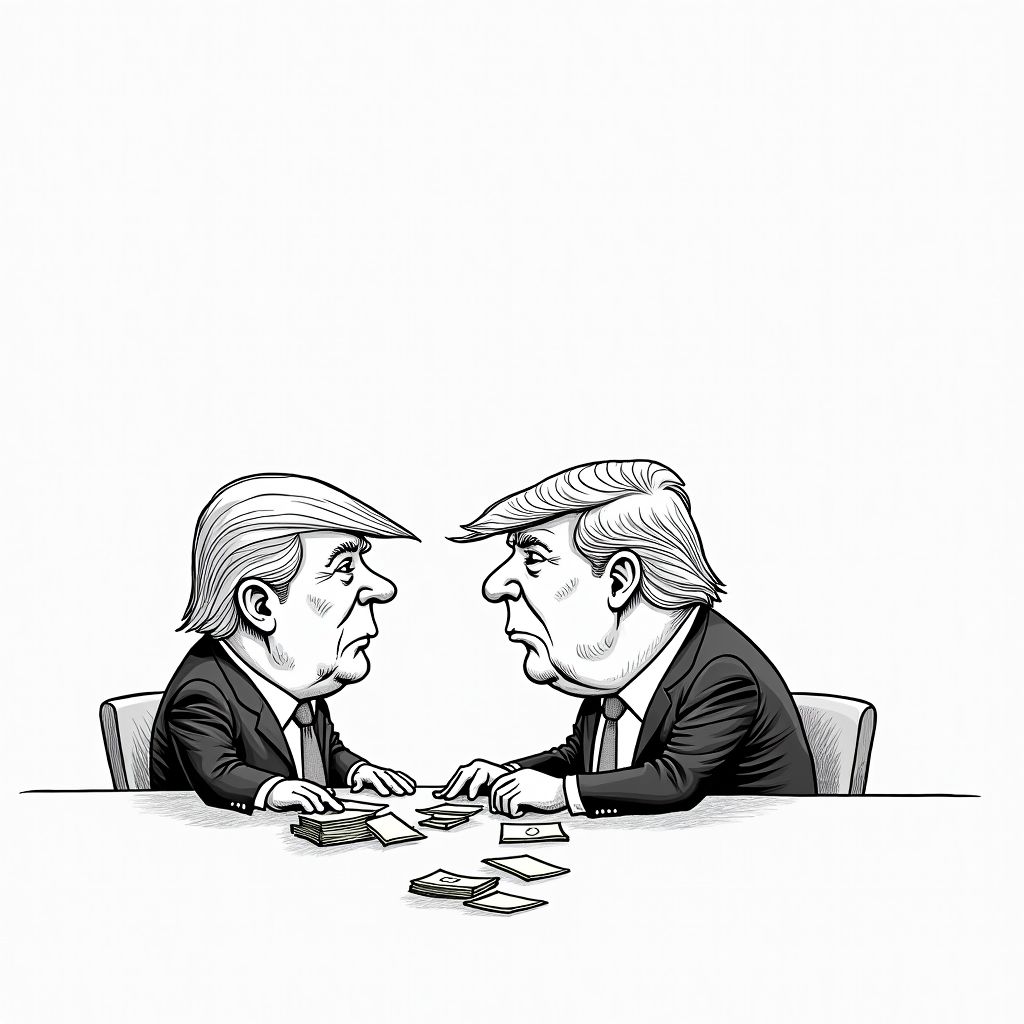
In March 2026, a staggering $39 trillion national debt and rising borrowing costs are forcing President Trump to halt aggressive Iranian policies to prevent a domestic banking collapse.
From Strategic Choice to Mathematical Imperative
Previously, the U.S. weighed winding down its Iran operations amid severe global energy uncertainty [1]. However, the situation has rapidly evolved from a strategic choice into a strict mathematical imperative [GPT]. The sheer gravity of the United States’ sovereign balance sheet is now actively dictating executive branch policy in real-time, proving that domestic financial stability must take precedence over international conflicts [2].
The Bond Market’s Absolute Veto
The underlying catalyst for this sudden geopolitical shift is not newfound diplomatic goodwill, but rather the crushing reality of a gross national debt that breached the $39 trillion mark this month [2][4]. Financial analysts note that the United States is now trapped in a cycle of “fiscal dominance,” where monetary and foreign policy decisions are entirely subordinate to debt-servicing costs [2]. Annual interest payments on the national debt have reached an unprecedented $1 trillion, surpassing the combined federal expenditures for defense, education, and healthcare [4].
De-Dollarization and the Canadian Safe Harbor
The macroeconomic strain is also manifesting visibly in global currency markets. While the U.S. Dollar Index (DXY) experienced a slight safe-haven rally during the initial stages of the Iran conflict, analysts note this bounce has been historically anemic compared to previous geopolitical shocks, such as the Russia-Ukraine invasion [5]. With foreign demand for U.S. Treasuries plummeting, the pace of de-dollarization is accelerating [5]. Institutional setups indicate that major currencies, including the Euro and the British Pound, are preparing for massive breakouts against the greenback [5].
Commodity Washouts and Market Volatility
The sudden alleviation of geopolitical risk premiums following the administration’s announcement has also triggered a historic liquidation event in precious metals [3][6]. Gold prices have crashed below $4,400 per ounce, marking the metal’s most severe weekly drop since 1983 [6]. Silver executed a similarly brutal washout, flushing down to the $60 per ounce level before catching a bid on the back of the broader stock market rally [3]. This sharp correction represents a -15% plunge in silver, marking its fourth consecutive weekly decline [6].
Sources
- wsnext.com
- sylvainsaurel.substack.com
- www.youtube.com
- www.youtube.com
- www.youtube.com
- www.youtube.com