China Emphasizes Global Stability Role in 2025 Economic Review
Beijing, Friday, 26 December 2025.
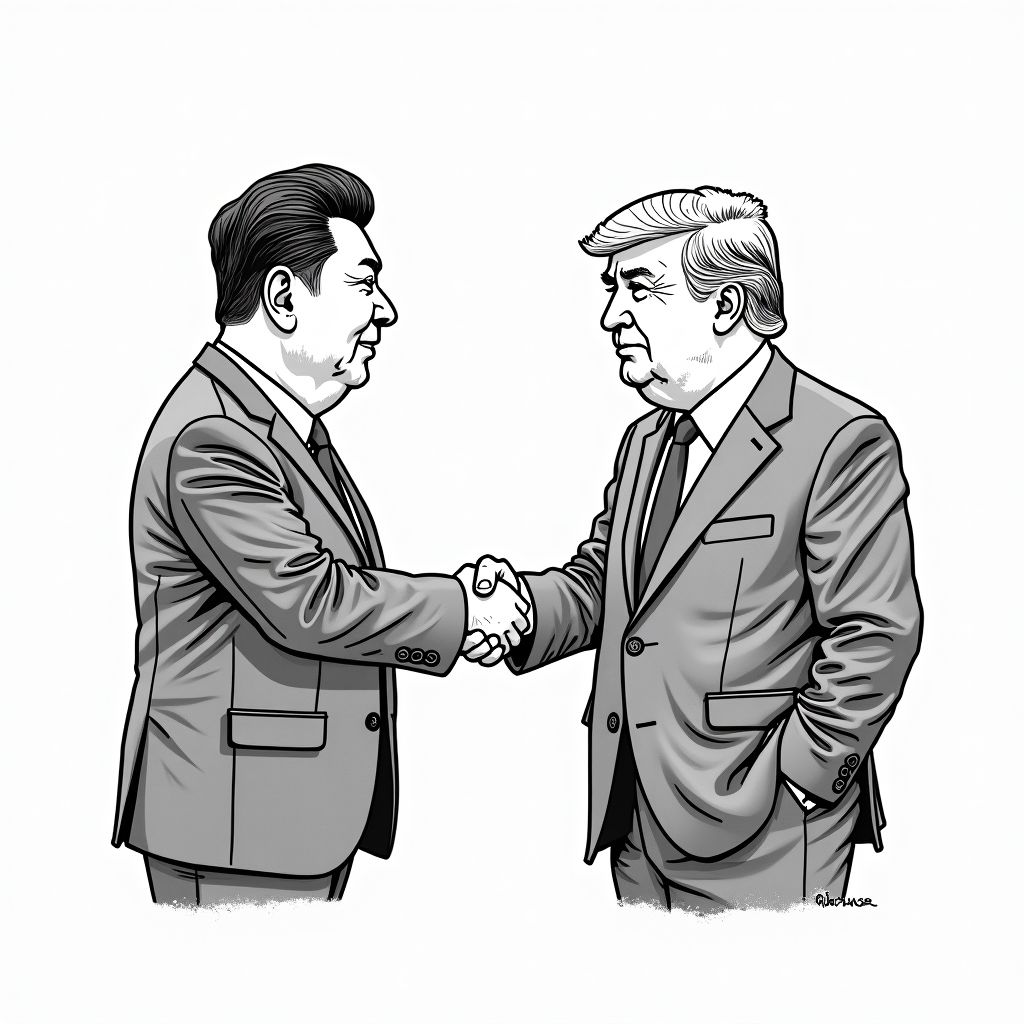
Amidst significant global turbulence in 2025, China is strategically positioning itself as an “oasis of certainty,” leveraging stable governance and technological breakthroughs to reassure global markets. A key highlight from the 2025 year-end review is the nation’s accelerating green transition, with new energy vehicle production surpassing 10 million units within the first nine months. This economic resilience is bolstered by assertive diplomatic engagements, including President Xi’s October appeal to U.S. President Donald Trump to “think big” on cooperation. For observers, Beijing’s narrative shifts focus from raw GDP growth to high-quality development in aerospace and AI, aiming to counter external pressures and establish China as a predictable anchor in a volatile international landscape.
Strategic Stability and Governance
The narrative of stability dominating China’s 2025 year-end reviews is anchored in specific diplomatic and domestic policy maneuvers executed throughout the fourth quarter. A defining moment occurred on October 30, 2025, in Busan, where President Xi Jinping met with U.S. President Donald Trump, urging both nations to “think big and recognize the long-term benefits of cooperation” [1]. This diplomatic outreach coincided with significant domestic policy crystallization; on October 23, 2025, the Fourth Plenary Session of the 20th Central Committee of the Communist Party of China officially adopted recommendations for the 15th Five-Year Plan (2026-2030) [2]. These strategic moves underscore Beijing’s intent to project a clear, long-term roadmap despite the “global turbulence” cited by observers like Erik Solheim at the Global Times Annual Conference held on December 20, 2025 [1].
Accelerating the Green and Digital Economy
China’s economic resilience in 2025 is quantitatively evident in its aggressive transition toward green energy and digital innovation. In the automotive sector, production and sales of new energy vehicles (NEVs) exceeded 10 million units in just the first nine months of the year [1]. This surge aligns with broader efficiency gains, as the nation reported that energy consumption per unit of GDP in 2024 was 11.6 percent lower than in 2020 [1]. Simultaneously, the digital landscape has expanded rapidly; as of December 25, 2025, over 700 generative AI large model products had completed filing in China [3]. These technologies are finding practical applications abroad, exemplified by Chinese-made service robots now operational in a private hospital in Al-Ahsa, Saudi Arabia, supporting logistics and healthcare tasks within the framework of Saudi Vision 2030 [2].
Resilience in Aerospace
The aerospace sector provided perhaps the most dramatic demonstration of China’s technical capabilities and crisis management in 2025. The year saw the launch of the Tianwen-2 probe on May 29, initiating a decade-long asteroid exploration and sample-return mission [4]. However, operational resilience was tested in late 2025 following the discovery of cracks in the Shenzhou-20 return capsule’s viewport on November 5 [4]. In a high-stakes emergency response, the crew safely returned to Earth aboard Shenzhou-21 on November 14, followed by the launch of an uncrewed Shenzhou-22 supply vessel on November 25 to execute repairs and ensure station safety [4]. Capping off the year’s activities, a Long March-8A rocket successfully launched internet satellites on December 26, 2025, signaling continued momentum into the new year [3].
Conclusion
As 2025 concludes, Beijing is cultivating a persona that moves beyond simple economic metrics to one of systemic utility for the Global South and beyond. Scholars such as Warwick Powell have described this approach as China acting as a “great enabling power,” creating conditions for regional stability and shared development [2]. Whether through diplomatic overtures in Busan or the export of automation technology to the Middle East, the 2025 review suggests a strategy focused on cementing China’s role as an indispensable partner in a fractured global environment.