United States Intervenes to Save Japanese Yen and Protect Treasury Debt Markets
Washington, Sunday, 9 August 2026.
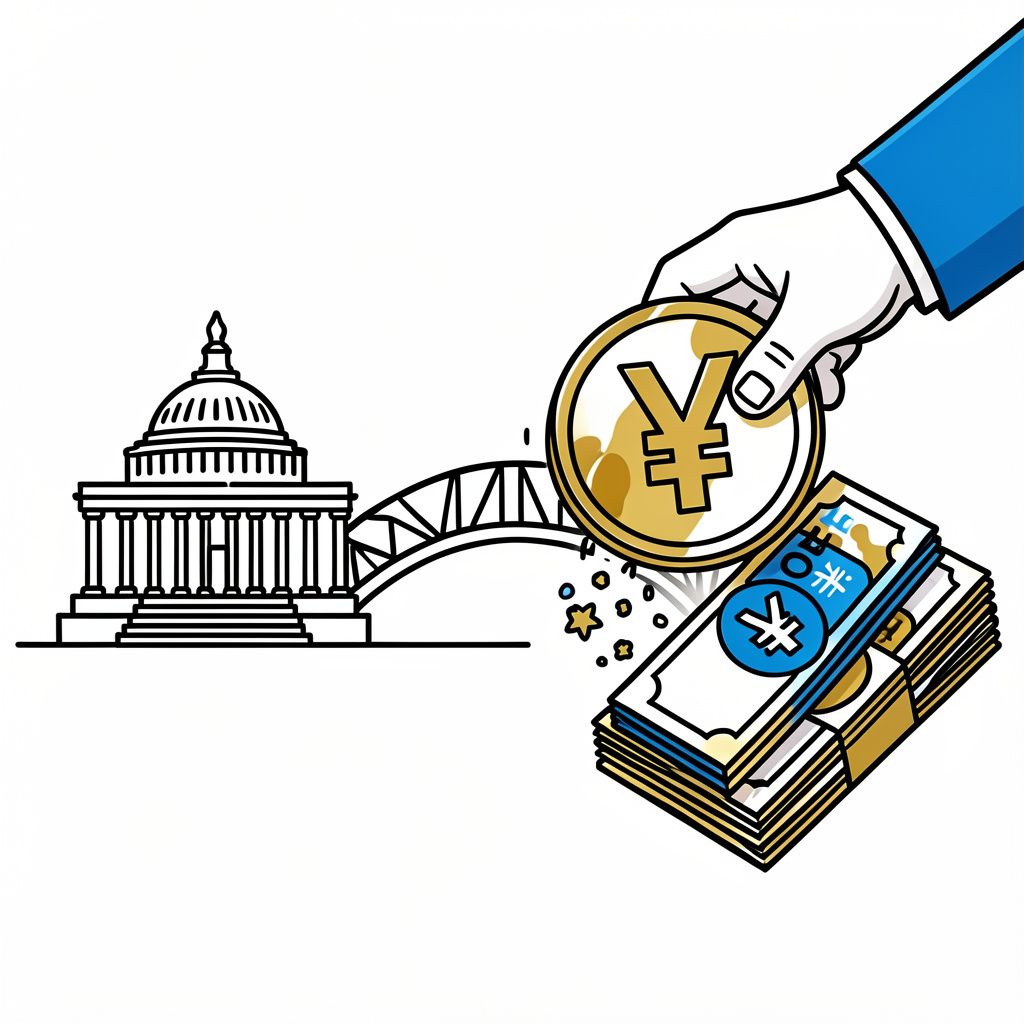
In late July 2026, the United States executed a rare currency intervention, selling euros to purchase yen to prevent a Japanese market crash from spilling into American sovereign bond markets.
Coordinated Currency Defense Mechanisms
On July 31, 2026, the United States Treasury initiated a rare currency intervention to support the Japanese yen, marking the first coordinated defense with Tokyo in over a decade [1]. Treasury Secretary Scott Bessent was photographed at Camp David with a note indicating a plan to purchase between $5 billion and $10 billion in Japanese yen, prompting the New York Fed to sell euros to facilitate the transaction [1]. This operation differed from historical precedents, such as those in 2000 and 2011, as the U.S. utilized euros rather than dollars to avoid weakening its own currency and risking inflation or credibility issues [1][2]. The intervention occurred after the yen reached approximately 164 per dollar on July 28, 2026, its weakest level in roughly 40 years [1]. By early August 2026, the yen recovered to the 155–157 range against the dollar, representing a significant but volatile shift in valuation [1][4].
Systemic Risks and the Carry Trade
Analysts emphasize that the intervention was primarily driven by fears of an abrupt unwinding of the massive yen carry-trade, which threatened to spill over into the U.S. Treasury debt market [1]. The trade exploited the interest rate gap between the Bank of Japan’s rate of approximately 0.75% and the U.S. Federal Reserve’s rate of 3.5%–3.7% [1]. Japan had previously spent 11.7 trillion yen, approximately $73.7 billion, during May 2026 to defend its currency, marking the largest monthly expenditure on record [1]. Despite these efforts, economic pressures persisted, including the Sanae Takaichi administration’s plans for increased spending on technology and defense [2]. The 10-year U.S. Treasury yield increased from 4.1% at the start of 2026 to 4.6% as of August 6, 2026, highlighting the sensitivity of sovereign yield spreads [2].
Diplomatic Framing and Trade Implications
On August 2, 2026, President Donald Trump addressed the intervention during a press conference aboard Air Force One, attributing the action to U.S.-Japan relations rather than economic risk [1]. Treasury Secretary Bessent later stated that the U.S. strongly supports Japan’s decisive market steps to correct the substantial undervaluation of the yen [3]. However, the economic implications extend beyond diplomacy, as a stronger yen is beneficial to the U.S. by making American goods more competitive [3]. In 2025, U.S. goods exports to Japan totaled $82.1 billion, while imports from Japan totaled $146.0 billion, resulting in a trade deficit of 63.9 billion [3]. Experts note that the price of American goods to the Japanese in yen is double what it was 20 years ago, reducing demand for U.S. products [3].
Market Reaction and Future Liquidity Facilities
Despite the intervention, the yen ended the week slightly weaker than where it began after a volatile period following actions by Japanese and U.S. authorities [4]. Treasury Secretary Bessent has urged the Federal Reserve to expand the Foreign and International Monetary Authorities (FIMA) Repo Facility’s $60 billion capacity in the coming months to provide liquidity without selling Treasury holdings [1][2]. Japan’s finance minister indicated that future dollar-selling interventions will be financed via this facility, though the status of the expansion remains pending [2][alert! ‘status unknown/ppending’]. Market pricing suggests the Federal Reserve may hike interest rates again before the end of 2026, though this awaits further FOMC announcements [2]. While the intervention stabilized the currency pair temporarily, analysts warn that the underlying interest rate differential remains unchanged [1].