US Navy Intercepts Iranian Drone in Arabian Sea, Sparking Oil Market Volatility
Washington D.C., Tuesday, 3 February 2026.
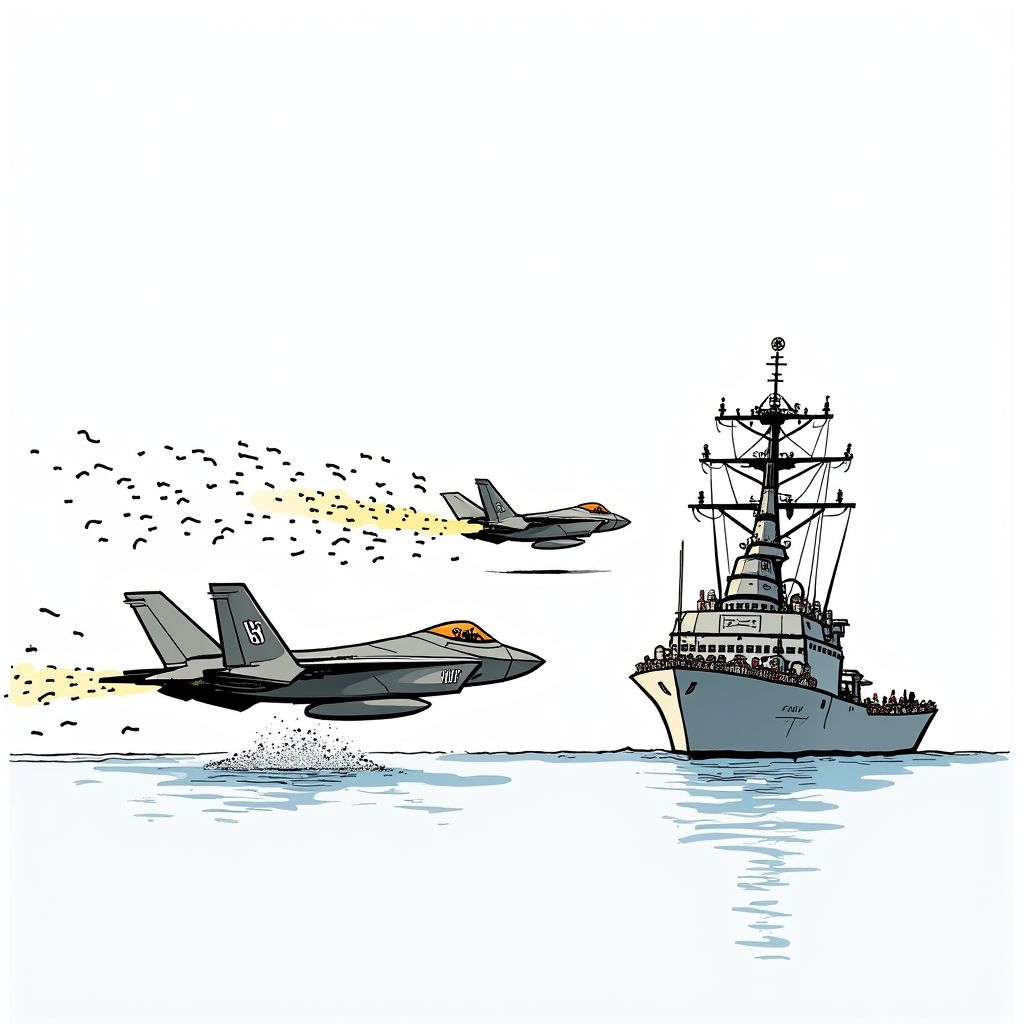
On Tuesday, February 3, geopolitical risk premiums surged in energy markets after a US F-35C fighter jet shot down an Iranian drone threatening the USS Abraham Lincoln carrier group. This military escalation, compounded by reports of Iranian vessels harassing a US commercial tanker in the Strait of Hormuz, immediately drove oil futures up by over $1 per barrel. With critical nuclear negotiations tentatively scheduled for this Friday, these confrontations in vital transit corridors signal renewed instability that poses immediate risks to global supply chains and energy security.
Escalation Follows Logistics Hub Sabotage
This kinetic confrontation in the Arabian Sea marks a dangerous evolution in regional hostilities, following closely on the heels of a significant security breach at a major Iranian port. Just days prior, an explosion at a logistics hub in Bandar Abbas raised alarms regarding the security of the Strait of Hormuz, a chokepoint responsible for transit of one-fifth of the world’s seaborne oil [1]. While authorities in Tehran initially dismissed rumors of a targeted strike on Islamic Revolutionary Guard Corps (IRGC) leadership during that incident, the subsequent aggressive maneuvers by Iranian forces against US naval and commercial assets suggest a coordinated shift in posture rather than isolated friction [1][2].
Details of the Aerial and Naval Intercepts
According to US Central Command (CENTCOM), the primary engagement occurred when an Iranian Shahed-139 drone engaged in an “aggressive” approach toward the USS Abraham Lincoln carrier strike group, which has been operating in the region since late January [2][3]. An F-35C Lightning II fighter jet launched from the carrier successfully intercepted and shot down the unmanned aerial vehicle (UAV) approximately 800 kilometers from Iran’s southern coast [2]. The military noted the drone displayed “unclear intent” before the decision was made to neutralize the threat to protect the carrier and its personnel [2][3].
Diplomatic Tightrope: Nuclear Talks and Regional Strategy
This military friction complicates an already fragile diplomatic landscape, as nuclear negotiations are tentatively scheduled to resume this Friday, February 6 [2]. Iranian President Masoud Pezeshkian has publicly instructed his foreign minister to pursue “fair and equitable negotiations,” contingent on an environment free from threats [2]. However, the definition of those terms remains contested; reports indicate that US Special Envoy Steve Witkoff is currently in Israel meeting with Prime Minister Benjamin Netanyahu and Mossad leadership [4]. Intelligence suggests Israel is pushing for any potential US-Iran agreement to mandate the abandonment of Tehran’s ballistic missile program, with threats of unilateral strikes should those terms be rejected [4]. President Pezeshkian has reiterated that while a deal is possible, it must align with Iran’s “vital national interests” and treat the nation as an equal [4].