Federal Safety Warning Urges Shoppers to Stop Using Popular French-Door Air Fryers
Washington, Friday, 23 October 2026.
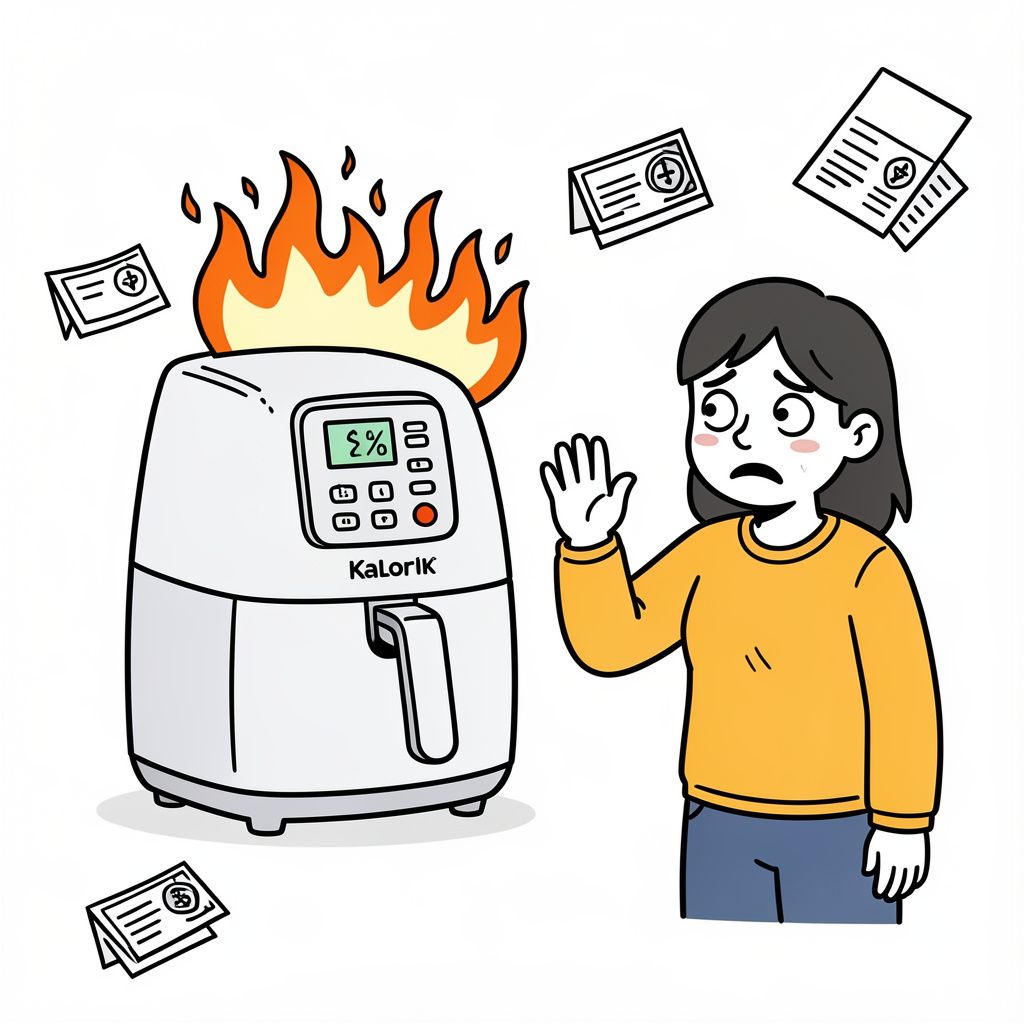
Federal safety officials urge households to stop using Kalorik French door air fryers over burn hazards, issuing direct consumer warnings after the brand’s new owner refused a recall.
Federal Safety Alert Echoes Across Retail Chains
On October 23, 2026, the U.S. Consumer Product Safety Commission (CPSC) escalated its public warning against the use of Kalorik MAXX Air Fryer Ovens equipped with French doors, citing ‘serious burn injury’ risks associated with sudden door closures during operation [1][2][3]. The advisory, which initially targeted individual consumers, has now expanded into a coordinated recall-like directive affecting major retail partners including Costco Wholesale Corp. (COST) and The Home Depot Inc. (HD). Retailers have responded by initiating full refund programs for affected units, with Costco instructing customers to ‘stop using it and return the item to your local Costco for a full refund’ [6]. The urgency of the federal warning is underscored by documented burn incidents, including at least one case resulting in second-degree scarring [2][5].
Product Lifecycle and Corporate Accountability
The defective Kalorik MAXX models—originally imported by Team International Group of America, Inc. and Kalorik, LLC between April 2020 and January 8, 2024—were later distributed by The Legacy Companies, LLC after June 23, 2025 [1][3][5]. The CPSC’s inability to conduct a traditional recall stems from the original importers’ dissolution and the current brand owner’s refusal to participate in voluntary recall efforts [1][3]. This corporate vacuum has created a unique regulatory challenge, compelling direct federal intervention through unilateral public warnings. The affected air fryer ovens, marketed as MAXX and MAXX Advance models, feature spring-loaded bilateral French doors with glass panels and metal handles—a design flaw identified as the root cause of the burn hazard [1][2].
Retailer Compliance and Consumer Disposal Protocols
Major retailers, including Walmart, Amazon, and regional chains such as H-E-B and Joe V’s Smart Shop, have publicly acknowledged the CPSC warning and issued customer advisories [3][5][4]. H-E-B emphasized that while no injuries had been reported among its customers, the company fully supports the federal directive and has removed affected inventory from shelves [5]. Consumers are instructed to dispose of defective units following local hazardous waste procedures, with specific disposal guidance available via the CPSC’s SaferProducts.gov portal [1][3]. The Legacy Companies, LLC has not issued a formal recall, leaving consumers with limited recourse beyond federal directives and retailer-initiated refunds [1][3].
Broader Implications for Appliance Safety Oversight
The Kalorik MAXX air fryer crisis highlights systemic vulnerabilities in consumer product safety enforcement, particularly when corporate accountability dissolves and brand ownership transfers without regulatory safeguards [alert! ‘lack of mandatory recall participation mechanisms’][GPT]. The CPSC’s proactive warning strategy reflects a broader trend toward unilateral public advisories in cases where traditional recall pathways are obstructed [1][2]. Industry analysts note that this approach, while effective in mitigating immediate risks, may not address long-term compensation or accountability for affected consumers [alert! ‘absence of structured restitution frameworks’][GPT]. The incident serves as a cautionary tale for regulators and retailers alike, emphasizing the need for robust product lifecycle tracking and corporate responsibility protocols. Consumers are urged to report any burn incidents or injuries to the CPSC via SaferProducts.gov to support ongoing hazard documentation [1][2].