Indiana Republicans Defy Trump Pressure to Reject New Congressional Map
Indianapolis, Thursday, 11 December 2025.
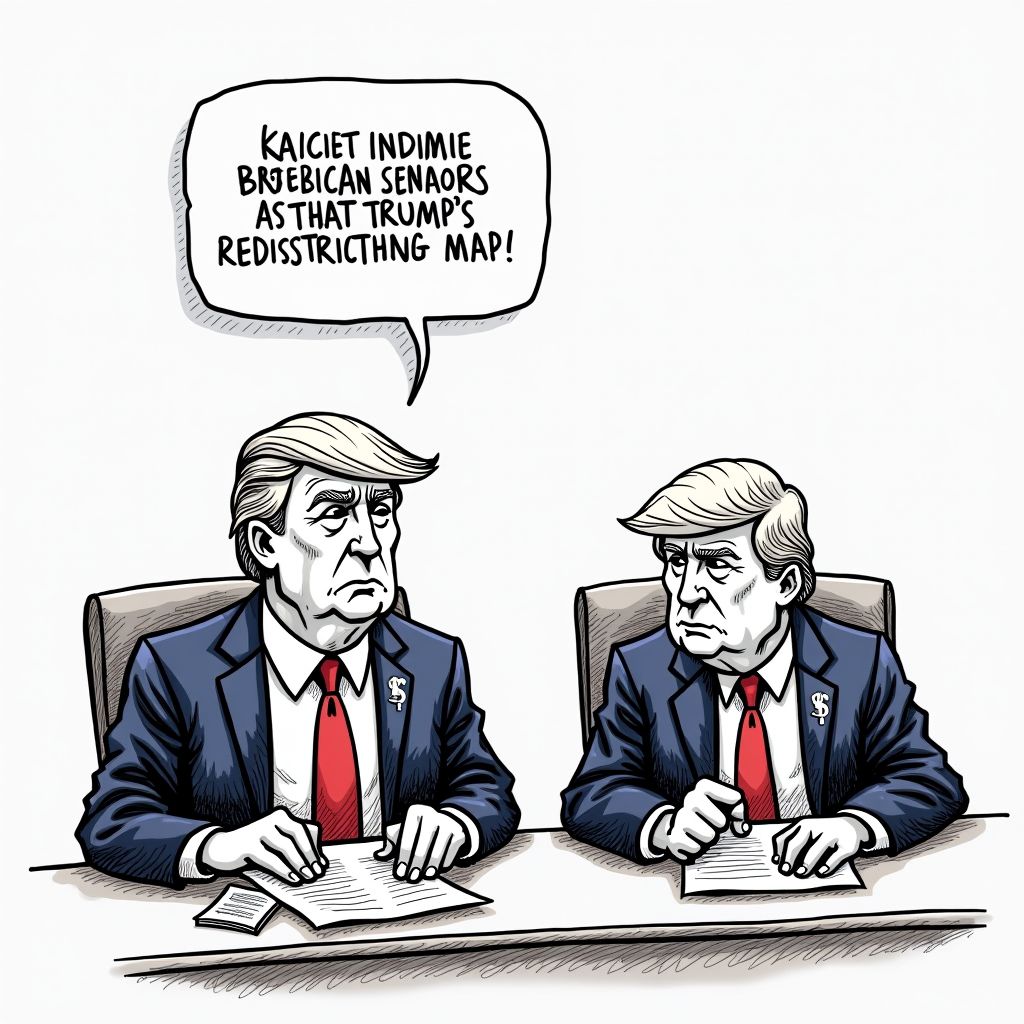
In a 19-31 vote today, Indiana’s Republican Senate defied President Trump, rejecting a mid-decade redistricting map intended to eliminate Democratic seats and secure total GOP congressional control.
A Rebuke to National Pressure
The Indiana Senate’s decision to strike down the proposed congressional map today, December 11, 2025, marks a rare and significant break between state-level Republicans and the national party leadership. Despite holding a commanding supermajority of 40 out of 50 seats, the Republican-led chamber rejected the measure by a vote of 19 to 31 [1]. This defeat occurred in the face of an intense lobbying campaign spearheaded by President Donald Trump, who had explicitly threatened that any Republican opposing the plan would face a “MAGA Primary in the Spring” [3]. The vote highlights the limitations of the former President’s influence when it conflicts with the institutional norms of state legislators, more than a dozen of whom defied his direct requests [1].
The Mathematics of Power
The rejected legislation, House Bill 1032, was designed to aggressively alter the balance of power in Washington by eliminating competitive districts in Indiana [4]. Currently, Republicans control seven of the state’s nine congressional seats [5]. The proposed map aimed to convert the remaining two Democratic-held seats into Republican strongholds, creating a 9-0 GOP delegation for the 2026 midterm elections [2][4]. This strategy was part of a coordinated national effort to offset potential losses elsewhere by maximizing seat counts in states with Republican legislative control [2]. However, the vote count reveals a significant internal rebellion; with only 19 votes in favor from a caucus of 40, at least 21 Republican senators broke ranks to defeat the bill [1].
A Campaign of Pressure and Intimidation
The weeks leading up to the vote were characterized by unprecedented interference from federal officials. President Trump, Vice President JD Vance, and House Speaker Mike Johnson all personally contacted state lawmakers to urge passage of the map [2]. Trump leveled specific public attacks against Senate leader Rodric Bray, accusing him of hindering the party’s success and labeling dissenters as “SUCKERS” [3]. Financial pressure was also applied, with Trump-aligned PACs spending nearly half a million dollars on ads and launching dark-money groups to influence the outcome [2].
Institutional and Financial Barriers
The opposition within the Senate was driven by concerns regarding the legality and cost of mid-cycle redistricting. Indiana Code generally mandates that congressional districts be established in the first session following the decennial census, leading lawmakers like Senator Greg Walker to argue the bill was unconstitutional [1][7]. Furthermore, local officials warned of the practical burdens; Marion County’s chief election official estimated that implementing new boundaries at this time would cost at least $1 million for that county alone [6]. Ultimately, these institutional concerns outweighed the demand for partisan advantage, preserving the status quo for the upcoming election cycle.
Sources
- www.nytimes.com
- www.politico.com
- www.foxnews.com
- indianacapitalchronicle.com
- www.wfyi.org
- www.democracydocket.com
- law.justia.com