All 50 States Join Federal Plan to Lower Medicaid Drug Spending
Washington, Friday, 18 September 2026.
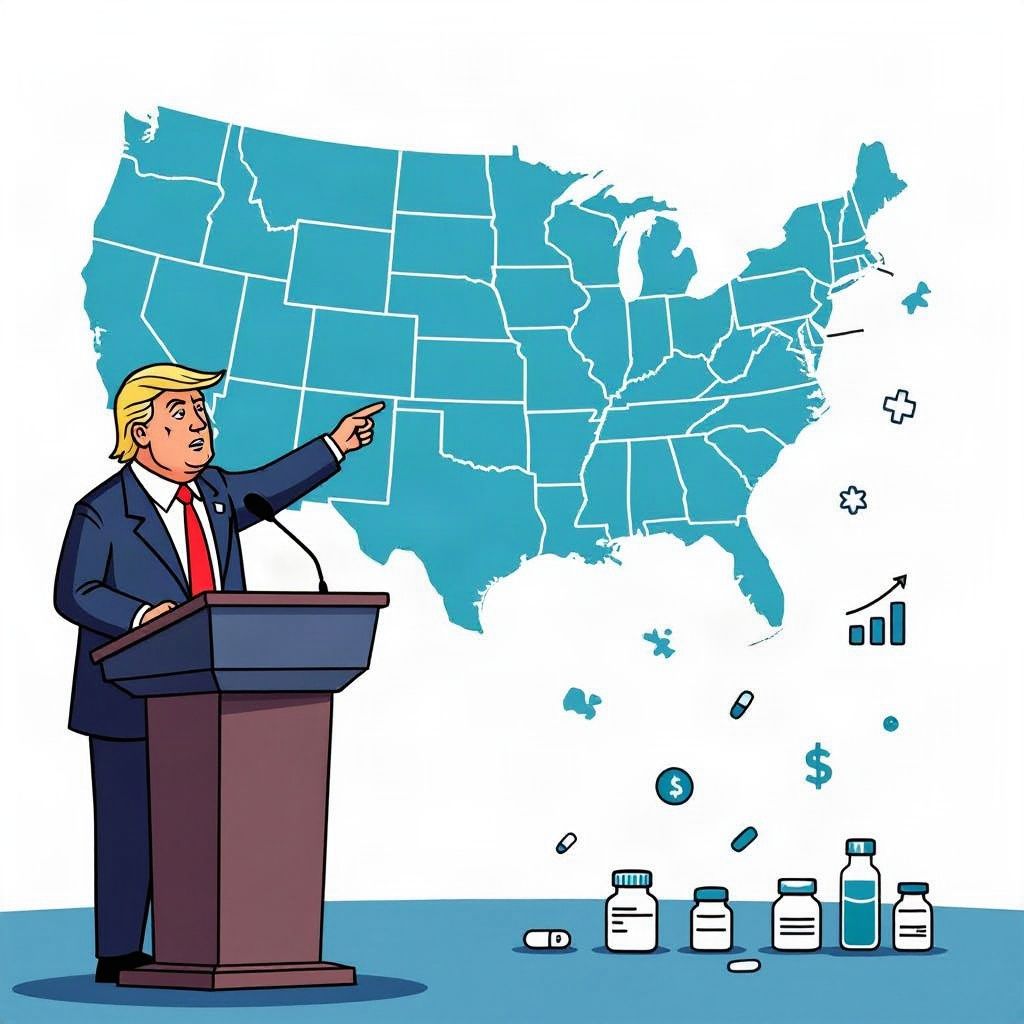
President Trump announced that all 50 states signed onto the Most-Favored-Nation drug pricing model for Medicaid, targeting lower drug expenditures by tying domestic costs to lower international prices.
Nationwide Medicaid Pricing Announcement
On September 18, 2026, President Donald Trump announced that all 50 U.S. states, alongside the District of Columbia and Puerto Rico, have officially agreed to participate in the administration’s ‘most favored nation’ (MFN) drug pricing initiative for Medicaid programs [1]. This policy shift aims to lower prescription drug expenditures for lower-income healthcare coverage by tying U.S. purchasing prices to the lowest prices paid by comparable developed nations [1]. The White House asserts that this nationwide implementation represents a significant policy shift that could compress profit margins for global pharmaceutical companies and substantially alter public healthcare financing across the United States [1]. The initiative builds upon an Executive Order signed on May 12, 2025, which aimed to align U.S. prices with those in similar nations [4].
Projected Savings and Economic Impact
Financial projections from the administration estimate the initiative will yield nearly $65 billion in savings over the next decade [1]. The Council of Economic Advisers projects total savings on Medicaid drug costs split between $36.6 billion for the Federal government and $27.6 billion for State governments, totaling 64.2 billion [4]. Broader MFN deals across the market are estimated to reach $600 billion in savings over the same period [4]. Additionally, the administration notes that 26 pharmaceutical companies, representing 90% of the branded U.S. market, have entered pricing agreements projected to contribute to these savings [1]. Since the launch of the TrumpRX platform in February 2026, patients have reportedly saved over $700 million on medicines [4].
Implementation Status and Reporting Discrepancies
While the administration states all states have agreed to the program as of September 18, 2026 [1][4], independent reporting indicates some deadlines remain pending [alert! ‘Conflicting reports on completion status vs. Sept 30 deadline’][2]. NPR reported on September 17, 2026, that states have until September 30, 2026, to finalize and sign binding agreements for the program [2]. As of September 17, 2026, only Massachusetts had publicly committed to opting into the program, while California officials applied to review program details before making a final commitment [2]. Furthermore, the administration has refused to release the 26 pharmaceutical agreements signed, and participating companies have not confirmed that all of their drugs will be subject to discounts [2].
Industry Incentives and Political Context
Drug companies reportedly had incentives to participate in the deals to stave off the threat of U.S. tariffs on their products [3]. Political rhetoric surrounding the issue highlights high costs, with Representative Zach Nunn stating that big drug companies charge Americans four times more for the same drugs they discount in other countries [5]. President Trump claimed at the Republican National Convention on September 10, 2026, that his administration shifted U.S. drug prices from the highest to the lowest globally [2]. However, experts caution that participating states could face increased expenditures if the pilot program mandates unfettered access to drugs, potentially increasing the number of patients receiving expensive treatments [2].