Federal Reserve Holds Rates Steady as Chair Powell Defies Pressure to Resign
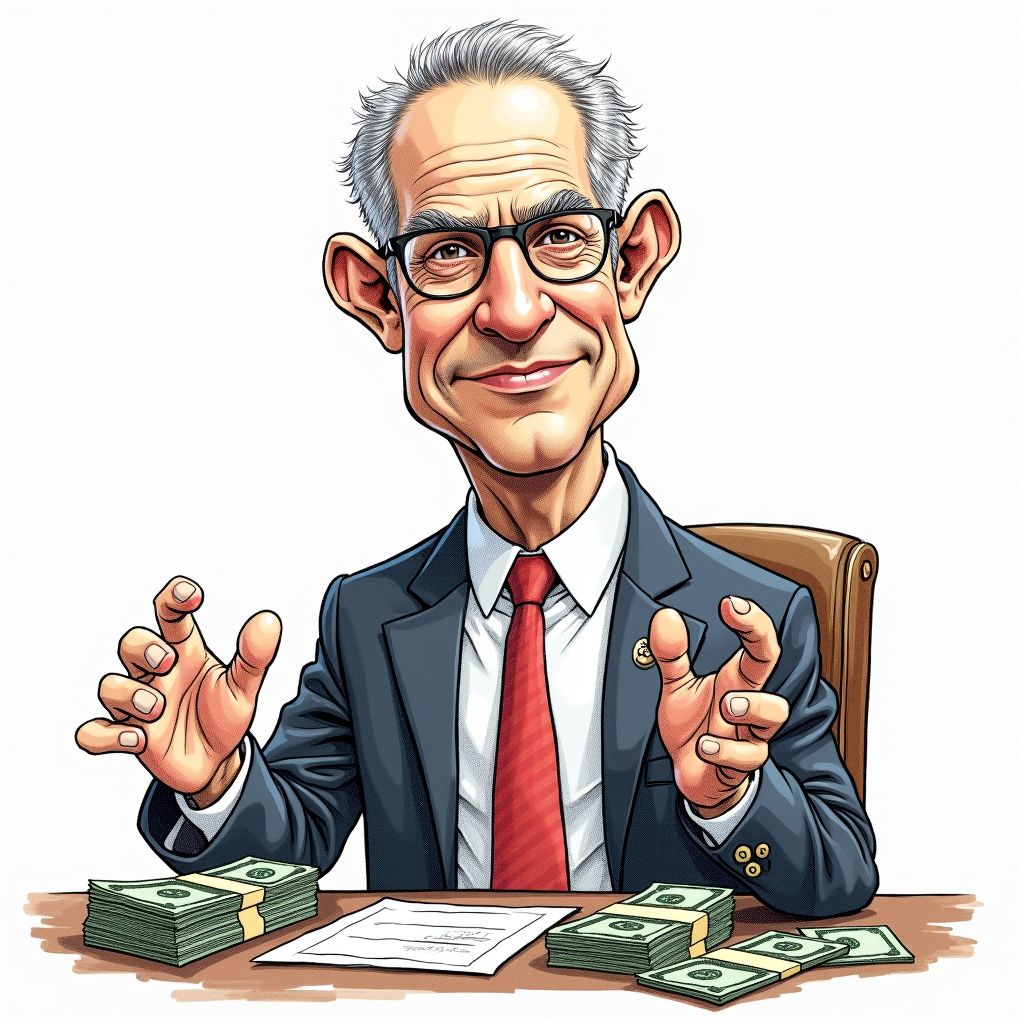
Washington, D.C., Wednesday, 18 March 2026.
The Federal Reserve paused rate cuts today. Strikingly, Chair Jerome Powell announced he refuses to step down until an ongoing Justice Department investigation into him is entirely resolved.
A Defiant Stance Amid Unprecedented Legal Pressure
Federal Reserve Chair Jerome Powell explicitly stated on Wednesday, March 18, 2026, that he will not relinquish his seat on the Board of Governors until the Department of Justice concludes its criminal investigation into his congressional testimony [3][5]. The probe, which centers on a $2.5 billion renovation of the central bank’s headquarters, has been widely criticized by Powell and his allies as a pressure campaign by President Donald Trump to force lower interest rates [4][5][6]. On March 13, 2026, U.S. District Judge James Boasberg blocked grand jury subpoenas issued to the Fed, stating the government provided “essentially zero evidence” of a crime and suggesting the subpoenas were a pretext to coerce Powell [3][4]. Despite the ruling, U.S. Attorney Jeanine Pirro announced her office will appeal, declaring the judge’s decision “outrageous” and asserting that Powell is “bathed in immunity” [3]. Powell defended the renovation project, noting it is funded entirely by the central bank’s own revenue rather than taxpayers, and emphasized there are “no new water features” or “roof garden terraces” [6].
A Stalled Succession Plan
This legal battle has created a significant bottleneck in the central bank’s leadership transition. Powell’s term as chair is scheduled to expire on May 15, 2026, though his separate term as a Fed governor extends into early 2028 [2][3]. President Trump has nominated former Fed Governor Kevin Warsh as Powell’s successor, but the confirmation process has effectively stalled in the Senate [1][5]. Senator Thom Tillis has actively blocked Warsh’s confirmation, labeling the DOJ investigation “bogus” and demanding the administration drop the probe before he allows the nomination to proceed [3][5]. Consequently, Powell announced he will follow precedent and serve as “chair pro tem” if the Senate fails to confirm Warsh by the May deadline, ensuring near-term continuity for the institution [3][4][8].
The Economic Balancing Act: Labor Weakness and Persistent Inflation
Against this tumultuous political backdrop, the Federal Open Market Committee (FOMC) voted 11-1 to maintain the federal funds rate at a target range of 3.5% to 3.75% for the second consecutive meeting [1][8]. The sole dissenter, Fed Governor Stephen Miran, advocated for a 0.25 percentage point rate cut [1][8]. The decision reflects a delicate balancing act as policymakers navigate a softening labor market alongside stubborn price pressures [7][8]. Economic data from February 2026 revealed that businesses shed 92,000 jobs, a stark contrast to the 130,000 jobs gained in January, pushing the unemployment rate up to 4.4% [2]. Powell attributed the hiring slowdown to diminished labor demand and declining immigration levels [8].
Tariffs and the Inflation Forecast
Despite the labor market’s fragility, inflation remains a formidable hurdle. The median policymaker now projects both headline and core inflation to finish 2026 at 2.7%, representing a 12.5% relative increase from the 2.4% headline estimate published in December 2025 [1][2]. This persistent inflation is partly driven by the continued ripple effects of sweeping tariffs implemented by the Trump administration, which have kept goods inflation elevated [4][8]. Furthermore, the producer price index for February 2026 surged by 0.7%, significantly overshooting the anticipated 0.3% consensus [7]. While Powell firmly rejected notions that the U.S. economy is entering a period of “stagflation,” he conceded that progress on inflation has not materialized “as much as we had hoped” [7].
Global Shocks and the Energy Market’s Shadow
Compounding the Fed’s domestic challenges is the ongoing U.S.-Iran war, which has injected severe uncertainty into the global economic outlook [1][4]. The conflict has triggered a notable oil shock, driving nationwide average gas prices up to $1.02 per liter by March 12, 2026 [2]. Powell noted that while higher energy prices will undoubtedly push up overall inflation in the near term, it remains too early to gauge the duration of these effects [alert! ‘The timeline of the Middle East conflict and its ultimate impact on the global oil supply chain remain entirely unknown’] [1]. The FOMC’s official statement acknowledged this volatility, noting that the implications of the Middle East developments are “uncertain” [1][8]. This global apprehension is not isolated to the United States; both the Bank of Canada and the Reserve Bank of Australia have similarly addressed the economic fallout of the conflict in their recent communications [7].
Market Reactions and the Path Forward
Financial markets reacted negatively to the Fed’s cautious stance and the broader geopolitical uncertainty. Following the rate decision on March 17, 2026, the Dow Jones Industrial Average plummeted by more than 600 points, representing a decline of 1.3%, while the S&P 500 fell by roughly 1% [2][7]. Looking ahead, the trajectory for monetary policy remains highly conditional. While the Fed previously executed three consecutive rate cuts in late 2025 [8], futures trading now indicates a less than 60% probability of policy easing by December 2026 [7]. However, 12 Fed officials still project that at least one rate cut will be appropriate this year, with inflation expected to eventually hit the central bank’s 2% target by 2028 [1][2].
Sources
- www.axios.com
- www.pbs.org
- www.cnbc.com
- www.politico.com
- www.nbcnews.com
- www.foxnews.com
- www.cnbc.com
- www.foxbusiness.com