Rapid Third-Quarter Growth Surprises Experts Despite Inflation Challenges
Washington, Wednesday, 24 December 2025.
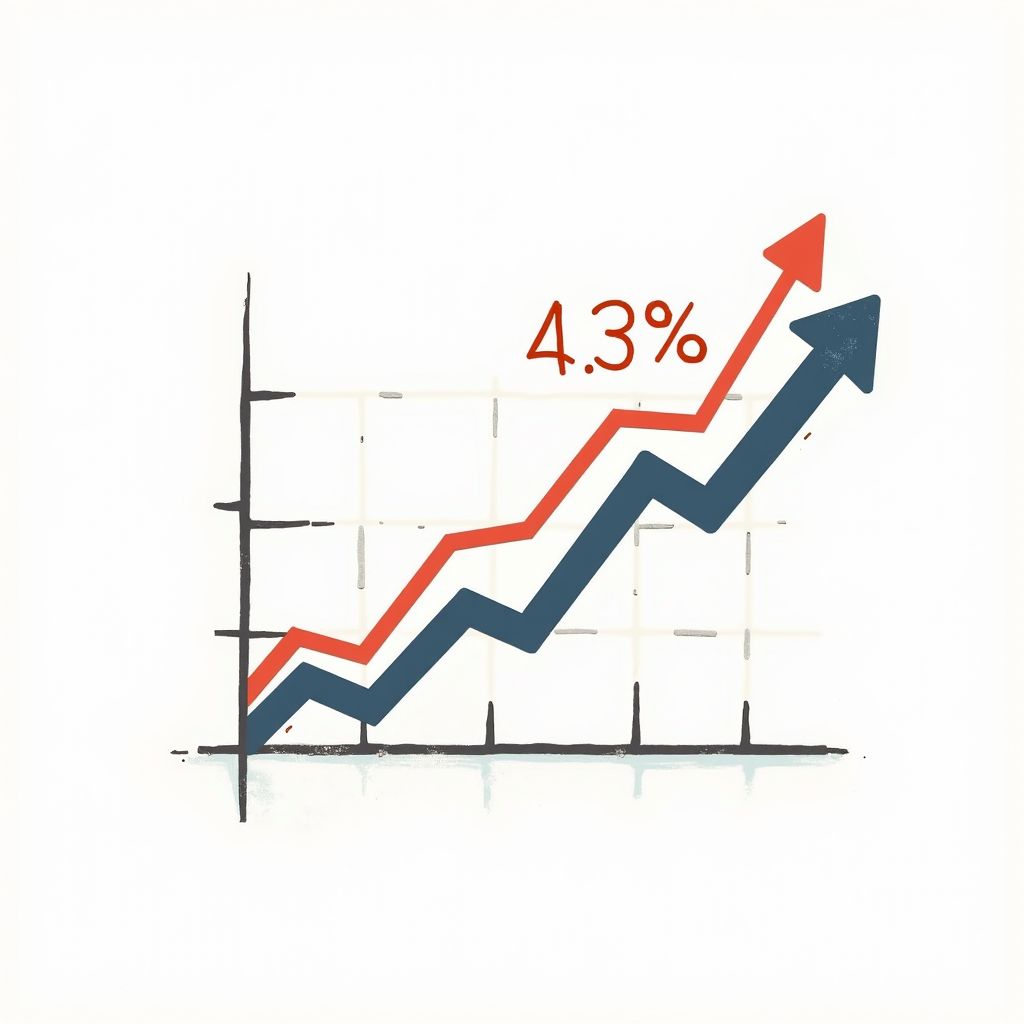
Shattering forecasts, the economy surged at a 4.3% annual rate, though a simultaneous rise in core inflation to 2.9% signals ongoing policy challenges.
Delayed Data Reveals Economic Surge
As we reported in our previous coverage, the release of third-quarter economic data was postponed due to a government shutdown, leaving investors waiting until this shortened holiday week for a critical health check. The figures released by the Commerce Department on Tuesday, December 23, delivered a significant upside surprise: the U.S. gross domestic product (GDP) expanded at an annualized rate of 4.3% from July through September [1][2]. This blistering pace of growth defied the consensus among analysts surveyed by FactSet, who had forecast a more modest 3% expansion for the period [1]. The 4.3% figure represents a notable acceleration from the 3.8% growth rate recorded in the second quarter [1][8].
Consumer Resilience and AI Investment Drive Expansion
The economy’s robust performance was primarily fueled by the American consumer, whose spending accounts for approximately 70% of U.S. economic activity [1]. Personal consumption expenditures accelerated to a 3.5% annual pace in the third quarter, a full percentage point higher than the 2.5% rate seen in the April-June period [1]. Beyond household spending, the economy benefited from an 8.8% jump in exports and increased government outlays [2][8]. Investment trends also played a pivotal role; Oliver Allen, a senior U.S. economist at Pantheon Macroeconomics, noted that growth was bolstered by a “boom in AI capex” alongside consumer resilience [2]. However, the expansion was not universal across all sectors, as residential investment acted as a drag on the economy, decreasing at a 5.1% annual rate [8].
Inflationary Heat Meets a Cooling Labor Market
While the headline growth figures paint a picture of vitality, the report highlights complicating factors for the Federal Reserve regarding price stability. The central bank’s preferred inflation gauge, the personal consumption expenditures (PCE) price index, rose to a 2.8% annual pace in the third quarter, up from 2.1% in the second quarter [1][8]. Even more concerning for policymakers is the trajectory of core inflation, which excludes volatile food and energy prices; this metric climbed to 2.9%, an acceleration of 0.3 percentage points from the previous quarter [1][8]. This persistent inflationary pressure arrives alongside signs of a softening labor market, with the unemployment rate ticking up to 4.6% in November 2025, reaching its highest level since 2021 [2].
Outlook: A Fourth-Quarter Slowdown?
Despite the third quarter’s strength, economists warn that this momentum is unlikely to sustain itself through the end of the year. The recent government shutdown, which delayed this very report, is expected to dampen economic activity in the fourth quarter [2][8]. Paul Ashworth, chief North America economist at Capital Economics, projects that growth will decelerate to approximately 2% in the final three months of 2025 [2]. Oliver Allen echoes this sentiment, characterizing the third quarter’s broad growth as “unsustainable” and pointing to clear signs that the tide has turned in the fourth quarter, particularly regarding consumption [2]. As markets prepare to close for Christmas, investors are left weighing the backward-looking strength of the economy against the forward-looking risks of slowing growth and sticky inflation.
Sources
- www.pbs.org
- www.cbsnews.com
- fred.stlouisfed.org
- www.marketwatch.com
- fred.stlouisfed.org
- fred.stlouisfed.org
- www.instagram.com
- www.calculatedriskblog.com