Lazard Forecasts Rising US Inflation in Early 2026 Amid Economic Wild Cards
New York, Saturday, 17 January 2026.
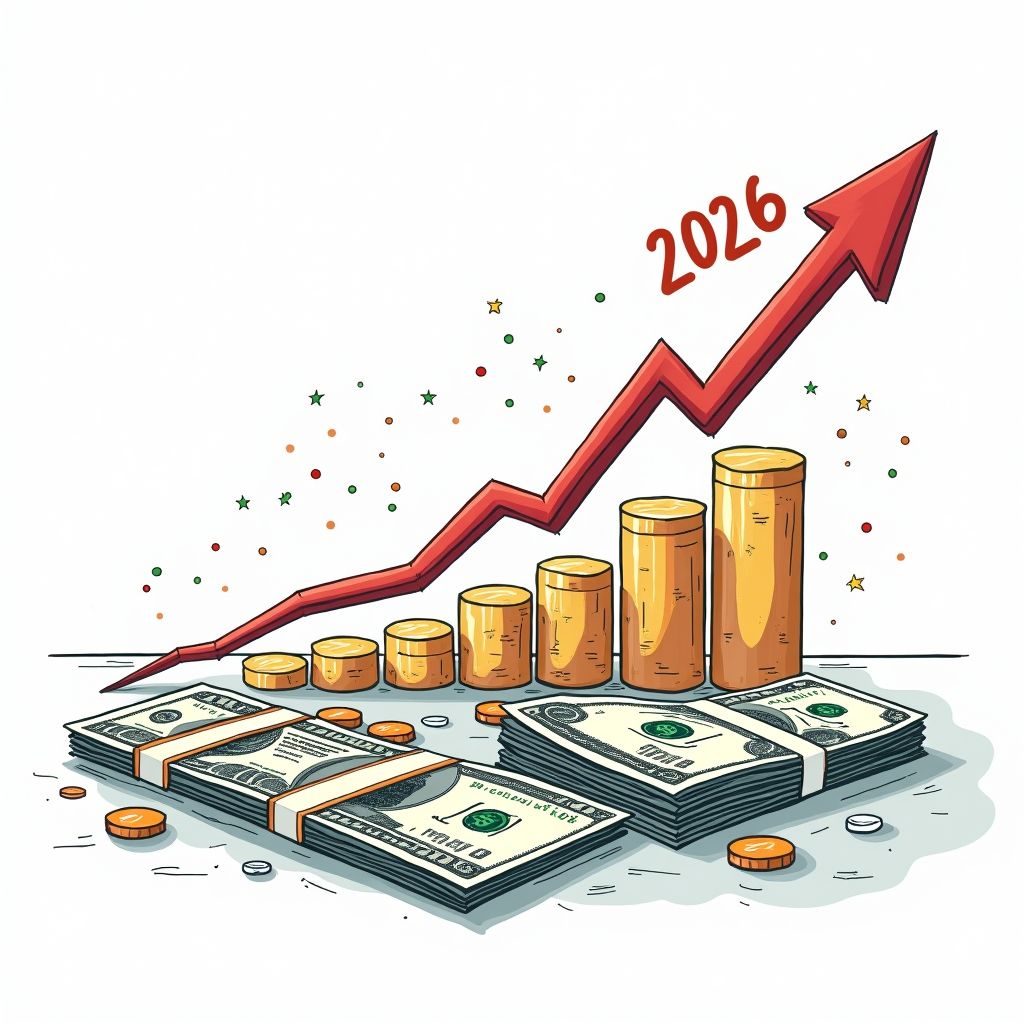
Lazard projects rising inflation for early 2026, warning that unforeseen ‘wild cards’ necessitate urgent updates to corporate risk management and investment strategies in a volatile landscape.
The Inflationary Base Case
Lazard Asset Management’s analysis, published on January 16, 2026, posits that the United States is poised to experience an uptick in inflation throughout the first half of the year [1]. This projection arrives against a complex macroeconomic backdrop where the Federal Reserve has already executed three rate cuts in 2025, despite inflation remaining persistently above the 2% target [2]. The economic landscape is further complicated by a national debt load that has swelled to a record $38 trillion in 2026, raising concerns about fiscal sustainability and monetary policy efficacy [2]. While the base case suggests rising prices, Lazard emphasizes that the trajectory is not guaranteed; significant “wild cards”—unpredictable economic or geopolitical variables—could disrupt this outlook, introducing a layer of uncertainty that demands vigilance from market participants [1].
Structural Shifts and Market Sentiment
The inflationary pressure is partly underpinned by continued fiscal stimulus and aggressive deregulation efforts currently underway, which have supported the U.S. economy even as global tensions persist [3]. However, beneath the surface of this growth lies a potential pivot in global market dynamics. Ron Temple, Chief Market Strategist at Lazard, suggests that 2025 marked the “beginning of the end of American exceptionalism” in financial markets [2]. Temple anticipates that as we move deeper into 2026, investors may begin to shift away from the U.S. dollar, initially through currency hedges, before potentially reducing exposure to U.S. assets [2]. This sentiment reflects growing apprehension regarding the Federal Reserve’s credibility and the long-term implications of the nation’s fiscal health [2].
Diverging Data: Sticky Inflation vs. Deflationary Signals
Current economic data presents a dichotomy that complicates the forecasting environment. On one hand, the Consumer Price Index (CPI) for December came in at 2.65%, indicating that inflationary pressures remain sticky [5]. Supporting the view of persistent inflation, Raymond James forecasts that price growth will remain above the Fed’s target throughout 2026, driven in part by increased tariffs, predicting only a single rate cut for the year [7]. Conversely, real-time metrics paint a different picture; independent inflation gauge Truflation reported a year-over-year rate of 1.70% as of mid-January, suggesting that underlying deflationary trends—particularly in housing—may be stronger than official government data reflects [5][8]. This divergence highlights the “unevenness” of the current growth story, where aggregate numbers may obscure sector-specific momentum or contraction [3].
Geopolitical Resilience and Future Risks
Despite the looming economic variables, financial markets have displayed a remarkable imperviousness to geopolitical turmoil in the early days of 2026 [6]. Oil markets have remained largely unresponsive to tensions involving major producers like Venezuela and Iran, and bond markets have notably shrugged off political pressure directed at Federal Reserve Chair Jerome Powell [6]. However, Dominic Barton notes that while the global system is proving more resilient than expected, it is becoming “far less forgiving of mistakes based on outdated assumptions” [3]. For corporate leaders and investors, the challenge in 2026 lies in balancing the immediate reality of sticky inflation and fiscal stimulus against the longer-term risks of currency devaluation and structural economic shifts [2][3].
Sources
- www.lazardassetmanagement.com
- www.aol.com
- www.linkedin.com
- www.ai-cio.com
- talkmarkets.com
- www.adviser-hub.co.uk
- www.advisorperspectives.com
- www.ark-invest.com