Moscow Allocates $1.85 Billion for 2026 Global Influence Campaigns Despite Domestic Economic Strain
Moscow, Wednesday, 10 June 2026.
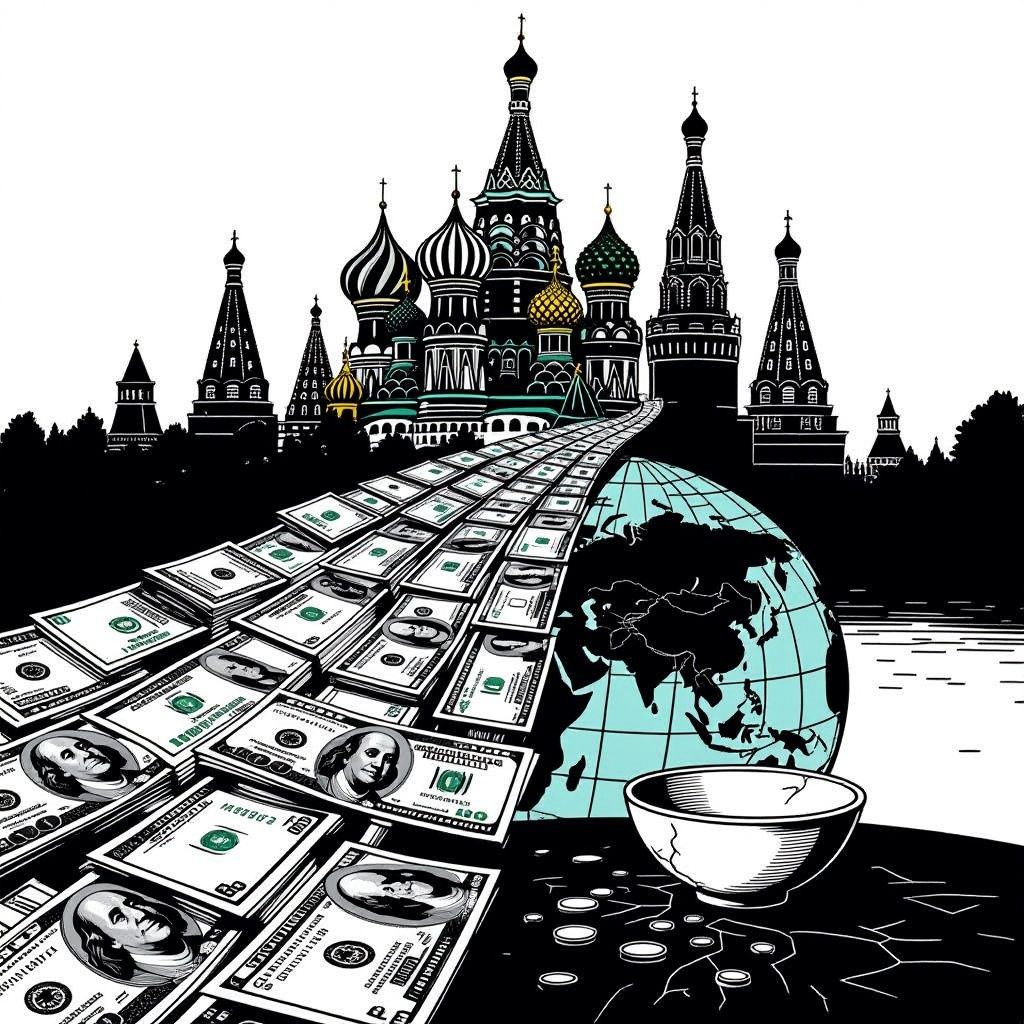
Despite severe domestic economic challenges, Russia has increased its 2026 foreign propaganda budget by 50% to $1.85 billion, signaling an impending surge in global disinformation efforts.
Economic Realities Versus Ideological Spending
The Russian government has earmarked $1.85 billion for foreign propaganda in 2026, a jump of more than 50% from 2025 [1]. This aggressive financial commitment comes at a time when the domestic economy is flashing severe warning signs [1]. Top officials within Russia’s Finance Ministry and Central Bank have sounded the alarm, warning President Vladimir Putin that the financial burden of the war in Ukraine is unsustainable and proposing cuts to defense spending [1][2]. Despite these warnings, projected military spending for 2026 remains stubbornly high at 14.9 trillion rubles, or roughly $204 billion [1]. This sustained expenditure is expected to cause the national budget deficit to balloon to as much as 3 trillion rubles, or $36 billion, by the end of 2026 [1].
Prioritizing Militarization Over Domestic Welfare
The Kremlin’s budget priorities vividly illustrate a preference for ideological control and militarization over civic investment [GPT]. In addition to the foreign propaganda budget, Moscow plans to spend nearly $800 million on youth militarization in 2026 [3]. This represents an exponential increase, as pre-war spending levels were merely 40 million [3]. According to the Center for Countering Disinformation, these funds could have built approximately 60 modern schools [3]. Instead, children are subjected to paramilitary games like “Zarnitsa” and trained with replica weapons, including inflatable “Katyusha” rocket launchers [3]. Meanwhile, the broader federal budget is being heavily cannibalized to support the military-industrial complex, with defense and security expenditures now consuming approximately 40% of federal spending, totaling roughly $238 billion [5].
Industrial Strain and Battlefield Economics
The immense military outlay has generated a severe fiscal imbalance, with the national deficit reaching 5.9 trillion rubles in just the first four months of 2026 [5]. The financial hemorrhage is compounded by operational inefficiencies and corruption within the military ranks [5]. Anthropologist Alexandra Arkhipova’s analysis of 2025 data uncovered a systemic “death-onomics” structure, wherein Russian commanders extort up to 60% of soldiers’ sign-on bonuses [5]. Troops are reportedly forced to pay exorbitant bribes, such as 50,000 rubles for dugout housing and up to 500,000 rubles for safer reassignments [5]. Furthermore, Ukraine’s targeted drone campaign has systematically dismantled Russia’s economic engine [5]. Between January 1, 2026, and May 31, 2026, Ukrainian forces executed 68 successful strikes on Russian oil infrastructure [5]. The resulting 13% year-over-year drop in refining capacity forced Moscow to implement a ban on petrol exports in April 2026, followed by a ban on aviation fuel exports on June 1, 2026 [5]. Despite these glaring vulnerabilities, Russian Minister of Economic Development Maxim Reshetnikov publicly insisted on June 8, 2026, that the economy has seen “strong growth” [4] [alert! ‘Reshetnikov does not provide specific metrics to substantiate this claim of strong growth amidst high inflation, labor shortages, and interest rates’].
The Strategic Pivot to Information Warfare
To mask these domestic and operational failures, the Kremlin is intensifying its information warfare [1]. In the days preceding June 9, 2026, Russia launched aggressive, inauthentic social media campaigns on platforms like X [1]. These efforts were timed to coincide with the St. Petersburg International Economic Forum, aiming to project resilience, reduce international isolation, and attract foreign investment despite the ongoing drone strikes [1][5]. The $1.85 billion foreign propaganda war chest is designed to exploit potential fractures in Western alliances [1][5]. With analysts projecting that the United States might reduce or scrap security assistance to Ukraine in the 2027 defense budget, Moscow sees a strategic opening [5]. By amplifying narratives of Western decay and inevitable Russian victory, the Kremlin hopes to force a diplomatic settlement on its own terms [5]. Ultimately, Russia’s 2026 budget reveals a stark gamble: sacrificing long-term domestic economic stability in a high-stakes bid to manipulate the global narrative and fracture international resolve [GPT].