What the 1973 Oil Crisis Reveals About the 2026 Market Decline
New York, Tuesday, 10 March 2026.
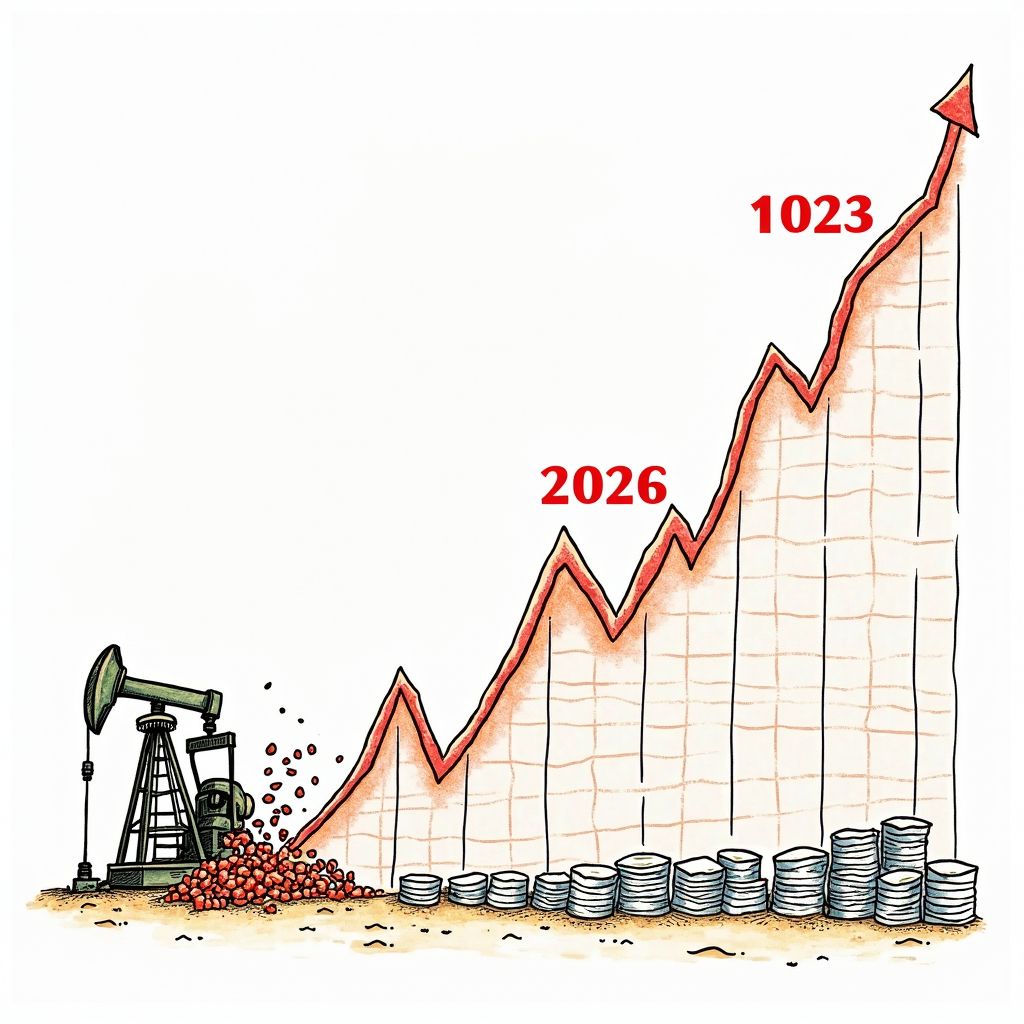
Analysts are using the severe 1973 oil embargo to predict the duration of the 2026 market decline, helping investors prepare for prolonged economic headwinds amid current energy disruptions.
The Architecture of a Modern Supply Shock
The current disruption in global energy markets mirrors the severe structural breaks seen during the 1973 OPEC embargo, presenting business leaders with the reality of a prolonged oil-shock-induced bear market [1][GPT]. By early March 2026, the ongoing war involving the United States, Israel, and Iran has effectively blockaded the Strait of Hormuz, a critical maritime chokepoint that historically facilitates the transit of roughly 20% of the world’s crude oil and liquefied natural gas [3][4]. The immediate physical removal of supply has been staggering: Iraq’s oil output has plummeted by more than 60%, dropping from 4.3 million barrels per day to between 1.7 and 1.8 million barrels per day [4]. Simultaneously, neighboring Kuwait and the United Arab Emirates are scaling back production, while Qatar’s state energy firm has halted operations, effectively removing 20% of global natural gas supplies from the market [3].
Historic Volatility and Market Reversals
This abrupt supply contraction triggered a historic repricing of energy assets, culminating in extreme volatility on Monday, March 9, 2026 [2][3]. In a single trading session, oil prices experienced their largest intraday jump since April 2020, surging nearly 29% as markets panicked over the supply deficit [5]. Both Brent crude and West Texas Intermediate rapidly approached the $120 per barrel threshold [3]. However, markets experienced a dramatic reversal later that same day after U.S. President Donald Trump told CBS that the military excursion was “very complete, pretty much” [2][6]. Following this statement, U.S. crude plunged approximately 5% to settle around $86 per barrel, while Brent dropped over 3.5% to just under $89 per barrel [2]. Despite this sudden downward correction, U.S. crude oil prices have still recorded an overall increase of over 50% since the beginning of 2026, and crude prices jumped 36% in just the first week of March due to Iranian attacks on ships in the Strait of Hormuz [2][4].
The Specter of Global Stagflation
The macroeconomic fallout from this energy deficit extends far beyond trading floors, threatening to push the global economy into a period of stagflation—an economically debilitating scenario characterized by accelerating inflation and stagnating growth [5]. Energy shocks historically trap central banks in a difficult policy dilemma, as the necessity to combat energy-driven inflation directly conflicts with the need to stimulate a slowing economy [5]. For consumers and businesses, the inflationary pressures are already tangible. The average U.S. retail gasoline price reached $3.49 per gallon by March 9, 2026, up from approximately $2.90 a month prior, representing a sharp cost increase of 20.345% for American drivers [2][3]. In Europe and the United Kingdom, natural gas prices have nearly doubled compared to pre-war levels [3].
Cascading Effects on Supply Chains and Equities
These surging input costs are rapidly cascading through industrial supply chains and agricultural sectors [5]. For instance, American farmers are facing potential fertilizer cost increases of $100 per acre as suppliers halt sales amid market uncertainty [3]. Financial markets have reacted aggressively to these shifting growth expectations. During the height of the panic on March 9, 2026, Japan’s Nikkei 225 fell 5.2%, and South Korea’s Kospi index tumbled 6%, triggering a 20-minute trading halt [2]. Although U.S. indices like the S&P 500 and Dow Jones Industrial Average recovered to close higher following President Trump’s remarks—with the Dow rebounding 239 points after an initial 880-point drop—the underlying structural vulnerabilities remain [2]. Portfolios built on traditional growth assumptions are increasingly exposed, prompting a shift toward real assets and commodities [5].
Geopolitical Maneuvering and Prolonged Uncertainty
Addressing what Daniel Yergin, vice chair of S&P Global, described as the “nightmare scenario” and potentially the “biggest disruption in oil production in history,” global leaders have scrambled to stabilize markets [4]. In an attempt to secure maritime trade, President Trump announced a $20 billion reinsurance program for oil tankers and committed U.S. Navy escorts through the Strait of Hormuz [4]. However, logistics experts, including Robin Brooks of the Brookings Institution, caution that protecting such a vast number of commercial vessels is a massive undertaking, requiring only a single successful drone strike by Iran to trigger a massive secondary oil shock [4]. Furthermore, while finance ministers from the Group of Seven and other industrialized nations held emergency video conferences to discuss a coordinated release of strategic petroleum reserves, both European and U.S. officials ultimately decided against releasing stockpiles on March 9 [2][5].
Forecasting the Duration of the Downturn
The ultimate duration of this oil-shock-induced economic downturn heavily depends on the actual cessation of hostilities [alert! ‘The exact end date of the conflict and subsequent market stabilization remains highly uncertain due to conflicting geopolitical perspectives’] [3]. While the White House maintains that the spike in oil prices is a short-term phenomenon that will resolve once military objectives are achieved, energy analysts remain skeptical [2]. Paul Sankey of Sankey Research warned that even if the U.S. and Israel declare operations complete, Tehran may not share that assessment, potentially extending the conflict and market disruptions far beyond official declarations [3]. With JP Morgan analysts forecasting “visible shortages” in Asia and Europe by mid-March 2026, and four of OPEC’s top five producing nations at risk of further disruptions, the global economy must brace for the possibility that these temporary outages could evolve into durable, long-term supply losses [2][3].