Iran Pledges to Halt Regional Attacks Despite US Surrender Demands
Tehran, Saturday, 7 March 2026.
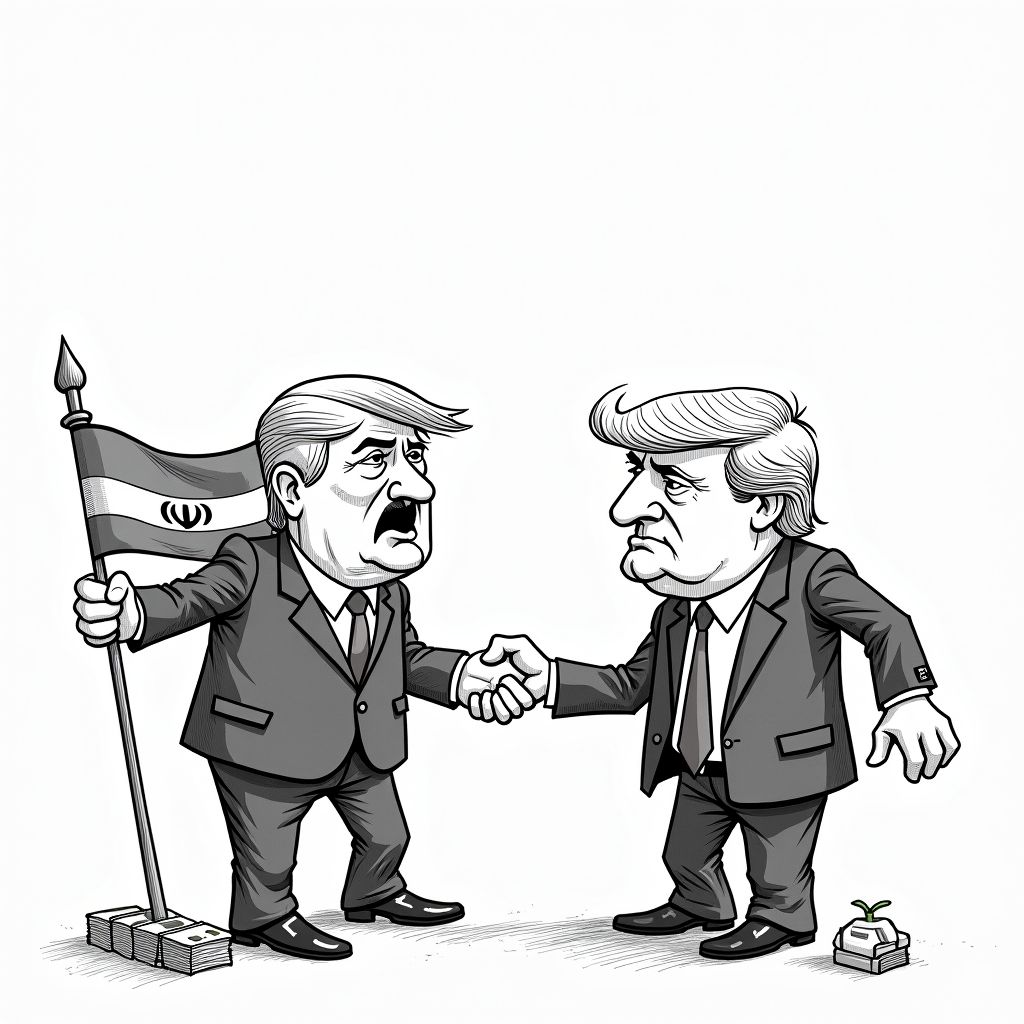
President Pezeshkian apologized for striking Gulf neighbors, blaming internal “miscommunication,” and halted regional attacks. This strategic pivot defies President Trump’s simultaneous demand for Tehran’s unconditional surrender.
Tehran’s Diplomatic Pivot Amidst Internal Chaos
On Saturday, March 7, Iranian President Masoud Pezeshkian issued a rare public apology to Qatar, Bahrain, Saudi Arabia, and the United Arab Emirates regarding recent missile strikes on their territories [1]. In a prerecorded address broadcast by state television, Pezeshkian attributed the hostilities to “miscommunication in the ranks” rather than central command directives [1]. He announced that Iran’s temporary leadership council had explicitly approved a suspension of attacks against neighboring nations, with the strict caveat that fire would only be returned if attacks against Iran originated from those specific territories [1]. This statement appears to be an attempt to insulate regional economic partners from the widening war, even as Tehran maintains a hostile stance toward the United States and Israel.
A Disconnect Between Rhetoric and Reality
However, the operational reality on the ground contradicts Tehran’s diplomatic overtures, suggesting a potential fracturing of the Iranian chain of command. Immediately following the release of Pezeshkian’s statement on Saturday, Qatar’s Defense Ministry reported repelling a fresh missile attack [1]. This incident follows a volatile 24-hour period where Saudi Arabia intercepted two ballistic missiles targeting the Prince Sultan Air Base and a drone east of Riyadh on Friday, March 6 [2]. Similarly, the UAE Defense Ministry confirmed on Friday that its air defense systems were actively engaging ballistic missiles and loitering munitions [2]. Consequently, Qatar’s Interior Ministry has urged residents to stay home due to the elevated security threat, while their Foreign Ministry condemned the strikes as a violation of sovereignty [2].
Washington’s Ultimatum and Military Posture
The diplomatic landscape is further complicated by Washington’s uncompromising stance. President Trump has demanded an “unconditional surrender” from Tehran, a condition President Pezeshkian dismissed on Saturday as a “dream that they should take to their grave” [1]. This rejection follows President Trump’s stark warning on March 6 that specific areas in Iran are under consideration for “complete destruction and certain death” [2]. Underscoring this threat, a U.S. Air Force Rockwell B-1 Lancer bomber arrived at RAF Fairford in the UK on Friday, signaling readiness for sustained operations using British bases for defensive strikes [2]. Domestically, the human cost of the conflict is becoming visible; President Trump is scheduled to attend a dignified transfer at Dover Air Force Base on Saturday to honor returning fallen U.S. service members [2].
Stalled Mediation and Regional Fallout
These escalations mark a significant shift from the diplomatic trajectory observed earlier in the week. As detailed in our previous coverage, Qatar had been leading an urgent mediation effort alongside Russian President Vladimir Putin to shield Gulf nations from the conflict [3]. While the Kremlin previously offered to mediate, the persistence of Iranian strikes on Gulf infrastructure suggests that the “interim leadership” in Tehran may be struggling to enforce the de-escalation promised to mediators. Beyond the Gulf, the conflict’s perimeter is expanding; on Saturday, Israeli airstrikes in Nabi Chit, Lebanon, resulted in 41 fatalities and 40 injuries [2]. Simultaneously, Azerbaijan reported foiling Iranian plots to attack the Baku-Tbilisi-Ceyhan oil pipeline and the Israeli embassy on March 6 [2]. Inside Iran, the regime is grappling with control; a national internet blackout has entered its seventh day as of Saturday, obscuring the full extent of damage from Israeli strikes on regime infrastructure, including a bunker explicitly confirmed to be used by senior officials [2].