Why the Billion-Dollar Artificial Intelligence Boom May Be Built on a Financial Illusion
New York, Monday, 10 August 2026.
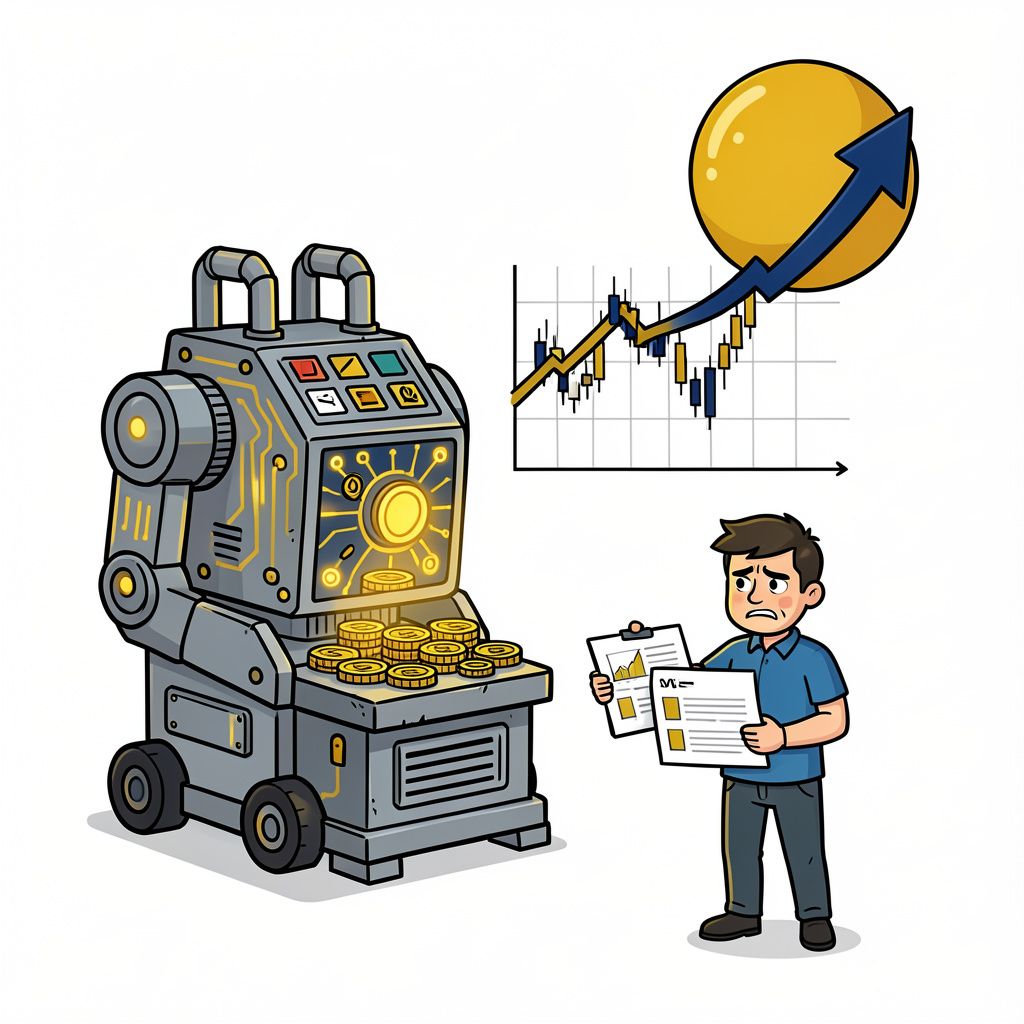
Top economist Torsten Slok warns that artificial intelligence profits are funded by investors rather than customers, as hardware makers reap 41% margins while application developers suffer 59% losses.
The Profit Illusion in Artificial Intelligence
On August 7, 2026, Apollo Global Management Chief Economist Torsten Slok published an analysis warning that corporate artificial intelligence investments are currently supported by investor venture capital and debt rather than customer-generated revenues [1]. Data from Pitchbook and Bloomberg indicates a significant profit disparity in the AI sector, where silicon and equipment firms report a 41% profit margin, while AI models and applications operate at a -59% margin [1]. This dynamic suggests that the most profitable part of the AI value chain depends on the least profitable part continuing to grow revenue or raise capital [1]. Slok continues to identify contradictions in the purported AI boom, arguing that unless AI users companies benefit from AI, they will not buy much from AI companies [2]. The bottom line is that capital can bridge the gap for a while, but not indefinitely, raising questions about whether return on investment will show up for AI’s end customers fast enough to sustain spending [1].
Hyperscaler Debt and Infrastructure Risks
In June 2026, the Bank for International Settlements annual report highlighted concerns regarding the rapid influx of AI investment, specifically from major hyperscalers [1]. As of the end of fiscal 2026 in March 2026, Oracle reported negative cash flow of $23.7 billion, with $130 billion in outstanding debt and $260 billion in lease commitments for unstarted AI infrastructure [1]. A November 2025 Bank of America analysis reported that the five major hyperscalers issued $121 billion in debt in 2025, four times their average annual debt levels from the previous five years [1]. The ratio of Oracle’s outstanding debt to its negative cash flow highlights the scale of leverage involved, calculated as 5.485 [1]. If hyperscalers slow or halt the aggressive pace of capital expenditure deployment, many borrowers across the supply chain could struggle to replace lost revenue and service their debt [1].
Labor Market and Economic Impact
Morgan Stanley economists published research in August 2026 indicating that the unemployment rate in occupations highly exposed to AI is approximately 0.5 percentage points higher than normal [6]. Economists Sania Edlich and Torsten Slok utilized Anthropic usage data to find that wage growth in AI-exposed fields has contracted by 6.7% since 2023, resulting in at least $28 billion in losses for 5.8 million affected workers [6]. The average loss per affected worker can be estimated as 4827.586 [6]. While top earners experienced no significant effect from AI-driven wage suppression, the impact was most severe among lower-income workers [6]. On August 9, 2026, Texas Governor Greg Abbott announced that all new AI data center projects in the state are paused until developers disclose plans regarding power usage and electricity cost reduction [6].
Future Risks and Market Stability
Consensus expects free cash flow for the hyperscalers to more than double over the coming years, but a slower payoff could trigger a broader equity sell-off [4][5]. Token prices continue to decline, and Chinese models are gaining ground in their share of the world’s most-used models [5]. Disappointment in returns could trigger a sudden pullback in financing and turn the capital expenditure boom into a protracted investment bust [1]. Investors are advised to make an independent investigation of the information discussed, as opinions constitute the current judgment as of the date indicated [3]. The broader financial system is changing, with banks providing less than one-fifth of nonfinancial corporate debt, down from half in the 1970s [1].
Sources
- fortune.com
- x.com
- www.apollo.com
- seekingalpha.com
- thedarksideoftheboom.substack.com
- www.politico.com