U.S. Forces Rescue Downed Airman Deep Inside Iranian Territory
Washington, Sunday, 5 April 2026.
U.S. troops successfully extracted a missing airman hunted deep inside Iran. This bold mission escalates Middle Eastern tensions, likely triggering immediate volatility across global energy and defense markets.
A Daring Extraction Behind Enemy Lines
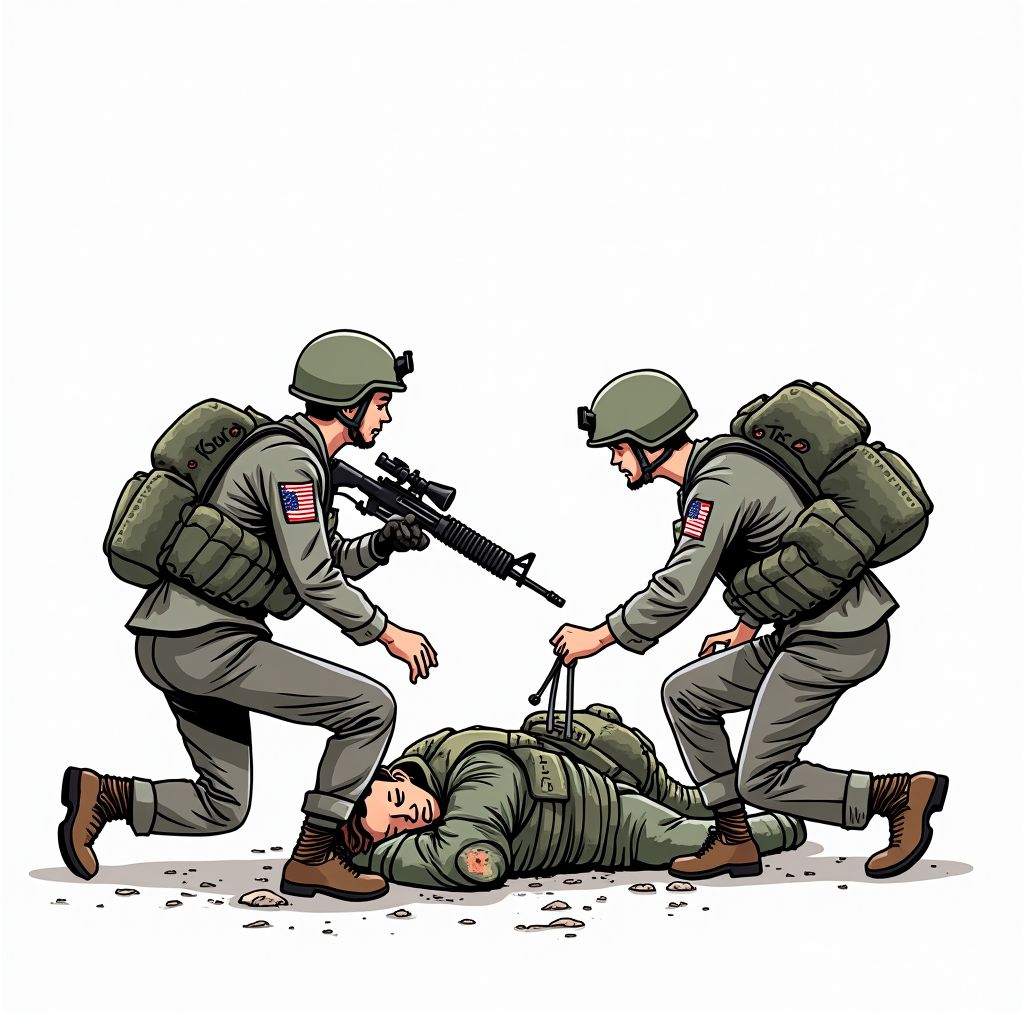
Following the loss of an F-15E Strike Eagle and an A-10 Thunderbolt, alongside damage to rescue helicopters, the desperate race to locate a missing American airman has concluded. On late Saturday, April 4, 2026, U.S. Special Operations forces successfully extracted the weapons system officer from Iranian territory [4]. President Donald Trump confirmed the rescue of the highly respected Colonel on Truth Social, stating the airman sustained injuries but is “safe and sound” [1][3]. The pilot of the downed F-15E had been recovered earlier on Friday, April 3, but the weapons officer remained behind enemy lines for nearly two days [4].
Infrastructure Targeted in Expanding War
As the rescue operation unfolded, the broader conflict initiated on February 28, 2026, intensified drastically [2]. On Saturday, April 4, Israeli military forces launched devastating airstrikes against the Mahshahr Special Petrochemical Economic Zone in southwestern Iran, targeting the Razi, Karoun, and Bandar Imam plants, as well as the Fajr 1 and Fajr 2 utility facilities [4]. The bombardment killed at least five people, injured 170 others, and completely shut down production at the complex [4]. This represents a critical blow to the Iranian economy, as petrochemical goods account for approximately 25% of the nation’s total exports, generating $10 billion to $15 billion annually [4].
Economic Shockwaves Ripple Globally
The cascading military engagements are severely disrupting global energy and commodity markets. U.S. crude oil prices have surged to $112 per barrel [alert! ‘barrel is a non-SI unit of volume’], reaching their highest level since 2022 [6]. This spike in energy costs is already devastating emerging economies; Pakistan was forced to sharply increase fuel prices by 54%, pushing diesel to 520.35 rupees per liter and gasoline to 458.40 rupees per liter [6]. In an effort to force a resolution, President Trump has issued a stark 48-hour ultimatum to Tehran, demanding they agree to a deal and reopen the Strait of Hormuz by Monday, April 6, or face catastrophic military consequences [5].