November Inflation Falls Unexpectedly to 2.7 Percent, Strengthening Case for Rate Cuts
Washington D.C., Friday, 19 December 2025.
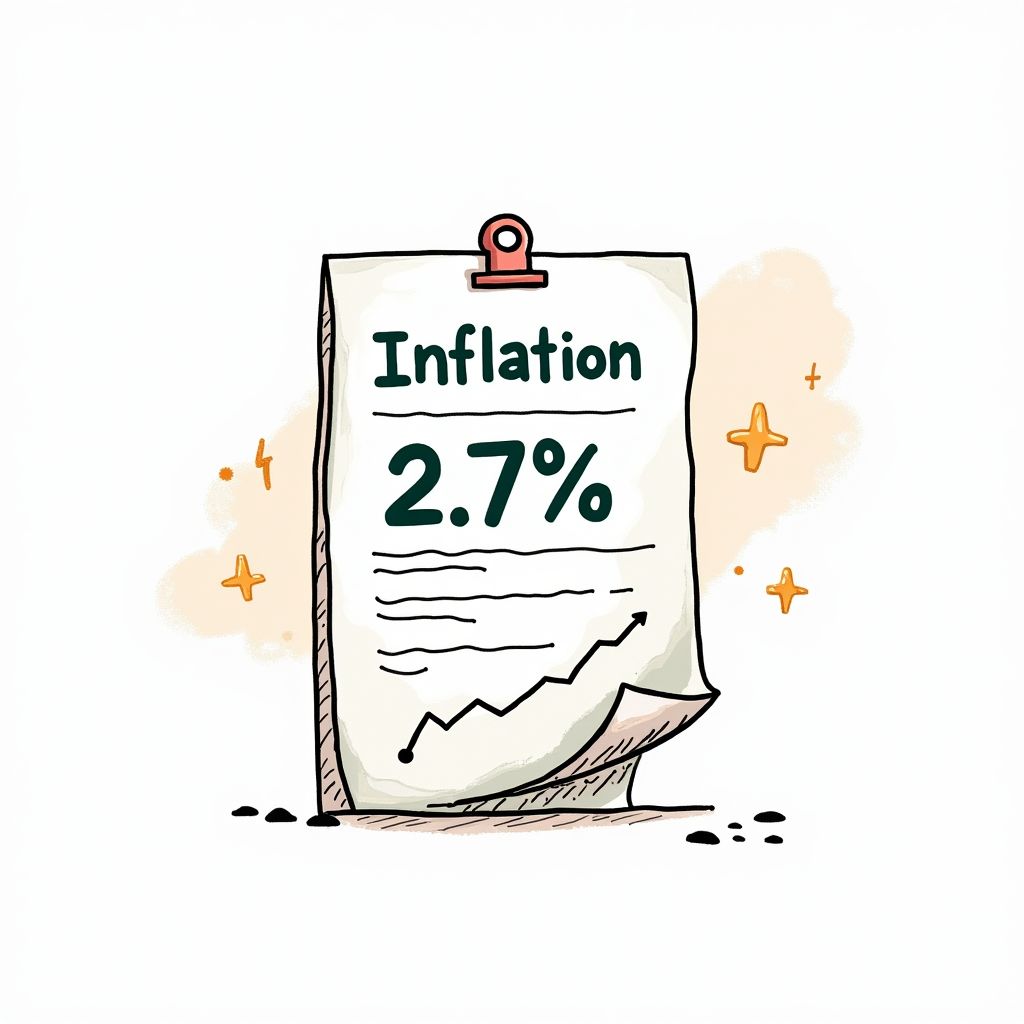
Annual inflation cooled to 2.7 percent, defying the 3.1 percent forecast. However, the recent government shutdown forced the cancellation of October’s report, leaving analysts cautious about data quality.
A Surprise Deceleration Amidst Data Gaps
As detailed in our previous coverage regarding the anticipated data gap, the Bureau of Labor Statistics (BLS) released the November Consumer Price Index (CPI) this week, marking the first significant inflation reading since the 43-day government shutdown ended [1][7]. The results defied consensus expectations: the annual inflation rate decelerated to 2.7 percent, coming in significantly lower than the 3.1 percent forecast by economists [1][2]. Core CPI, which excludes volatile food and energy prices, also cooled to 2.6 percent against a projected 3 percent [2][4]. While the headline numbers suggest a welcome reprieve in price pressures, analysts urge caution, noting that the cancellation of October’s data collection has rendered this report statistically “noisy” and potentially distorted [1][6].
Navigating the Data Void
The government shutdown, which spanned from October 1 to November 12, 2025, forced the BLS to forego the collection of price data for October entirely [1][2]. Consequently, the agency was unable to produce a report for that month, creating a historic gap in the economic record [1]. Gregory Daco, chief economist at EY-Parthenon, highlighted that this lack of continuity resulted in a “downwardly biased perspective of inflation,” suggesting that the technicalities and gaps argue for putting the report aside in favor of waiting for December data [1]. The BLS acknowledged these difficulties, noting that they were unable to retroactively collect the missing October data; for instance, the agency assumed rent changes were around zero for the missing period, a methodological necessity that may have artificially depressed the figures [6].
Market Optimism Meets Monetary Caution
Despite the caveats regarding data integrity, financial markets reacted with optimism to the signs of cooling prices. Following the release, S&P 500 futures ticked higher, and traders adjusted their forecasts for Federal Reserve policy [2][4]. The probability of a rate cut in March 2026 rose to 58.3 percent, up from approximately 53.9 percent just a day prior [2]. This shift reflects a growing sentiment that a “Fed put” is in place to protect the labor market, especially as the unemployment rate climbed to 4.6 percent in November from 4 percent at the start of the year [1][2]. However, New York Federal Reserve President John Williams noted on Friday that data distortions likely lowered the November reading by “probably a tenth or so,” reinforcing the central bank’s “wait-and-see” approach [4][7].
Sector Specifics and Future Outlook
Underlying the headline figures, specific sectors continue to show volatility that complicates the economic picture. Energy prices rose 4.2 percent annually, with fuel oil soaring 11.3 percent and utility gas service up 9.1 percent [3][7]. Food prices also remained elevated, increasing 2.6 percent year-over-year [3][7]. Conversely, airline fares saw a significant drop of 5.4 percent, and apparel prices barely budged with a 0.2 percent increase [6][7]. These mixed signals will be critical as the Federal Reserve approaches its next meeting scheduled for January 27-28, 2026 [7]. Policymakers are expected to look toward the December CPI release in mid-January as a more accurate bellwether before committing to further easing, having already cut rates by 25 basis points for the third consecutive time earlier in November [1][4][7].
Sources
- thehill.com
- www.cnbc.com
- tradingeconomics.com
- www.cbsnews.com
- www.bbc.com
- realeconomy.rsmus.com
- www.foxbusiness.com