From Satire to Strategy: How Presidential Reversals Sparked a $1.5 Trillion Market Rally
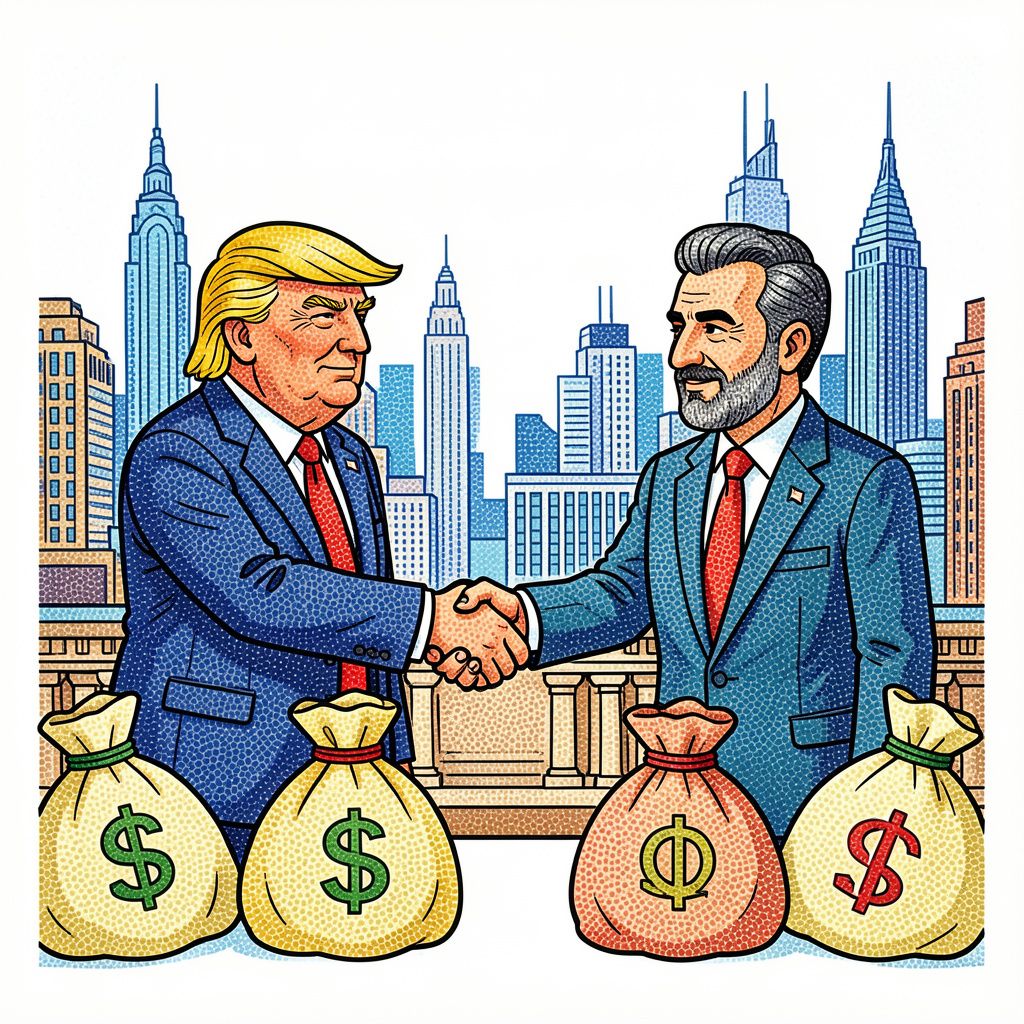
New York, Thursday, 9 April 2026.
Initially a Wall Street joke, the strategy of profiting from President Trump’s policy reversals just fueled a $1.5 trillion market rally following a last-minute ceasefire with Iran.
The Anatomy of a $1.5 Trillion Reversal
On April 7, 2026, President Donald Trump issued a severe ultimatum to Iran, establishing a strict deadline of 20:00 EDT on April 8 to bomb Iranian power plants and bridges if his demands were not met [2][3]. The geopolitical tension had already weighed heavily on the broader economy, with the S&P 500 down 4% since the broader Iran conflict escalated in late February 2026 [2]. However, in a move that has become a hallmark of his administration’s foreign policy, Trump suspended the planned strikes a mere one hour and twenty minutes before the deadline, agreeing to a two-week ceasefire on the condition that Iran reopen the Strait of Hormuz and resume oil flows [2][3].
From Financial Times Column to Market Phenomenon
The TACO acronym was initially coined on May 2, 2025, by Robert Armstrong, a columnist for the Financial Times, to describe the administration’s low tolerance for economic pain and its tendency to reverse aggressive policy threats [3]. The strategy of buying the dip after a presidential threat and selling following the subsequent policy reversal gained significant traction last year during the “Liberation Day” tariff scare [2][3]. During that specific downturn, the S&P 500 plunged nearly 20% before rebounding, while retail investors aggressively capitalized on the TACO trade by pouring a record $3 billion into equities as the index sank 5% [2].
The Energy Sector’s Lingering Hangover
Despite the broad equities rally, the underlying physical economy—particularly the energy sector—faces a much more complex reality. While oil futures plunged on the news of the ceasefire, the logistical nightmare created by the conflict cannot be resolved overnight [4]. Hundreds of oil tankers are currently displaced or in the wrong locations, and significant regional production remains offline [4]. Market analysts warn that restoring normal energy supply chains could take months even in a best-case scenario, indicating that the immediate 16% price drop might not reflect the true tightness of the global oil market [2][4].
A Strategy Teetering on the Edge
As institutional capital increasingly relies on the predictability of the president’s unpredictability, wealth managers are sounding the alarm. Michael Reynolds, vice president of investment strategy at Glenmede Investment Management, acknowledged that it is reasonable for investors to notice and act on this pattern, but cautioned against over-extrapolating the TACO trade [2]. Reynolds warned that if investors blindly trust the TACO premise, they could be “setting themselves up for a nasty surprise” should the administration actually follow through on a major geopolitical or economic threat [2]. This caution is underscored by data from the European Council on Foreign Relations, which showed that as of early 2025, Trump had threatened force 22 times but acted only twice—a historical ratio that currently underpins trillions of dollars in market capitalization [alert! ‘Past performance of policy reversals does not guarantee future de-escalation’][3].