Trump Hikes South Korean Tariffs to 25% Over Stalled Trade Agreement
Washington, Tuesday, 27 January 2026.
Citing legislative inaction on a $350 billion investment pact, Trump raised tariffs on South Korean autos and lumber to 25% Monday, escalating financial risks for importers like Hyundai.
Escalation in Trade Tensions
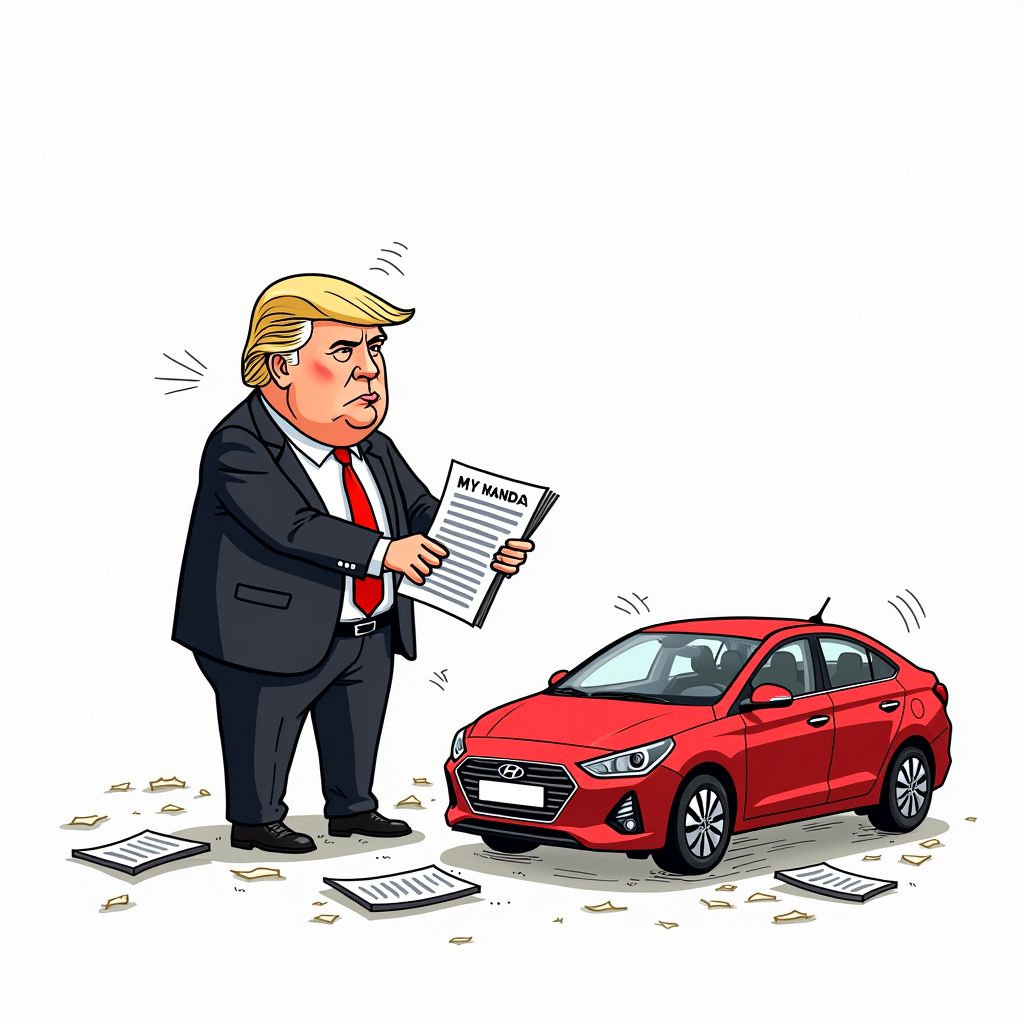
On Monday, January 26, President Donald Trump announced a significant escalation in trade policy, raising tariffs on South Korean imports—specifically targeting automobiles, lumber, and pharmaceuticals—from 15 percent to 25 percent [1][2]. The administration explicitly linked this punitive measure to the South Korean National Assembly’s failure to ratify a bilateral trade framework that had been affirmed in October 2025 [3][5]. In a social media post, the President declared that because the legislature had not enacted the “Historic Trade Agreement,” he was compelled to increase levies on these key sectors, alongside “all other Reciprocal TARIFFS” [4].
Stalled Legislation and Investment Delays
The friction stems from a deadlock over a major investment component of the trade deal originally reached in July 2025 and finalized in October [1][3]. The agreement included a commitment from South Korea to invest $350 billion into strategic sectors within the United States [2]. However, patience in Washington appears to have frayed following comments made on January 16 by South Korea’s finance minister, who indicated that the commencement of this investment was unlikely to occur in the first half of 2026 [2]. President Trump characterized the legislative delay as a failure to live up to the deal, exercising his prerogative to adjust tariff rates in response [1][4].
Economic Fallout and Market Volatility
This tariff hike represents a substantial financial burden for importers, marking a 66.667 percent increase in the duty rate itself. The automotive sector faces particular exposure; Hyundai Motor is currently the largest importer of South Korean vehicles into the United States [1]. The economic footprint of this trade relationship is vast, with the U.S. importing $131.6 billion in goods from South Korea in 2024 [1]. Other estimates place the annual import value near $150 billion, highlighting the scale of commerce now subject to higher taxation [3].
Broader Implications for Global Trade
The abrupt policy shift has reignited concerns regarding the stability of international trade agreements in 2026. Josh Lipsky, chair of international economics at the Atlantic Council, noted that markets were premature in anticipating tariff stability this year [2]. This move is part of a wider pattern of aggressive trade posturing; within the last week alone, the President has also issued threats against Canada and Switzerland [3]. Meanwhile, the legality of such unilateral tariff impositions remains under judicial review, with the U.S. Supreme Court having heard arguments on the matter in November 2025 [1].