Retail Traders Gain Access to Hedge Fund-Level Trading Insights
New York, Wednesday, 17 June 2026.
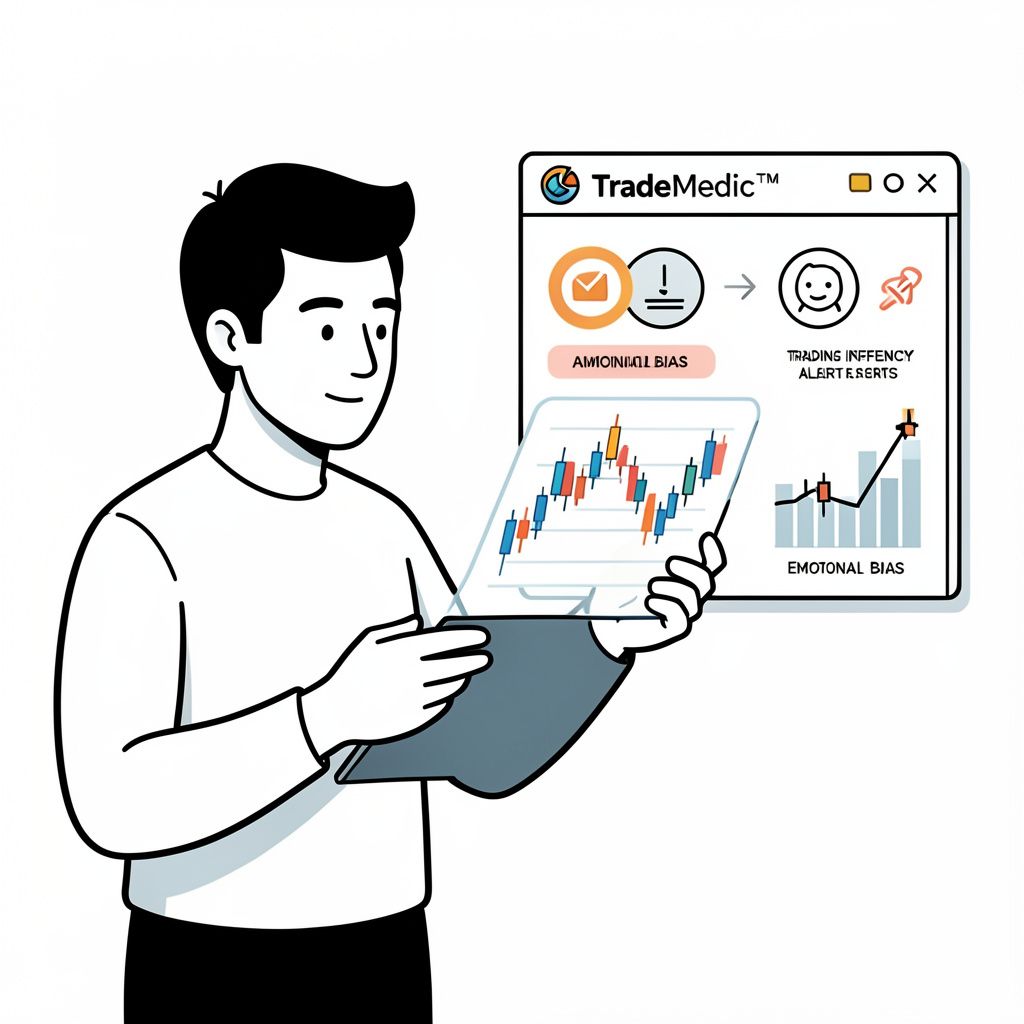
For the first time, retail traders can access institutional-grade behavioral analytics on MT4 and MT5, tools once reserved for hedge funds. TradeMedic™ identifies emotional biases and trading inefficiencies, offering actionable recommendations to optimize strategies—potentially reshaping global trading behaviors.
The Democratization of Trading Analytics
On 17 June 2026, Singapore-based fintech firm Hoc-trade launched TradeMedic™, a behavioral analytics platform previously exclusive to institutional investors, now available to retail traders on MetaTrader 4 (MT4) and MetaTrader 5 (MT5) platforms [1]. This marks the first time retail traders can access hedge fund-level insights into their trading psychology, a development that could significantly alter the retail trading landscape [1]. TradeMedic™ leverages artificial intelligence to analyze raw execution data, identifying emotional biases, decision-making inefficiencies, and behavioral patterns that may undermine trading performance [1]. The platform is broker-agnostic, meaning it can be used across different brokers, exchanges, and asset classes, providing a universal tool for self-improvement in trading [1].
From Institutional Exclusivity to Retail Accessibility
Before this launch, behavioral analytics tools were the preserve of hedge funds, proprietary trading firms, and large financial institutions, which used them to refine execution strategies and manage risk at scale [1][GPT]. TradeMedic™ changes this dynamic by offering retail traders a subscription-based model, democratizing access to clinical-grade diagnostics [1]. The platform addresses common behavioral flaws such as revenge trading—where traders double down after losses in an attempt to recover—premature profit-taking, and risk-aversion, which can lead to missed opportunities [1]. By providing AI-driven corrective ‘treatment’ plans, TradeMedic™ aims to transform these psychological weaknesses into competitive advantages [1].
Technical Integration and Market Implications
TradeMedic™ is designed to function as a standalone diagnostic tool, integrating seamlessly with MT4 and MT5, the world’s most widely used retail trading platforms [1][GPT]. The platform’s portability across brokers and asset classes—including forex, commodities, indices, and cryptocurrencies—ensures that traders are not limited by their choice of broker or market [1]. This flexibility is critical, as retail traders often operate across multiple platforms and instruments [GPT]. The launch comes at a time when retail trading volumes have surged, with individual investors accounting for a growing share of daily market activity [GPT]. For instance, retail traders now represent approximately 20% of U.S. equity trading volume, up from just 10% a decade ago [GPT]. By providing retail traders with institutional-grade tools, TradeMedic™ could further accelerate this trend, narrowing the performance gap between professional and individual investors [1].
The Future of Behavioral Analytics in Trading
The introduction of TradeMedic™ raises important questions about the future of retail trading. As behavioral analytics become more accessible, will retail traders adopt more disciplined strategies, or will the tools themselves introduce new complexities? [alert! ‘Market adoption rates and long-term impact on trading behaviors remain uncertain’] While the platform’s AI-driven recommendations are designed to mitigate emotional biases, the effectiveness of such tools depends on traders’ willingness to act on them [1]. Early adopters may gain a competitive edge, but widespread adoption could lead to a more homogenized trading environment, where behavioral inefficiencies are systematically reduced [GPT]. Additionally, the launch of TradeMedic™ could spur competition in the fintech space, with other providers potentially developing similar tools to cater to the growing demand for retail-focused analytics [1].