Iran Blocks Strait of Hormuz After US-Israel Strikes, Risking Global Energy Crisis
Tehran, Saturday, 28 February 2026.
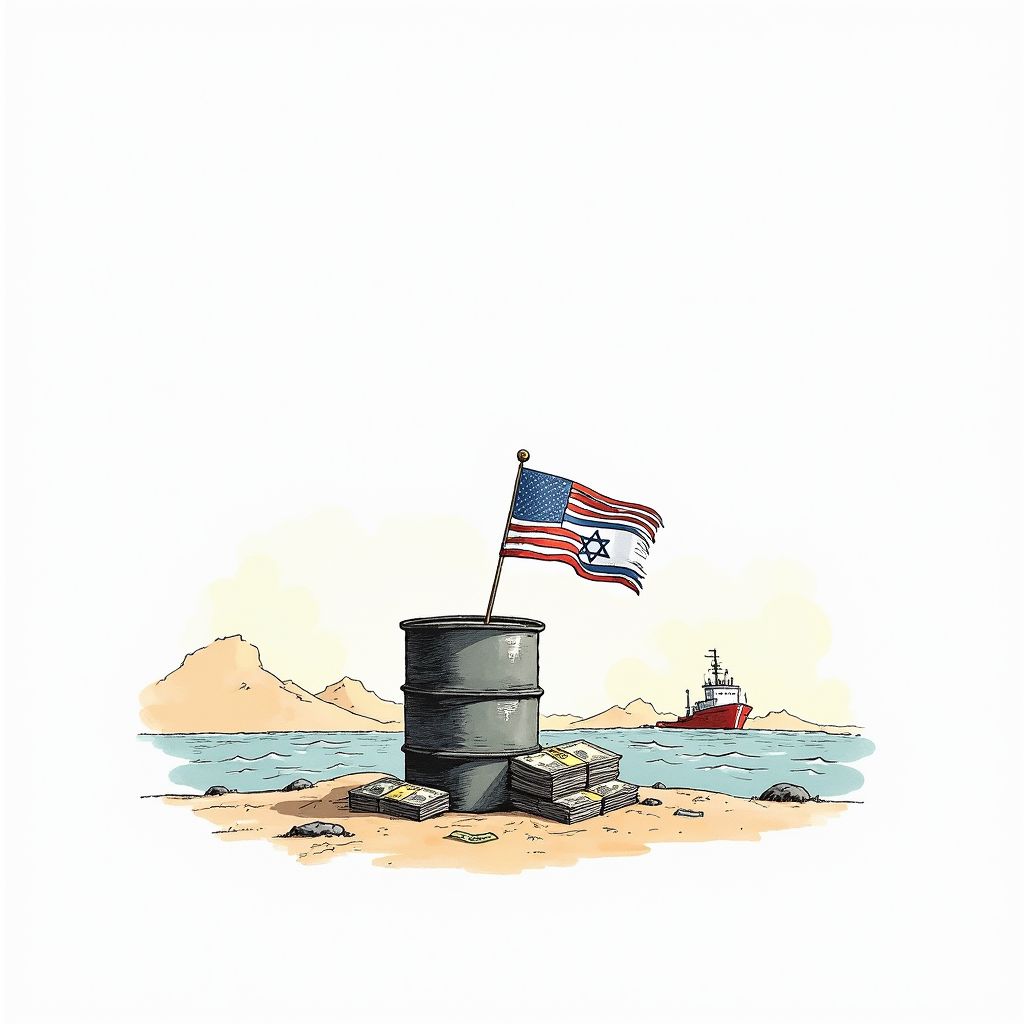
Following joint US-Israeli strikes on February 21, 2026, Iran’s Revolutionary Guards have effectively closed the Strait of Hormuz. This blockade of the world’s most critical oil chokepoint—conveying 20 million barrels daily—threatens to catapult crude prices toward $150 per barrel, severing the primary artery for global energy trade.
Escalation to Economic Siege
This blockade marks a perilous new chapter in the conflict detailed in our previous report, “Iran Targets U.S. Bases Across Five Gulf Nations in Retaliation for Joint Military Operation” [https://wsnext.com/42eb266-Middle-East-conflict-Energy-security/]. While the initial military exchange involved kinetic strikes on February 21, 2026, and subsequent retaliatory barrages [1][3], Tehran has now pivoted to economic warfare. On Saturday, ships navigating the Persian Gulf began receiving high-frequency radio broadcasts from Iran’s Revolutionary Guards, explicitly warning that passage through the strategic waterway is no longer permitted [4]. An official from the European Union’s naval mission, Aspides, confirmed that commercial vessels are reporting VHF transmissions stating “no ship is allowed to pass the Strait of Hormuz” [2]. While Tehran has not yet formally confirmed the order through diplomatic channels, the maritime reality is immediate and severe, effectively freezing movement in a corridor responsible for approximately 20 percent of the world’s total oil consumption [4][5].
Commercial Shipping Grinds to a Halt
The shipping industry has reacted with immediate caution, fearing that the verbal warnings will be enforced with anti-ship missiles or naval mines. According to trading sources, several oil majors and top commodity trading houses have already suspended crude oil and fuel shipments via the strait [5]. Executives at major trading desks have instructed fleets to “stay put for several days” rather than risk transiting the blockade zone [5]. This suspension creates a logistical backlog that threatens to starve Asian markets, which receive more than 80 percent of the oil and gas moving through this corridor [3]. The disruption is further compounded by reports from Bahrain, where the service center of the U.S. Fifth Fleet—the entity responsible for securing these very shipping lanes—was subjected to a missile attack, evidenced by smoke plumes rising from the coastline [5].
Market Volatility and Price Shocks
Global energy markets are bracing for a volatility shock not seen in decades. Prior to this escalation, Brent crude had averaged $66 per barrel for the year [1]. However, analysts now warn that a sustained blockade could drive prices to between $120 and $150 per barrel [1]. This represents a potential price surge of up to 127.273% if the upper estimates are realized. In the immediate term, if signs of de-escalation do not materialize over the weekend, geopolitical analysts predict that risk premiums alone could drive Brent crude up by $10 to $20 per barrel as soon as markets open on Monday [5]. Such a spike would inevitably fuel global inflation and rattle financial markets already on edge from the military confrontation [1].
Strategic Vulnerabilities of the Chokepoint
The leverage Iran holds lies in the unique geography of the Strait of Hormuz. The waterway is a narrow maritime corridor separating Iran from the Arabian Peninsula, stretching 161 kilometers long but narrowing to just 33.8 kilometers at its tightest point [1]. Within this bottleneck, navigation lanes are only 3.2 kilometers wide in each direction, making vessels easy targets for interception or blockage [1]. Data indicates that more than 20 million barrels of crude, condensate, and fuels passed through this strait daily on average last year [1][5]. The reliance on this route is absolute for many producers; while Saudi Arabia and the UAE possess pipelines to bypass the strait, their combined alternative capacity is limited to roughly 2.6 million barrels per day—a fraction of the total volume at risk [3]. Consequently, the U.S. Energy Information Administration notes that very few effective options exist to move oil out of the region if the strait remains closed [3].