Poland Faces Constitutional Crisis After Police Enter Top Court
Warsaw, Friday, 30 October 2026.
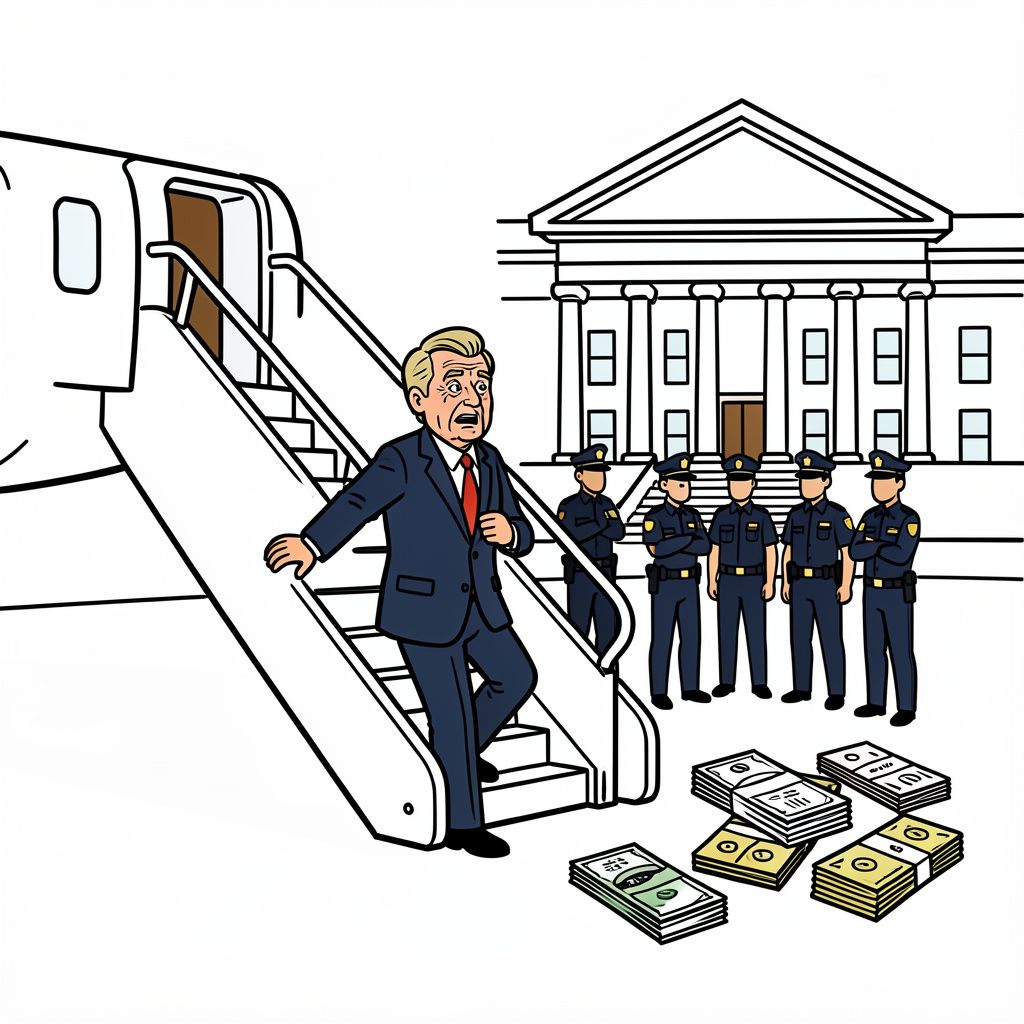
Polish President Karol Nawrocki abruptly aborted his flight to Senegal after police entered the Constitutional Tribunal grounds, following the unprecedented suspension of the court’s leadership amid escalating institutional turmoil.
Unprecedented Police Intervention at Poland’s Constitutional Tribunal
On Friday, 30 October 2026, Polish police forcibly entered the premises of the Constitutional Tribunal (Trybunał Konstytucyjny) in Warsaw, marking a dramatic escalation in a prolonged institutional crisis [1][2][3][5]. The intervention occurred after Judge Anna Korwin-Piotrowska, acting on allegations of threats to life, health, and public order, ordered the suspension of Tribunal President Bogdan Święczkowski and Vice-President Bartłomiej Sochański [2][3][5]. Police deployed officers equipped with batons and tear gas, cordoning off the building while protesters gathered outside, cutting chains and forcing entry to the grounds [5]. The scene unfolded as Jarosław Kaczyński, leader of the opposition Law and Justice (PiS) party, stood outside the Tribunal, denouncing the intervention as a ‘coup’ and a ‘police state’ operation coordinated by the government of Prime Minister Donald Tusk [3][5].
Presidential Abort of Senegal Trip Signals Crisis Depth
The crisis reached a critical juncture when President Karol Nawrocki, en route to Senegal for an official visit, abruptly ordered his plane to return to Warsaw [1][3]. In a statement on X (formerly Twitter), Nawrocki declared, ‘At a moment like this, the President must be in Poland. I am cutting short my flight to Senegal. I am returning,’ underscoring the gravity of the domestic turmoil [1][3]. The decision came as the Constitutional Tribunal’s website announced the suspension of Święczkowski and Sochański, with Korwin-Piotrowska assuming leadership based on seniority [2][5]. This sudden transfer of power, amid police presence inside the Tribunal, has drawn sharp condemnation from allies of the former nationalist government, who argue that the move violates judicial independence and constitutional norms [3][5].
Legal and Political Ramifications of the Crisis
The legal framework governing the Tribunal’s leadership has become a flashpoint. Judge Korwin-Piotrowska’s order suspending Święczkowski and Sochański cites Article 12.4 of the Tribunal’s enabling law, which permits the most senior active judge to assume presidential duties in the event of the president’s inability to act [2][5]. However, critics, including former President Andrzej Duda, argue that this interpretation is legally dubious and amounts to a ‘brutal assault’ on state institutions [5]. The Prosecutor General and Minister of Justice, Waldemar Żurek, has filed multiple requests to lift the immunities of Święczkowski and Sochański, further intensifying the standoff [5]. Meanwhile, Prime Minister Tusk has defended the actions as necessary to restore the rule of law after years of perceived PiS-led lawlessness, stating, ‘Restoring the rule of law is our obligation. After years of PiS lawlessness, this process is difficult, sometimes painful, and requires decisive action. There is no other way’ [5].
Geopolitical and Economic Concerns Mount
The crisis has raised alarms among international investors and corporate leaders about Poland’s judicial independence and institutional stability [alert! ‘No direct evidence of investor reaction found in provided sources’]. Poland’s economic standing, already under scrutiny due to its political instability, could face further pressure if the crisis persists. The Constitutional Tribunal’s role in adjudicating laws and constitutional disputes is critical to investor confidence, particularly in sectors reliant on legal certainty [GPT]. Analysts warn that prolonged institutional paralysis may deter foreign direct investment and strain Poland’s relationships with European partners, particularly amid ongoing debates over judicial reforms within the EU [alert! ‘Indirect inference required due to lack of direct sources’]. As the crisis unfolds, the world watches to see whether Poland can navigate this constitutional quagmire without further erosion of its democratic institutions.