Iran Imposes Internet Blackout as Protests Escalate and US Threatens Intervention
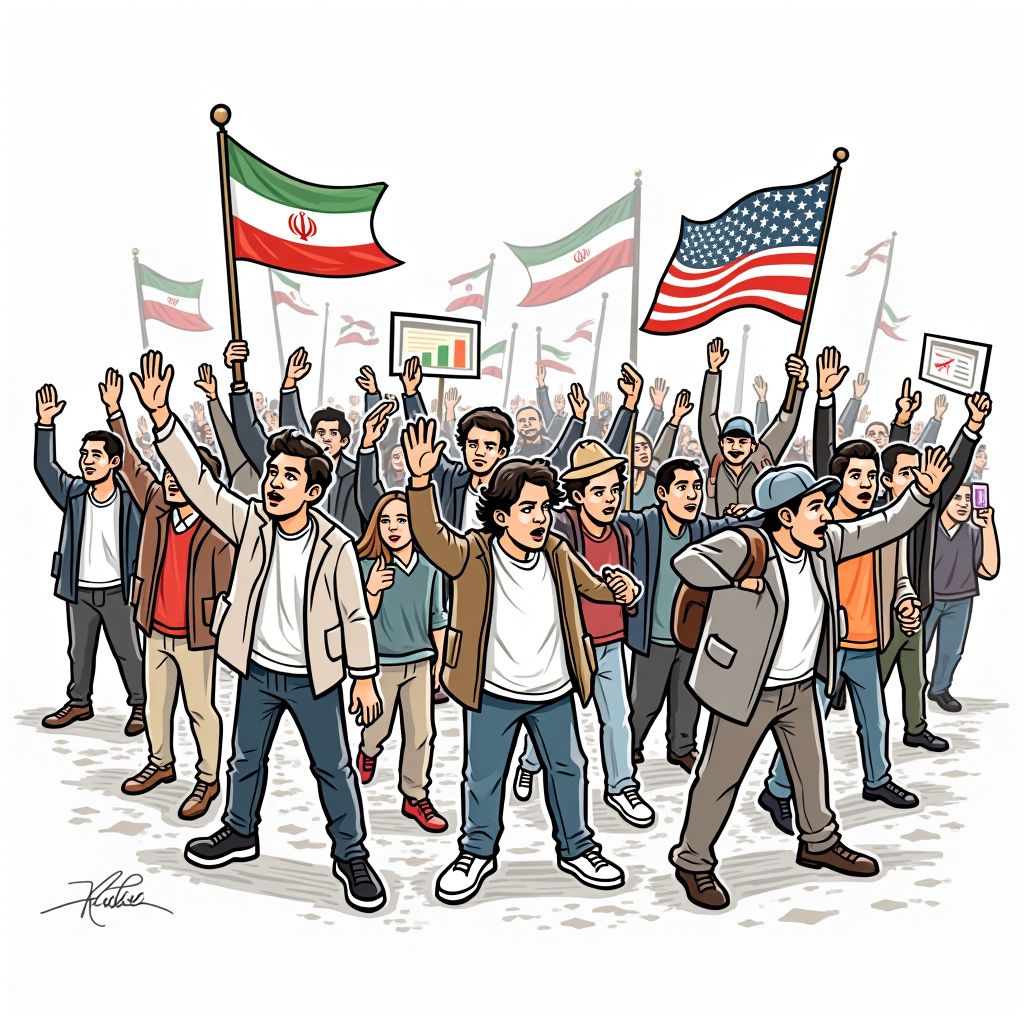
Tehran, Saturday, 10 January 2026.
Amidst a total internet blackout and over 50 reported deaths, Iran’s escalating civil unrest has triggered a severe warning from Washington regarding potential military intervention, significantly heightening regional geopolitical risks.
Iran Imposes Internet Blackout as Protests Escalate and US Threatens Intervention
The situation in Iran has deteriorated rapidly since our last report on President Trump’s endorsement of the protests [9]. As of Saturday, January 10, 2026, the Iranian regime has severed internet access across the country in a bid to conceal a violent crackdown that has already claimed dozens of lives [5][7]. The unrest, which began in late December 2025 over economic grievances, has evolved into a nationwide movement seeking the downfall of the Islamic Republic, prompting Washington to issue direct military threats in response to the regime’s use of lethal force [2][5].
Casualties Mount Under Digital Darkness
Human rights organizations are reporting grim casualty figures following the escalation of violence. As of Friday, January 9, the Norway-based Iran Human Rights Organization confirmed at least 51 deaths, including nine children [4]. Another monitoring group, HRANA, placed the death toll higher at 62, comprising 48 protesters and 14 security personnel [5]. The violence has been exacerbated by a near-total information blackout imposed on January 8 and 9, which has severely limited the flow of information and resulted in the cancellation of international flights, including 17 routes between Dubai and Iran [5][7]. Reports indicate that security forces are utilizing tear gas and live ammunition to disperse crowds in major urban centers like Tehran [6].
Direct Threats and “Moharebeh” Charges
The rhetoric from Tehran has shifted from dismissal to existential threats against demonstrators. On January 9, Supreme Leader Ayatollah Ali Khamenei explicitly accused protesters of being “saboteurs” and “agitators” working on behalf of the United States, stating that President Trump has the “blood of Iranians on his hands” [1]. More alarmingly for the safety of detainees, Tehran’s prosecutor, Ali Salehi, has labeled protesters as “terrorists” and announced they will face charges of “moharebeh” (waging war against God) [1]. This legal classification is a capital offense in the Islamic Republic’s judicial system and often precedes swift executions, signaling the regime’s intent to utilize maximum force to quell the uprising.
International Escalation and Economic Collapse
In Washington, the response has moved beyond political endorsements to direct military warnings. President Trump, having previously stated the U.S. is “locked and loaded” [1], issued a blunt ultimatum on January 9: “You better not start shooting because we’ll start shooting too” [5]. While the regime blames foreign interference, the unrest is deeply rooted in domestic economic collapse. Inflation is now nearing 50%, a stark increase after remaining above 30% for five years, decimating the purchasing power of ordinary Iranians [7]. Furthermore, a severe water crisis has led to rationing and warnings that parts of the capital may need evacuation, compounding the public anger driving the current demonstrations [7].
Sources
- www.rferl.org
- www.youtube.com
- www.theguardian.com
- www.iranintl.com
- www.reuters.com
- understandingwar.org
- nolabels.org
- www.instagram.com
- wsnext.com