Robot Security Takes Center Stage at the 2026 FIFA World Cup
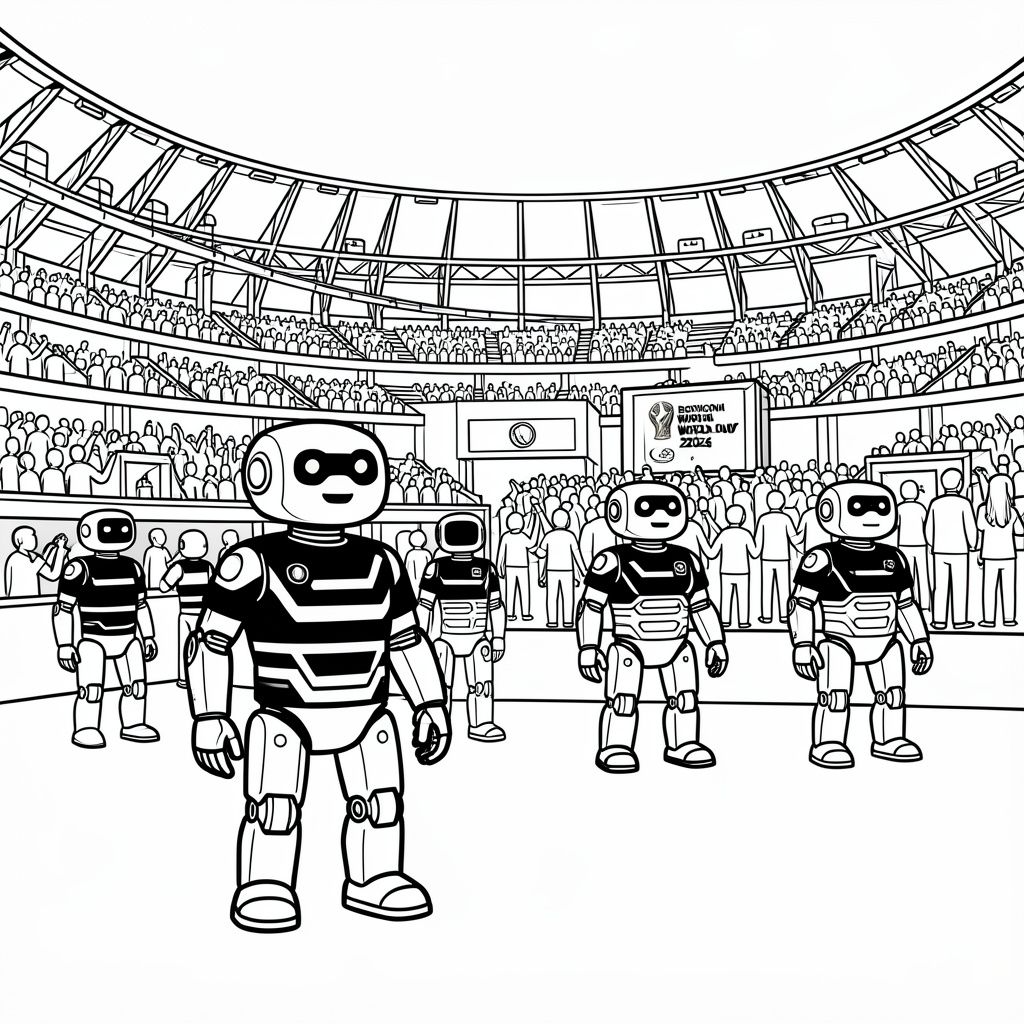
Monterrey, Monday, 15 June 2026.
Hyundai’s deployment of Boston Dynamics’ Spot robots marks a historic first for global sporting events, revolutionizing security with autonomous crowd monitoring and facility inspections across U.S. venues.
Hyundai’s Robotic Security Deployment: A World Cup First
The 2026 FIFA World Cup has entered uncharted territory with Hyundai Motor Group’s deployment of four Boston Dynamics Spot robots for security operations across U.S. venues [1]. This marks the first integration of autonomous quadruped robots in a FIFA World Cup, representing a significant leap in event security technology. The robots are actively patrolling key locations including the International Broadcast Centre in Dallas, Texas, and stadiums in New York and New Jersey [1]. As the official robotics partner of FIFA, Hyundai has mobilized over 1,500 vehicles and robots across the United States, Canada, and Mexico for this tournament [1].
Advanced Capabilities for Modern Security Challenges
The Spot robots are equipped with advanced sensors and AI-driven capabilities to perform three critical functions: crowd monitoring, facility inspection, and real-time surveillance [1]. Their deployment comes as part of a broader $625 million security initiative that also incorporates AI-powered deepfake detection and counter-drone systems [1]. This multi-layered approach reflects the evolving nature of security threats at large-scale international events. The robots’ ability to navigate complex environments autonomously allows them to access areas that might be challenging for human security personnel, particularly in high-traffic zones where crowd density can impede traditional surveillance methods [GPT].
Global Context: Security in an Era of Heightened Risks
The introduction of robotic security at the World Cup occurs against a backdrop of increasing security concerns at major sporting events. Just days before the tournament’s opening match in Mexico City on 11 June 2026, protests erupted near the stadium as demonstrators criticized government spending on the event [5]. Clashes between police and protesters from the National Autonomous University of Mexico (UNAM) highlighted the complex security challenges organizers face [5]. While the opening match between Mexico and South Africa proceeded as scheduled, the unrest underscored the need for innovative security solutions like Hyundai’s robotic deployment [5].
Technological Innovation Meets Public Safety
Hyundai’s integration of Spot robots represents more than just a technological showcase - it signals a fundamental shift in how major events approach public safety. The robots’ deployment at the World Cup serves as a real-world test case for the commercial viability of autonomous security systems. Their performance during the tournament will provide valuable data on the effectiveness of robotic solutions in managing large crowds and detecting potential security threats [1]. This initiative also positions Hyundai at the forefront of the growing robotics-as-a-service market, which analysts project to reach $21.4 billion by 2028 [GPT].
Fan Experience and Cultural Impact
While the primary function of the Spot robots is security, their presence has also become part of the World Cup’s cultural narrative. Social media has been abuzz with reactions to the robotic security guards, with some fans expressing fascination while others have raised questions about privacy implications [2][3][4]. The deployment coincides with high-profile fan activities, including Sir Rod Stewart’s attendance at Scotland’s matches in Boston [3], and Australia’s national team celebrations [4]. This intersection of cutting-edge technology and traditional fan culture creates a unique dynamic for the 2026 tournament.
Historical Parallels and Future Implications
The use of robots at the 2026 World Cup represents a natural evolution in event security, building on previous technological milestones. The tournament’s opening in Mexico City carried particular historical significance, echoing the country’s hosting of the 1970 and 1986 World Cups [5]. The 2026 edition also marks the first time the tournament is being held across three nations - the United States, Canada, and Mexico - presenting unique logistical challenges that robotic solutions may help address [GPT]. As the tournament progresses, the performance of Hyundai’s Spot robots will be closely watched by security experts and event organizers worldwide, potentially setting a new standard for future global sporting events.