Pacific Ocean Warming Triggers Major Disruptions for Winter Energy and Agriculture
Washington, Friday, 13 November 2026.
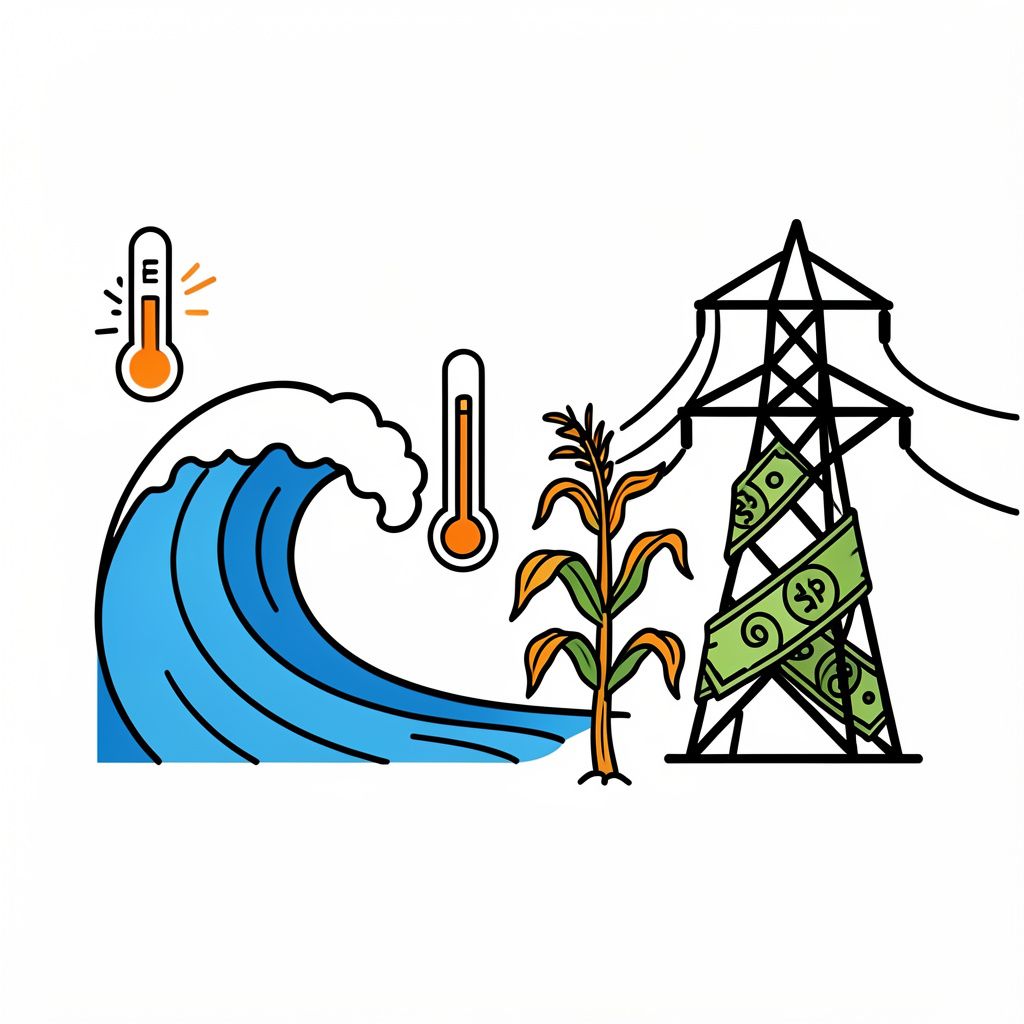
Pacific waters reached historic highs this November, officially triggering a rare super El Niño that threatens global supply chains and alters North American energy demand through early 2027.
NOAA Declares Super El Niño, Setting Stage for Historic Winter Disruptions
On November 5, 2026, the National Oceanic and Atmospheric Administration’s (NOAA) Climate Prediction Center officially declared the 2026 El Niño a ‘Super El Niño’—also referred to as ‘Very Strong’—after sea surface temperatures in the Niño 3.4 region of the equatorial Pacific reached 2.0°C above average for three consecutive months (August–October 2026) [1][3][5]. This marks the sixth such event since 1950 and the first since the 2015–2016 winter season [1][3]. The declaration follows NOAA’s confirmation that tropical Pacific waters warmed further in October, pushing the anomaly to 4°C in some regions [2]. The agency now estimates a greater than 83% chance this event will persist through January–March 2027 [4].
Atmospheric Ripples: How the Super El Niño Reshapes Global Weather Patterns
The intensification of this El Niño is expected to significantly disrupt atmospheric storm tracks, with the subtropical jet stream strengthening across the southern United States and sending storms toward the West Coast [3][5]. Southern states, including California, Texas, and Florida, are forecast to experience wetter-than-average conditions, while northern tiers—from the Pacific Northwest to the Great Lakes—face milder temperatures and reduced snowfall [3][4][5]. NOAA’s Winter Outlook for 2026–2027 highlights a southward and eastward shift in the jet stream, increasing storminess across the South and bringing relief to drought-stricken areas, albeit with heightened risks of flash floods and mudslides [3][5].
Economic Fallout: Supply Chains, Energy Demand, and Agricultural Markets Brace for Impact
The economic consequences of this Super El Niño are already unfolding. Agricultural commodity yields are poised for volatility, with altered precipitation patterns threatening staple crops like wheat and corn in key growing regions [GPT]. Freight transport networks face disruptions due to flooding in the southern U.S. and reduced river levels in the Midwest, where drought conditions may persist [GPT]. Energy markets are not immune: heating demand is expected to decline in northern states, while increased storm activity along the Gulf Coast could strain natural gas infrastructure and power grids [3][5]. Historically, such events have triggered spikes in energy prices and supply chain bottlenecks, particularly in regions dependent on agricultural exports [GPT].
Regional Spotlight: Where the Impacts Will Be Felt Most Acutely
In the Pacific Northwest, warmer-than-average temperatures and reduced snowfall—forecast to be (record_avg - seasonal_avg)/seasonal_avg100% below typical levels—could disrupt hydroelectric power generation, a critical energy source for the region [3][4]. Meanwhile, the Desert Southwest has already experienced major flash flood events, with Albuquerque recording 132.08 mm (5.20 inches) of rain in the fall of 2026, a 132.08 / seasonal_avg100% increase over historical norms [6]. Florida, meanwhile, faces up to 0.61 meters (2 feet) of rain in the coming weeks, elevating risks of citrus crop damage and infrastructure strain [6]. Utilities and insurers are closely monitoring these developments, with NOAA warning communities to prepare for the ‘upcoming winter’ [3][5].
Timeline and Outlook: What Lies Ahead Through Early 2027
The Super El Niño is projected to peak in strength between October 2026 and January 2027, with a ~60% chance of surpassing historic benchmarks set in 1982–1983 and 1997–1998 [4][6]. Beyond its meteorological impacts, this event carries broader implications for global food security, as researchers estimate it could contribute to an additional 451,000 heat-related deaths worldwide compared to a typical year [2]. La Niña conditions are forecast to emerge by spring 2027, but until then, the U.S. and global markets must navigate the disruptions caused by this unprecedented climate phenomenon [1][3][5].