Rising Local and Federal Barriers Stifle U.S. Wind and Solar Expansion
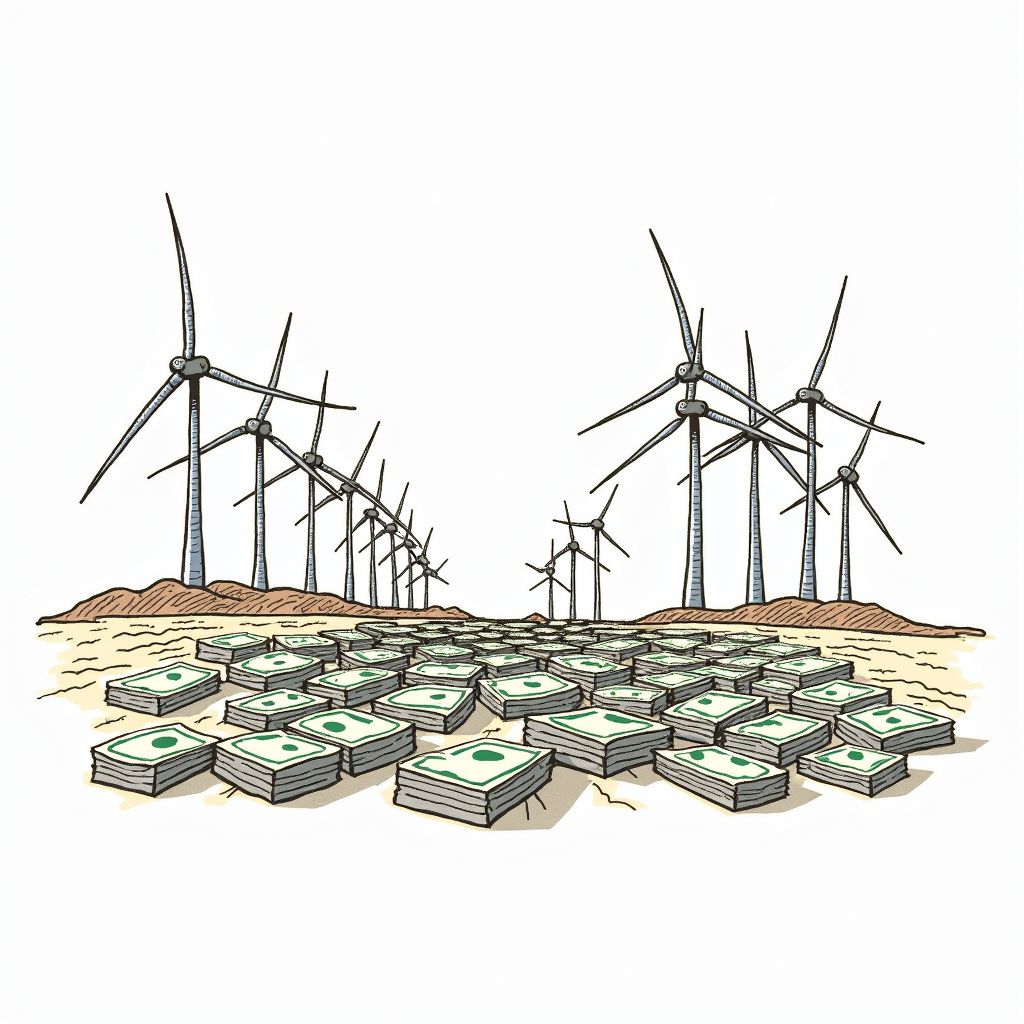
Washington D.C., Saturday, 21 February 2026.
A 2026 investigation reveals that 24% of U.S. counties now restrict renewable energy projects—up from 15% in 2023—creating significant headwinds for developers despite proven local economic benefits.
Federal Policy Shifts and Local Resistance
The landscape for renewable energy development in the United States has shifted dramatically following the inauguration of President Trump in January 2025. A USA TODAY investigation released on February 20, 2026, identifies that at least 24% of U.S. counties have now implemented restrictions on wind or solar energy construction [1]. This represents a sharp increase from 2023, when approximately 15% of counties had limited such projects [1]. The data indicates that by the end of 2025, impediments existed in at least 755 counties, effectively rendering 38% of the country’s land unfeasible for wind development and 33% for solar projects due to a combination of local ordinances and federal restrictions [2]. This surge in local barriers coincides with explicit federal directives; in September 2025, President Trump addressed the United Nations General Assembly, warning nations to abandon the “green energy scam” [1].
Regulatory Hurdles from Washington
Beyond local zoning disputes, the Trump administration has utilized executive power to stall renewable infrastructure. On January 20, 2025, the President issued the “Wind Memo,” which directed federal agencies to halt new approvals and leases for wind projects pending a comprehensive review [4]. Concurrently, the Department of the Interior (DOI) issued Order 3415, suspending authority for renewable energy authorizations [4]. The administration’s approach extended to environmental permitting; the U.S. Fish and Wildlife Service (USFWS) ceased issuing “eagle take” general permits—necessary for wind facilities to operate legally under wildlife protection laws—from early 2025 until mid-January 2026 [4]. While the USFWS resumed permitting in late January 2026, issuing 34 permits in a two-week window, the year-long pause created a significant bottleneck for developers [4].
The Mechanics of Restriction
At the state and local levels, opponents of renewable energy are employing increasingly sophisticated legislative tools. In Ohio, Senate Bill 294 proposes defining a “reliable energy source” as one with a minimum capacity factor of 50% [3]. This metric would effectively ban utility-scale wind and solar projects, which operated at capacity factors of 34.3% and 23.2% respectively in 2024, while favoring nuclear power (90.8%) and combined-cycle natural gas (60.5%) [3]. This legislative strategy appears to be coordinated; the wording in the Ohio bill mirrors model legislation from the American Legislative Exchange Council (ALEC) finalized in September 2024, with similar bills appearing in Utah, Louisiana, and Arizona [3]. Furthermore, local governments are enacting “creative” bans, such as noise limits set lower than the sound of the wind itself or height restrictions of 152.4 meters or less, which serve as de facto prohibitions on modern turbines [6].
Economic Trade-offs in Rural America
The tightening regulatory environment clashes with the economic realities of rural communities that have historically benefited from renewable energy revenue. In Ford County, Kansas, wind turbines have funded improvements to roads, schools, and housing since 2006 [1]. Deloyce McKee, a 76-year-old farmer, describes wind energy as “another crop” that allows agricultural operations to continue alongside energy generation [1]. The economic stakes are high; the Pioneer Creek Wind project, currently under construction, is projected to generate $36 million in landowner payments and $84 million in county tax revenue over its lifespan [1]. Despite these figures, the political narrative remains hostile. In January 2026, President Trump referred to wind turbines as “losers,” falsely claiming that China has not built any, despite data showing that wind and solar accounted for 18% of China’s electricity generation in 2024 [1].
Legal Battles and Future Outlook
The conflict between federal policy and energy developers has moved to the courts. In December 2025, a federal district court vacated the administration’s Wind Order, declaring it unlawful following a lawsuit by over a dozen states [4]. However, the administration remains defiant; on February 17, 2026, the DOI filed a notice of appeal to challenge the court’s decision [4]. Meanwhile, the U.S. energy sector faces a potential loss of global competitiveness. Julio Friedmann, an expert at Carbon Direct, warns that these restrictive actions may strengthen China’s position as a global leader in energy while the U.S. surrenders its advantages [1]. Despite the political headwinds, the economic momentum of renewables persists, with the cost to build and operate solar plants having decreased by 8484% since 2009 [2].
Sources
- www.usatoday.com
- www.usatoday.com
- insideclimatenews.org
- www.lexology.com
- www.usatoday.com
- www.usatoday.com