United States and United Arab Emirates Cut Economic Lifelines to Iran
Tehran, Wednesday, 19 August 2026.
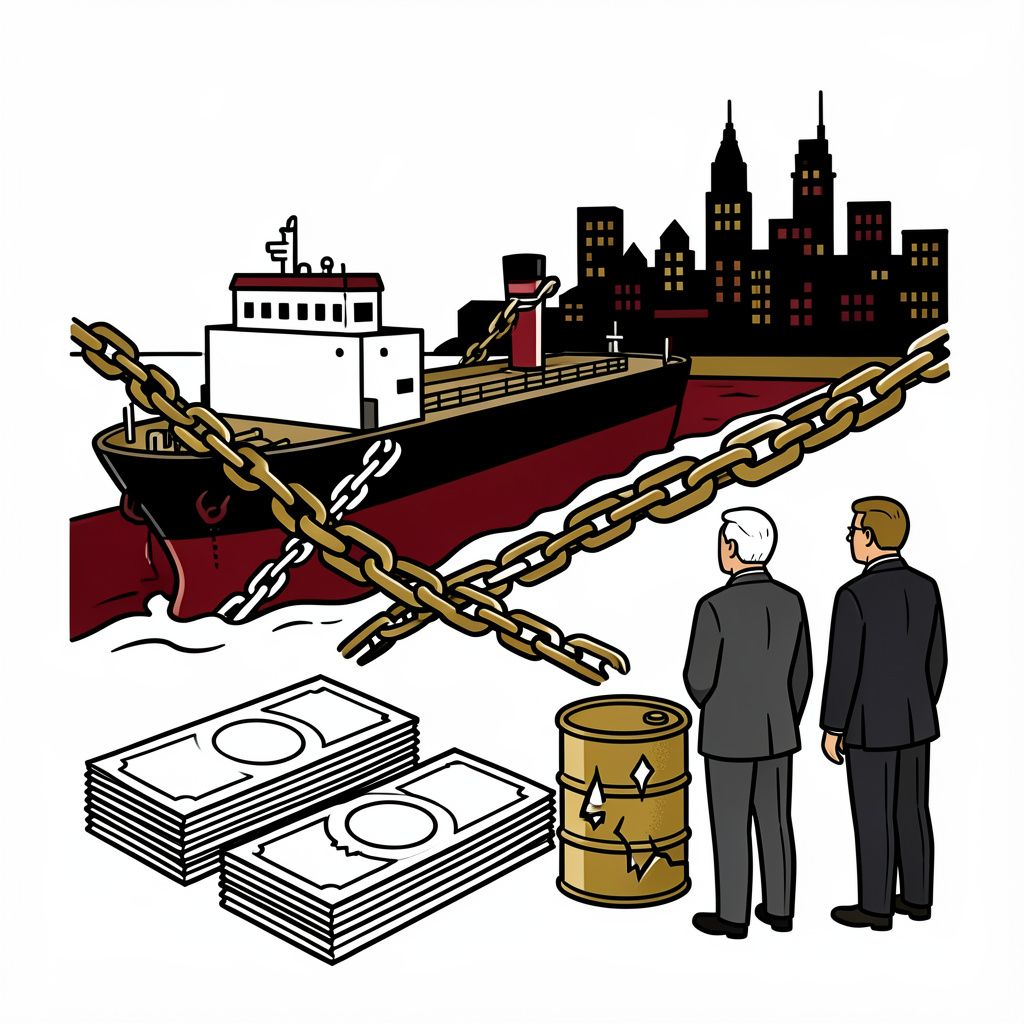
Following the August 2026 expiration of a key diplomatic memorandum of understanding, the United States is deploying unprecedented economic sanctions alongside a naval blockade targeting Iran’s primary oil revenues. Compounding Tehran’s isolation, the United Arab Emirates enacted an indefinite trade embargo on August 18, halting all commercial and financial transactions. This decision abruptly severs access to Dubai, which historically supplied approximately one-third of all Iranian imports and served as a critical hub for mitigating foreign restrictions. Domestically, Iran faces a daily deficit of 20 million liters of gasoline and worsening power shortages. Rather than capitulating to Western pressure, Iranian officials signal a potential shift toward military escalation in the Strait of Hormuz to force an end to the blockade.
A Rapidly Escalating Maritime and Economic Standoff
To understand the current crisis, one must look back to the rising tensions that began when Iran threatened offensive military strikes in the vital shipping routes of the Strait of Hormuz following the expiration of a previous diplomatic agreement [7]. Since February 2026, the United States has enforced a strict naval blockade alongside financial, energy, and maritime penalties [5]. This campaign has severely choked off maritime traffic through the Strait of Hormuz, reducing it by more than 90 percent compared to pre-war levels [2]. The expiration of the 60-day U.S.-Iran Memorandum of Understanding (MoU) on August 10, 2026, has further aggravated this dynamic, as President Donald Trump opted not to seek an extension and resumed aggressive sanctions designations [3].
The UAE’s Indefinite Trade Embargo
The geopolitical situation escalated further on August 18, 2026, when the United Arab Emirates announced an indefinite trade embargo on Iran, halting all commercial exchanges and financial transactions [6]. This drastic measure followed the UAE Ministry of Defence’s detection of two Iranian ballistic missiles targeting maritime traffic on August 17, 2026 [6]. The incident represents the first such strike targeting the UAE since May 2026, and follows accusations on August 14, 2026, that Iran attacked two ADNOC vessels [6]. Retired U.S. General Mark Kimmitt emphasized that this embargo could hit Tehran harder than Washington’s sanctions, given that Dubai serves as Iran’s largest trading partner, supplying approximately 33.333 percent of its annual imports [6].
Severe Domestic Shortages and Public Vulnerabilities
Domestically, the combined impact of the physical blockade and sanctions has pushed Iran’s economy to the brink. The country currently suffers from a severe gasoline deficit of approximately 20 million liters per day [3]. This deficit is highly threatening to the regime, as past fuel price hikes have sparked some of the largest rounds of public protests in Iran [3]. Furthermore, pre-existing electricity, gas, and water imbalances are forcing the government to implement deeper rationing and temporary industrial shutdowns to maintain household utility supplies [1]. Even before the current conflict, the government had reduced subsidized petrol quotas for personal vehicles following a price hike in December 2025 [1].
Washington’s ‘Maximum Pressure on Steroids’
The Trump administration’s strategy, termed a ‘maximum pressure campaign on steroids,’ directly targets the core of Iran’s financial survival [3]. Oil exports historically represent 40% to 60% of Iran’s GDP and fund 40% to 50% of the government’s budget for operations and salaries [3]. On August 11, 2026, Treasury Secretary Scott Bessent warned of ‘never before seen’ economic isolation measures, including secondary sanctions on foreign countries purchasing Iranian oil [2][5]. Specifically, the U.S. is targeting Chinese independent ‘teapot’ refineries, which purchase over 80% of Iran’s shipped oil, and is considering secondary sanctions on two major unnamed Chinese banks processing these transactions [5].
Tehran’s Resistance and Potential for Escalation
Despite the immense pressure, history suggests that Tehran is unlikely to capitulate. Since the U.S. and Israel initiated military operations six months ago on February 17, 2026, Iran’s economy has shown surprising resilience by letting market prices and exchange rates float rather than enforcing rigid price controls [4]. However, Middle East economics professor Mohammad Reza Farzanegan notes that Tehran now faces a critical dilemma: accept terms dictated by the Trump administration or escalate armed conflict to break the blockade [1]. Iranian Parliament Speaker Mohammad Bagher Ghalibaf has already declared that the Strait of Hormuz will remain closed until the U.S. fulfills its MoU commitments, indicating that military escalation remains Tehran’s preferred recourse [1].
Sources
- www.aljazeera.com
- www.nytimes.com
- abcnews4.com
- responsiblestatecraft.org
- www.the-independent.com
- www.aljazeera.com
- wsnext.com