SpaceX Files for Record-Breaking Public Offering Targeting a Two Trillion Dollar Valuation
Hawthorne, Wednesday, 20 May 2026.
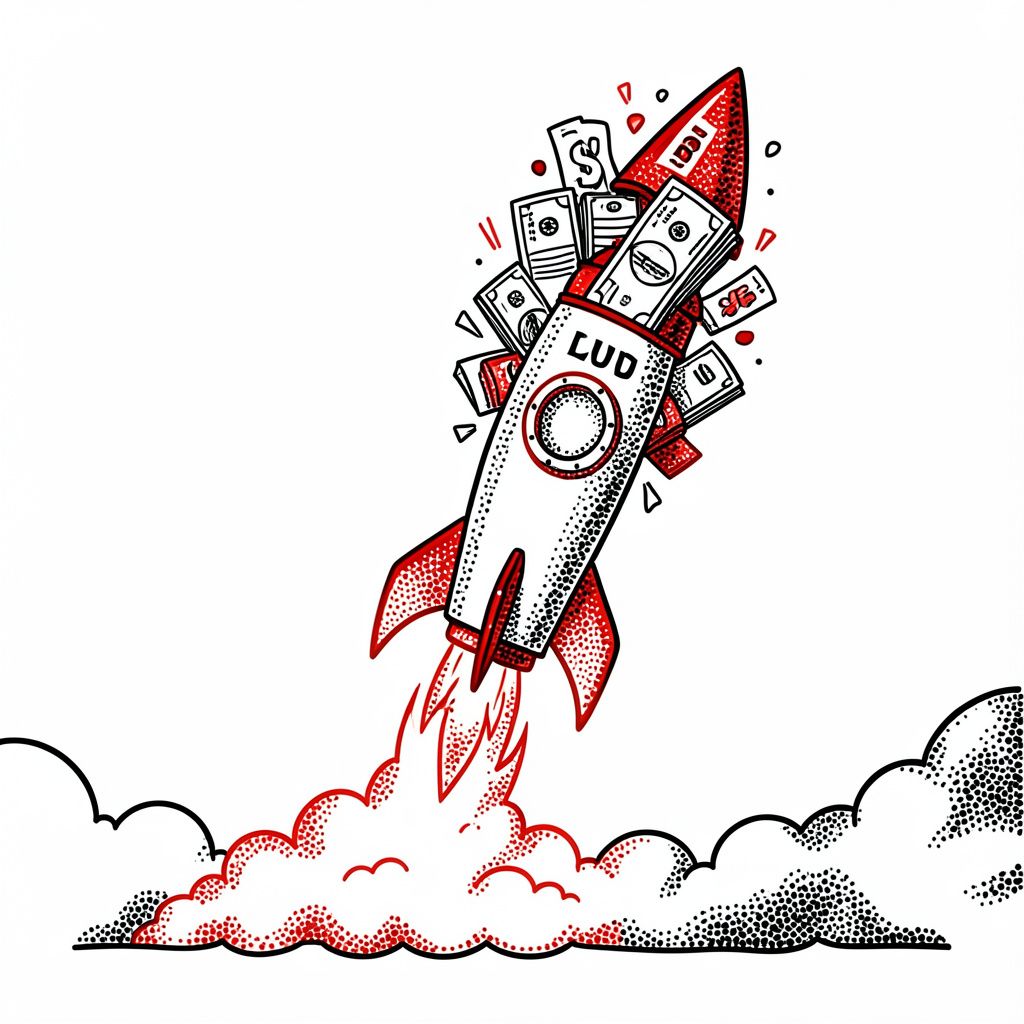
SpaceX has filed for the largest public offering in history, targeting a staggering $2 trillion valuation that could officially make CEO Elon Musk the world’s first trillionaire.
Shattering Capital Market Records
On late Wednesday afternoon, May 20, 2026, the S-1 registration statement for SpaceX officially arrived at the Securities and Exchange Commission [1]. The aerospace giant plans to list its shares on the Nasdaq exchange under the ticker symbol SPCX [3]. The company is targeting a massive capital raise of up to $75 billion, a figure that would easily eclipse the previous initial public offering records set by Saudi Aramco’s $29.4 billion debut in 2020 and Alibaba’s $25 billion offering [2][4]. The highly anticipated public market debut is expected to occur around June 12, 2026, following a comprehensive marketing period [3][5].
The proposed offering aims for a staggering valuation of over $2 trillion [2][4]. This unprecedented market capitalization has profound implications for CEO Elon Musk, whose net worth sat at $667 billion as of mid-May 2026 [3]. A successful listing at this target valuation could propel Musk to become the world’s first trillionaire [3]. Underscoring the immense scale of the enterprise’s ambitions, the draft prospectus prominently features a photograph of the company’s Starship rocket during the early stages of liftoff [7].
Financial Realities Behind the Rockets
The newly public S-1 document provides Wall Street with a highly anticipated look into SpaceX’s financial fundamentals. In 2025, the company generated $18.6 billion in revenue, representing a robust 33% increase from the previous year [3]. However, profitability remains a challenge in the near term; the Wednesday filing revealed a net loss of $4.3 billion for the three months ended March 31, 2026 [3]. The company’s primary revenue streams include subscriptions to its Starlink satellite internet service, commercial rocket launches, and national security contracts [5].
Operational metrics highlight the company’s aggressive growth trajectory. SpaceX completed 165 orbital launches in 2025 alone [4]. Meanwhile, its Starlink division has emerged as a critical financial engine. As of May 13, 2026, Starlink boasted 10.3 million active subscribers, marking a 106% increase from the 5 million subscribers recorded a year prior [3]. Analysts note that this rapidly expanding telecommunications network serves as the primary revenue layer making the broader space exploration vision viable [4].
A Lucrative Pivot to Artificial Intelligence
Beyond traditional aerospace operations, the S-1 highlights SpaceX’s aggressive expansion into artificial intelligence infrastructure. Following the acquisition of Musk’s AI startup, xAI, in February 2026, the company has begun monetizing its massive computational capabilities [3][4]. The prospectus reveals a major agreement with AI firm Anthropic, which is paying SpaceX $1.25 billion monthly to utilize its Colossus I and Colossus II compute clusters [6]. This lucrative contract is slated to run until May 2029, providing a highly predictable and substantial stream of revenue [6].
This strategic pivot aligns with Musk’s stated goal from January 2026 to launch 100 gigawatts of AI compute capacity annually within the next three to four years [4]. While this ambitious plan has drawn criticism—with OpenAI CEO Sam Altman previously labeling it “ridiculous”—it represents a massive potential growth vector [4]. However, some market analysts express caution regarding the overarching financial picture; David Wagner, head of equity at Aptus Capital Advisors, noted that the $2 trillion valuation reflects future assumptions rather than current fundamentals [4].
The Path Forward for Investors
As the expected June 2026 IPO date approaches, the investor landscape for SpaceX is coming into clearer focus. The company’s largest outside investor is Google, with additional backing from prominent venture capital firms including Sequoia, Andreessen Horowitz (a16z), Valor Equity Partners, Gigafund, and Future Ventures [5]. Furthermore, the offering will not be restricted to institutional giants; SpaceX intends to make stock available to retail investors through consumer platforms such as Schwab, Fidelity, Robinhood, SoFi, and E*Trade [3].
The impending market debut represents a pivotal moment not just for SpaceX, but for the broader technology and aerospace sectors [alert! ‘Exact market impact remains speculative until trading begins’]. As the company transitions into the public sphere, investors will be closely monitoring how it balances the capital-intensive nature of deep space exploration with the lucrative, high-margin opportunities in satellite internet and AI infrastructure [GPT].
Sources
- www.barrons.com
- www.bloomberg.com
- www.nbcnews.com
- www.businessinsider.com
- www.wsj.com
- www.marketwatch.com
- www.theinformation.com