Trump Rings Wall Street Opening Bells From the Oval Office to Launch Children's Investment Program
Washington, Tuesday, 7 July 2026.
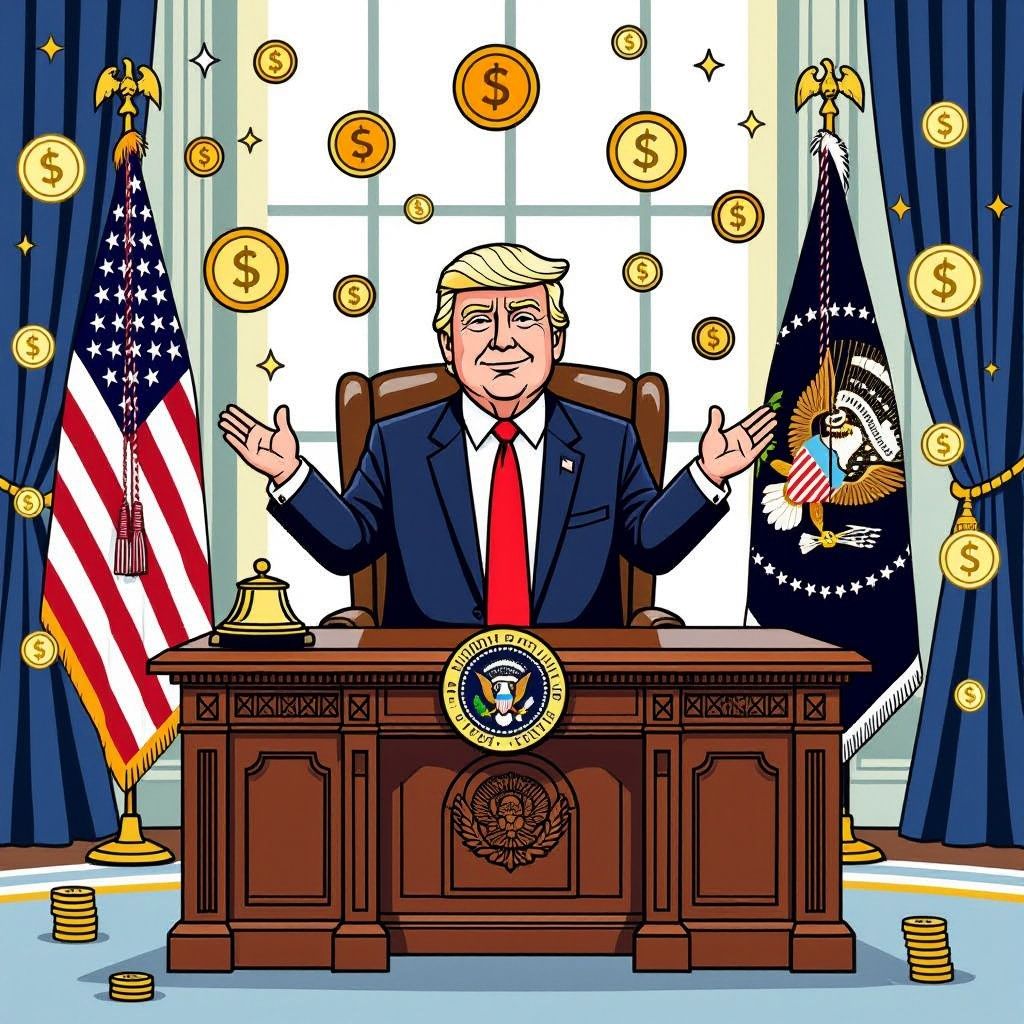
President Trump made history by ringing the NYSE and Nasdaq opening bells from the Oval Office to launch a controversial government-backed investment program for children.
A High-Stakes Oval Office Ceremony
On Monday, July 6, 2026, Republican President Donald Trump took the unprecedented step of symbolically ringing the opening bells for both the New York Stock Exchange (NYSE) and Nasdaq directly from the Oval Office [2][3]. This highly televised event served as a dual-purpose platform: it sought to tie his administration’s policies directly to Wall Street’s performance and officially launched “Trump accounts,” a government-backed investment program designed for children under the age of 18 [1][2][3]. By bringing these traditional financial ceremonies into the heart of the White House, the administration made a clear bid to highlight market gains, even as it navigates persistent economic challenges like rising inflation and lukewarm public approval of the president’s economic leadership [1].
Market Projections and Political Strategy
During the ceremony, President Trump projected immense optimism for the future of the financial markets, declaring that the stock market “is going to go through the roof” [2]. This bold projection comes at a time of renewed market momentum, as traders returned from the Fourth of July holiday weekend to find technology stocks climbing and pushing major indexes upward [3]. By aligning his executive image so closely with daily market fluctuations, Trump is employing a high-stakes political strategy that seeks to turn stock market indices into a direct report card of his presidency’s success [1].
A New Financial Vehicle for Millions of Families
At the core of Monday’s White House event was the official implementation of “Trump accounts,” a newly launched, government-backed investment program aimed at fostering early-stage wealth accumulation [2][3]. The policy is designed to provide special investment accounts for children under the age of 18, offering a direct pipeline to the U.S. equities market [2]. According to administration projections, the program is set to give more than 6 million children and their families a structured pathway to invest in the U.S. stock market [2].
The Debate Over Branding and Public Policy
While the administration touts the program as a revolutionary tool for financial inclusion and long-term savings, the policy’s rollout has also drawn sharp scrutiny from political opponents and ethics watchdogs [GPT]. Critics argue that branding a government-backed initiative with the president’s own surname blurs the lines between official public policy, personal branding, and private business interests [GPT]. This controversial integration of executive power and retail investing marks a significant departure from traditional federal savings initiatives, such as 529 college savings plans or Treasury bonds [GPT].
Market Momentum and Economic Skepticism
The timing of the Oval Office bell-ringing coincided with a positive turn in market sentiment, driven largely by a post-holiday surge [3]. As Wall Street reopened on Monday following the Fourth of July weekend, tech stocks led a broader market climb, adding fresh momentum to major indices [3]. Financial analysts, including Stash Graham of Graham Capital Wealth Management, noted that the return of traders after the holiday weekend helped sustain the upward trajectory, providing a favorable backdrop for the president’s high-profile announcement [3].
The Cost-of-Living Disconnect
However, the administration’s celebratory tone stands in stark contrast to broader macroeconomic pressures and public sentiment [1]. Despite the strong performance of major stock indexes, the American public remains highly concerned about rising inflation, which continues to erode household purchasing power [1]. Consequently, public approval of President Trump’s economic leadership has remained weak, as many everyday consumers feel a disconnect between soaring Wall Street averages and their own cost-of-living struggles [1].
Ethical Questions and Presidential Precedent
Beyond the economic debate, the decision to host the NYSE and Nasdaq opening ceremonies inside the Oval Office has sparked an intense debate over ethics and executive boundaries [GPT]. Critics and ethics watchdogs argue that using the White House to host commercial financial ceremonies conflates official executive actions with corporate stock performance [GPT]. This symbolic merger raises questions about the impartial role of federal governance, as the executive branch is also tasked with regulating the very markets and financial institutions it is actively promoting [GPT].
The Future of the Administration’s Market Focus
Historically, presidents have maintained a degree of separation from daily market movements to avoid the appearance of favoring specific corporate entities or taking blame for inevitable market downturns [GPT]. By tying his presidency so explicitly to Wall Street’s daily performance, Trump has set a highly visible precedent [1]. Whether this strategy will yield long-term political dividends or leave the administration vulnerable to future market corrections remains a central question for both political strategists and financial market observers [GPT].