The $25 Million Cost of World Cup Prep: Artist Sues Over Erased Dallas Landmark
Dallas, Wednesday, 3 June 2026.
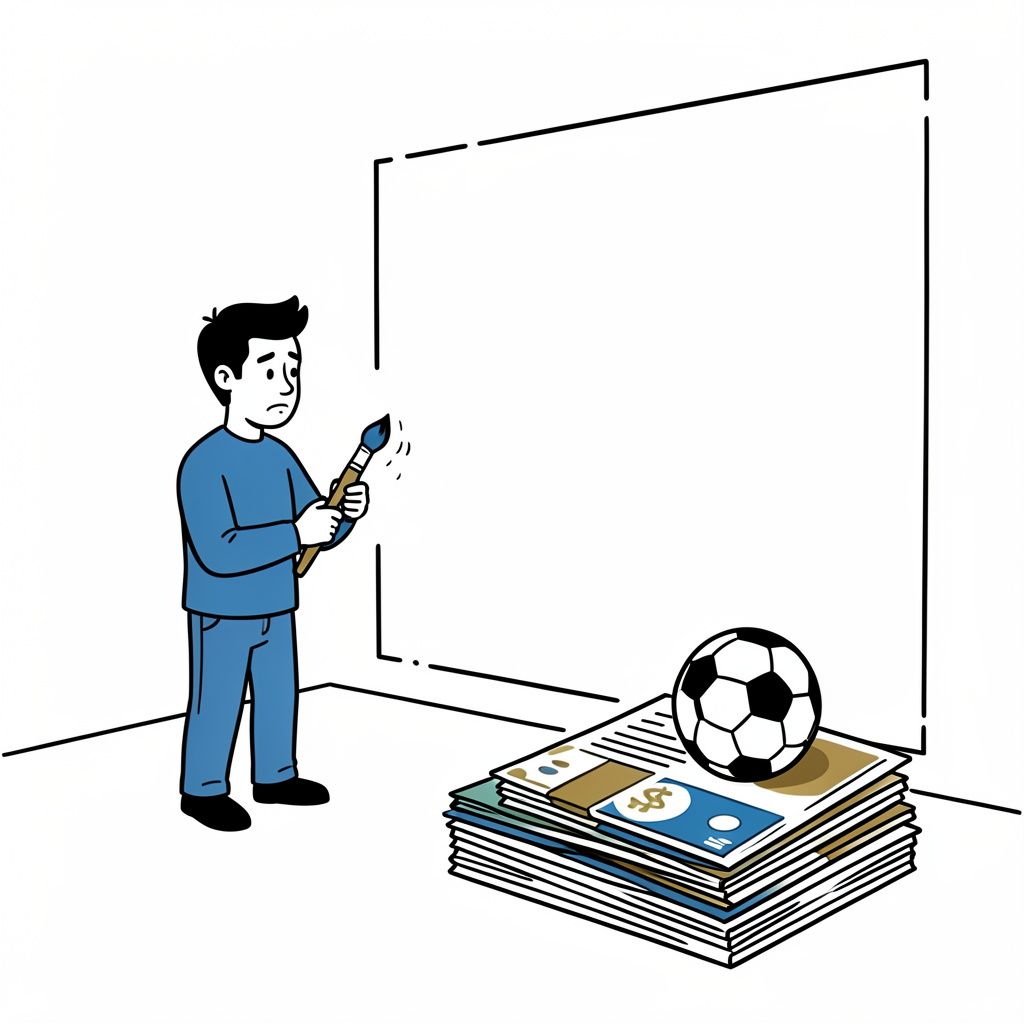
Exposing the hidden liabilities of mega-events, artist Robert Wyland’s $25 million lawsuit against FIFA reveals the steep financial cost of erasing a 1,580-square-meter Dallas mural for World Cup preparations.
The Legal Collision of Art and Global Commerce
On May 25, 2026 [1], marine artist Robert Wyland initiated a high-stakes legal battle in the Dallas Federal District Court [2]. He filed a federal lawsuit seeking a minimum of $25 million in damages over the destruction of his sprawling 1,580-square-meter mural, “Ocean Life” [1]. The artwork, which graced the wall at 505 N. Akard St. since 1999, was painted over to make way for promotional installations tied to the 2026 FIFA World Cup [1][2]. The lawsuit targets an array of corporate and organizational heavyweights, including FIFA, FIFA (Americas), Inc., FWC2026 US, Inc., 3PZ Property Company, LLC, and Slate Asset Management [1]. [alert! ‘Source 3 reports the lawsuit was filed on Tuesday, June 2, 2026, while Source 1 cites May 25, 2026. Both dates are noted for transparency.’]
The Blame Game and Corporate Deflections
The timeline of the mural’s demise reveals a complex web of corporate miscommunication. In March 2026, property owner Slate Asset Management was approached by Downtown Dallas Inc. and the North Texas FIFA World Cup organizing committee [1][2]. They requested the donation of the Akard Street wall space for a new public art installation by a local Dallas artist [1][2]. According to a spokesperson, Slate Asset Management received no financial compensation for the wall’s use and authorized the project under the assurance from local partners that Wyland had already been notified [1][2].
The Economics of Preserving Public Art
Wyland’s predicament in Dallas is not an isolated incident in the business of public art management. The artist has faced similar challenges in Detroit, where his 1997 whale mural on the Broderick Tower remains partially obscured by lucrative corporate advertisements [3]. Maintaining the visibility of that specific Detroit installation carries a steep opportunity cost; Wyland noted he was previously informed it would require roughly $500,000 annually to keep the artwork uncovered [3]. This figure underscores the intense commercial pressures placed on urban real estate, where blank walls are frequently monetized as premium advertising space [GPT].