Missile Strikes on Saudi Energy Facilities Threaten Global Oil Markets
Riyadh, Friday, 10 April 2026.
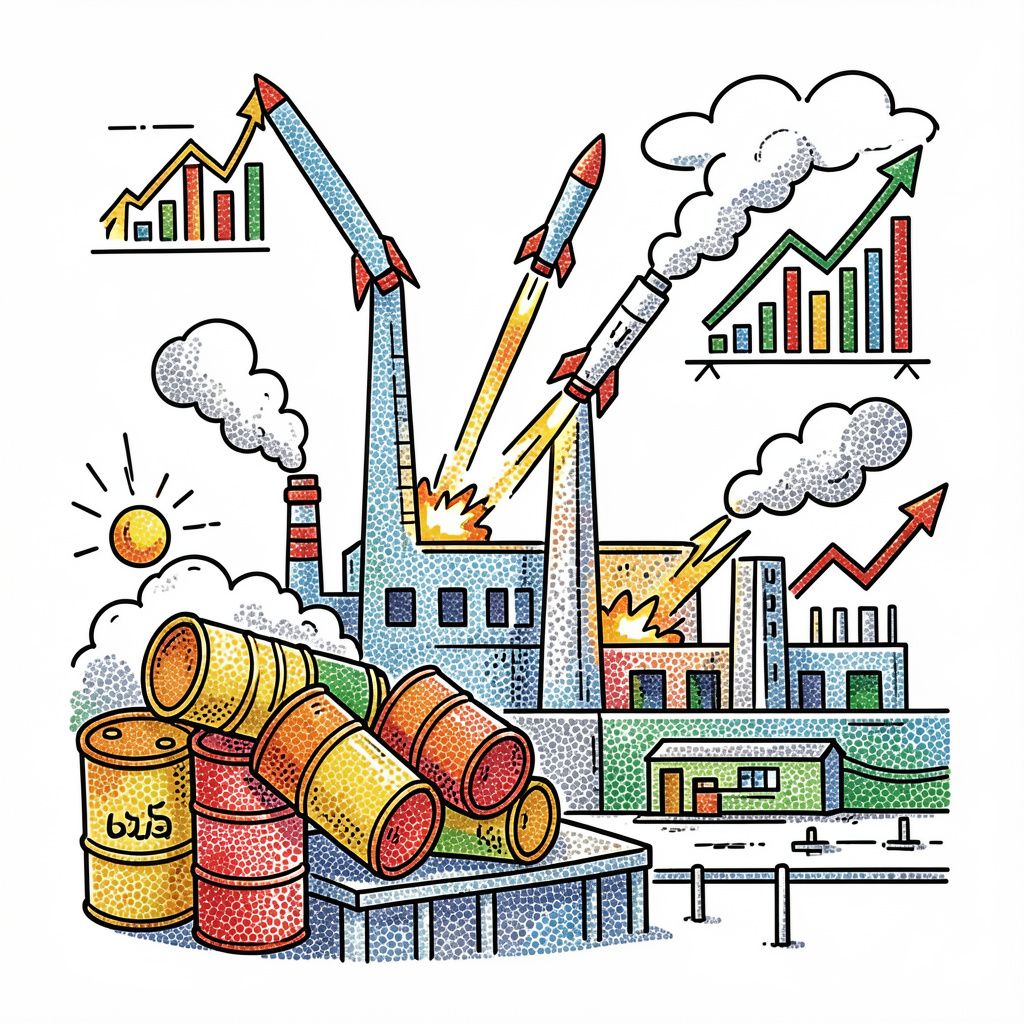
Recent missile strikes on Saudi energy infrastructure slashed daily oil production capacity by over 95,000 cubic meters, threatening global markets with severe supply shocks and rising crude prices.
Escalation Beyond the Ultimatum
Building upon the previous warnings of strikes on the Al Jubail energy hub, which threatened global supplies just before a critical April 7 United States ultimatum [2], the conflict has now cascaded into a broader systemic shock. The U.S.-Israeli war on Iran, which commenced in late February 2026, has seen hundreds of Iranian missiles and drones target Saudi infrastructure [1].
Severed Arteries of Global Supply
This severe capacity reduction stems from direct hits on multiple extraction sites. The Saudi Ministry of Energy detailed the combined losses of 600000 barrels per day, stemming from consecutive strikes on the Manifa and Khurais oilfields, respectively [1][5].
Refining Deficits and Depleted Reserves
The tactical assault did not stop at raw extraction; it systematically targeted the kingdom’s downstream capabilities. Major refining facilities sustained direct hits, including the TotalEnergies-backed SATORP in Jubail, the Exxon Mobil-affiliated SAMREF in Yanbu, and the Ras Tanura and Riyadh refineries [1][5]. Footage from earlier in the week confirmed huge fires erupting near the Jubail industrial complex after Saudi defense ministries intercepted seven ballistic missiles, with debris raining down on eastern energy facilities [3][4]. Furthermore, processing facilities in Ju’aymah caught fire, directly threatening the vital export of liquefied petroleum gas and natural gas liquids [5].