China Launches the World's First Wind-Powered Underwater Data Center
Sanya, Wednesday, 3 June 2026.
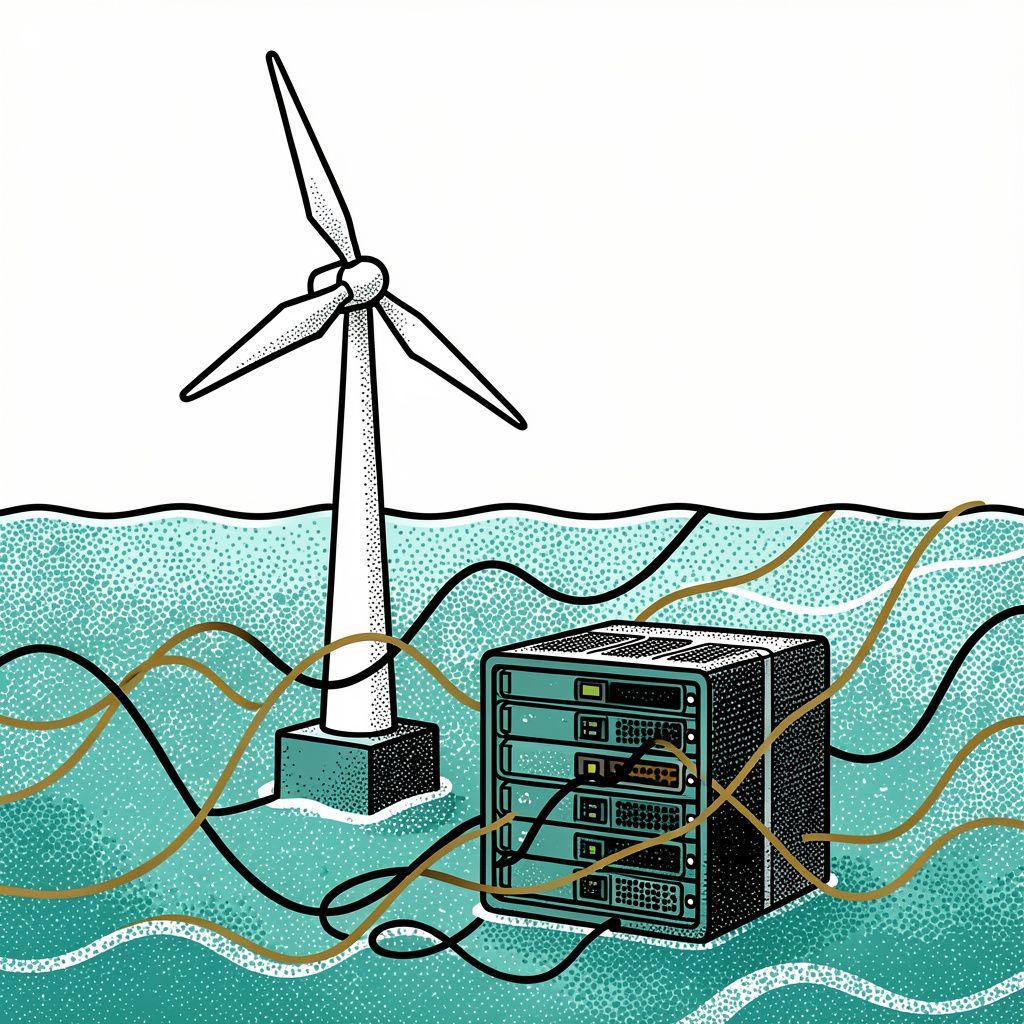
In June 2026, Chinese engineers activated a pioneering offshore data center. By utilizing ocean water for cooling, it eliminates freshwater use and cuts land consumption by over 90 percent.
Engineering the Ocean Floor
In late May 2026, Chinese engineers officially activated an underwater data center (UDC) powered by offshore wind turbines off the coast of Shanghai in the Lin-gang Special Area [1]. Constructed by a subsidiary of China Communications Construction, phase one of this mega-project was completed in October 2025, seven months prior to its launch [1]. The facility currently operates at a capacity of 2.3 megawatts (MW) and houses 192 server racks distributed across four levels [1]. Concurrently, on June 2, 2026, China launched a commercial-grade UDC off the coast of Lingshui, Hainan Province, further cementing the nation’s commitment to marine-based technology infrastructure [5].
Scaling Up and Global Ambitions
The economic and spatial efficiencies of UDCs are compelling for the global technology sector [GPT]. Compared to traditional above-ground facilities, the Shanghai UDC cuts land use by more than 90 percent [1]. The Hainan project, developed by Beijing Highlander Digital Technology Co., similarly boasts impressive metrics, achieving a Power Usage Effectiveness (PUE) of 1.076 [5]. A single 1,300-metric-ton data cabin deployed at a depth of 35 meters can save 122 million kWh of electricity and 105,000 metric tons of freshwater annually [5]. Developers have ambitious expansion targets, planning to deploy 100 data cabins at the Hainan site by December 31, 2028, to massively scale cloud computing capabilities [5]. In Shanghai, the planned future capacity is set to reach 24 MW, representing an immense scale-up of 943.478 percent from its current operational baseline, with offshore wind farms estimated to eventually generate 95 percent of its required electricity [1].
Alternative Models and Market Realities
Floating platforms offer unique logistical advantages. They bypass the lengthy environmental impact assessments and land acquisition hurdles typical of terrestrial builds, while allowing operators to flexibly relocate the centers based on demand or to connect directly to offshore wind and tidal energy sources [4]. Japanese maritime companies are also advancing FDC prototypes [4]. Mitsui O.S.K. Lines (MOL) plans to retrofit a 120-meter, 9,731-ton vessel into a floating data center with a capacity ranging from 20 to 73 MW by 2027, utilizing direct seawater cooling [4]. By repurposing existing ship hulls, MOL anticipates shortening the construction timeline by 75 percent, reducing it from four years to just one year [4]. Another Japanese firm, NYK Line, is developing a containerized floating data center in the Port of Yokohama [4].