American Workers Fall Behind as Living Costs Outpace Modest Raises
New York, Saturday, 21 November 2026.
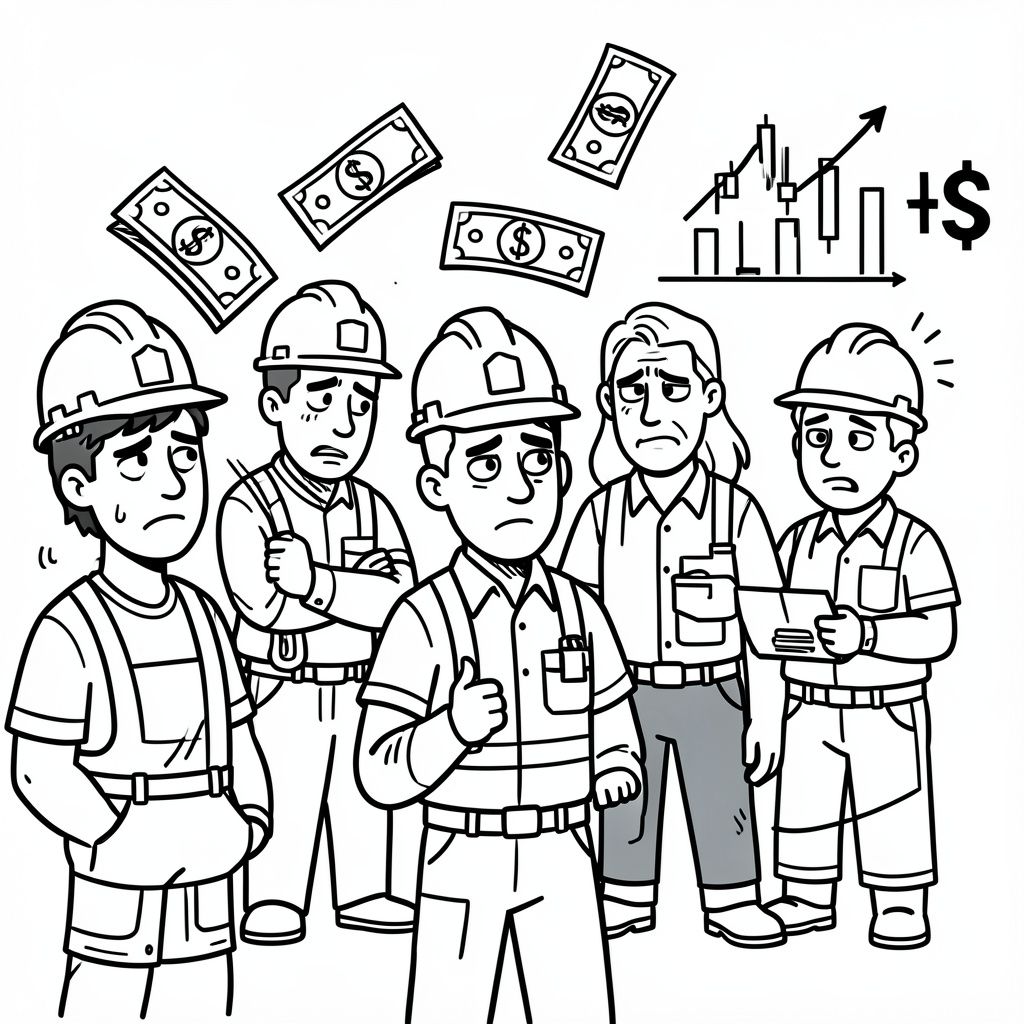
Over 90% of U.S. workers report wages trailing inflation, with resurgent consumer prices eroding household purchasing power and forcing corporate leaders to confront growing employee turnover risks.
Inflation Resurgence Erodes Pay Gains in Late 2026
As of November 2026, American workers are seeing their purchasing power erode once again as inflation outpaces modest wage growth across the domestic economy. [alert! The Federal Reserve’s preferred inflation gauge, the Personal Consumption Expenditures (PCE) price index, has not been cited in provided sources, so analysis relies on Consumer Price Index (CPI) data as a proxy for inflation trends.] The Consumer Price Index (CPI) climbed 3.7% year-over-year in September 2026, significantly outpacing the 3.1% annual increase in the Bureau of Labor Statistics’ Employment Cost Index and the 2.5% gain in Indeed’s wage tracker (a three-month moving average) [1]. This gap reverses a multi-year trend from 2023 through 2025, during which pay growth largely outpaced moderating prices, leaving inflation-adjusted wages down 0.6% from a year earlier [1].
Sectoral Disparities and Structural Pressures
The reacceleration of consumer price growth in 2026 has been driven by multiple factors, including geopolitical tensions with Iran and shipping disruptions in the Strait of Hormuz, which triggered a spike in global energy prices [1]. These disruptions have been compounded by lingering effects from 2025 trade tariffs on imported goods, persistent shelter costs, and substantial corporate investment in AI infrastructure, all of which have contributed to upward price pressures [1]. While headline CPI pulled back from a three-year high of +4.2% year-over-year in May 2026, it remains well above the Federal Reserve’s 2% target, prompting the central bank to keep interest-rate hikes on the table [1].
Real Wages Decline as Nominal Gains Lag
According to the U.S. Bureau of Labor Statistics (BLS), the average hourly wage in the United States reached $37.81 in September 2026, reflecting a nominal year-over-year increase of 3.0% [5]. However, when adjusted for inflation, real wages declined by −0.7% over the same period [5]. This decline underscores the persistent erosion of purchasing power despite nominal wage growth. Historical context reveals that real average wages peaked at $36.52 in 2020 (in October 2026 purchasing power) and hit a low of $34.41 in 2016, highlighting the long-term stagnation in real earnings [5].
Corporate Retention Risks and Labor Market Dynamics
The chronic gap between nominal wage growth and inflation has intensified retention challenges for business leaders and corporate executives. A November 2026 survey found that 71% of workers received salary adjustments of less than 3% in their most recent compensation review, well below the 3.7% inflation rate [1]. UBS chief economist Paul Donovan noted on November 20, 2026, that consumer resilience increasingly depends on lowering savings rates and engaging in side hustles, implying that labor cost pressures are not a primary driver of inflation [4]. Federal Reserve Governor Christopher Waller also emphasized the need to ‘shock people’ into recognizing the disparity between wage growth and inflation [4].
Credit Reliance and Financial Strain
The Federal Reserve Bank of New York reported on November 12, 2026, that U.S. credit card balances climbed by $22 billion in the third quarter of 2026 to a record $1.29 trillion, marking a 4.2% year-over-year increase [6]. The average credit card balance per consumer reached $6,678, while the average credit card interest rate stood at 22.3% [6]. Younger generations, particularly millennials and Gen Z, are disproportionately reliant on credit to cover expenses, with 38% of respondents in a NerdWallet survey indicating they needed to use credit for day-to-day spending [6]. This reliance on credit cards as a financial bridge reflects the combined pressures of rising costs and stagnant wages.
Policy Implications and Future Outlook
The Federal Reserve’s next rate-setting meeting, scheduled for December 2026, looms large as inflation remains stubbornly above the 2% target [4]. Interest rate traders have assigned a 91% probability of a 25 basis point rate hike at the December meeting, according to CME’s FedWatch data [4]. Meanwhile, wage premiums have emerged in sectors such as data center construction, driven by skilled labor shortages, and in industries reliant on immigrant workers due to reduced labor supply [4]. These sectoral disparities highlight the uneven impact of inflation and wage stagnation across the economy.
Sources
- seekingalpha.com
- fortune.com
- marketgenius.app
- finance.yahoo.com
- www.facebook.com
- www.facebook.com
- seekingalpha.com