Why Venezuela’s Oil Wealth Could Reshape Global Energy Markets in 2026
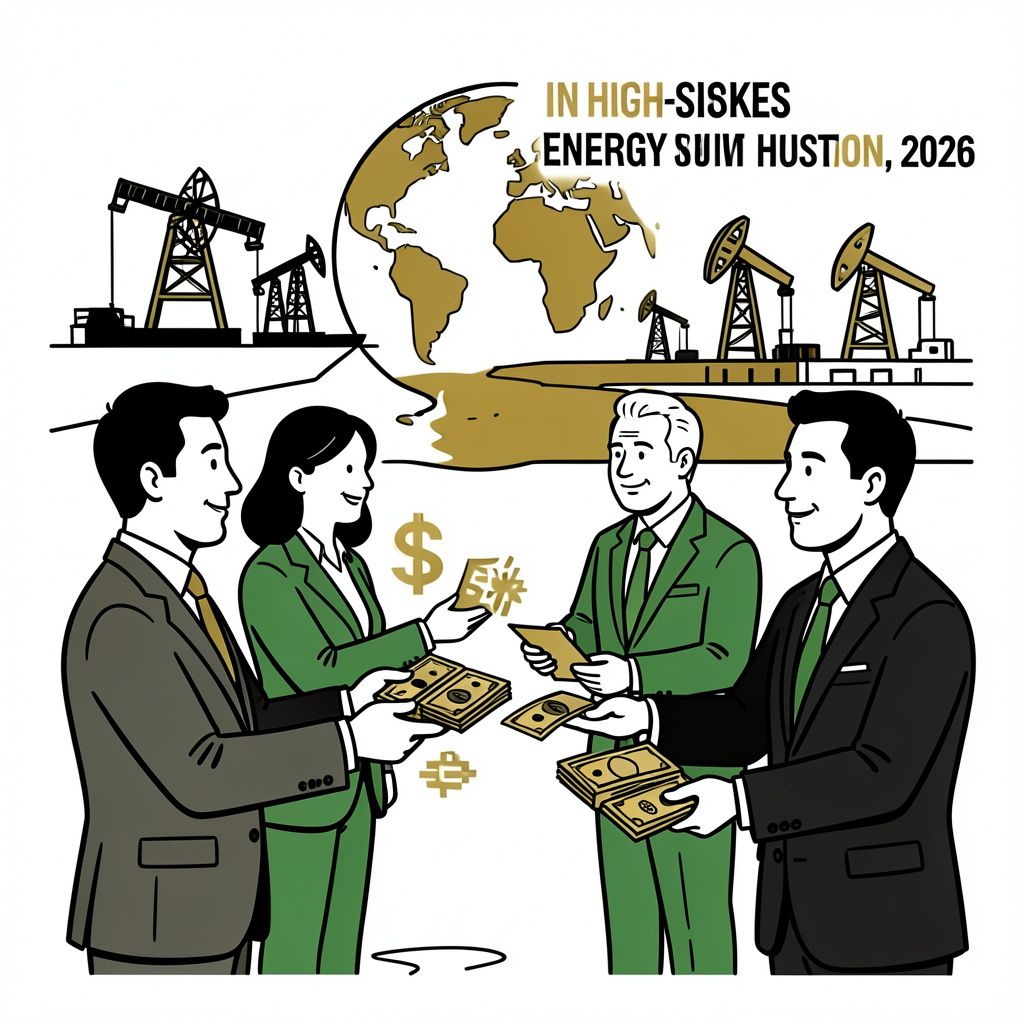
Houston, Monday, 22 June 2026.
Houston will host a high-stakes summit on June 22, 2026, where global leaders and investors will explore Venezuela’s vast oil reserves—the world’s largest. With U.S. businesses eyeing re-engagement post-sanctions, this event could unlock billions in foreign investment and redefine energy geopolitics.
Venezuela’s Oil Reserves: The Numbers Behind the Potential
Venezuela holds the world’s largest proven oil reserves, with an estimated 303.8 billion barrels as of 2024, accounting for approximately 17.5% of the global total [1]. This surpasses Saudi Arabia’s 297.5 billion barrels and Canada’s 168.1 billion barrels [GPT]. The Orinoco Belt alone contains an estimated 220 billion barrels of extra-heavy crude oil, though much of it requires significant investment to extract profitably [1]. Current production stands at approximately 760,000 barrels per day (bpd) as of May 2026, a sharp decline from the 3.5 million bpd produced in 1998 before the industry’s collapse [2]. The International Energy Agency (IEA) estimates that with proper investment and regulatory reforms, Venezuela could increase production to 1.5 million bpd within three years and potentially reach 2.5 million bpd by 2030 [3].
The Sanctions Landscape: Recent Shifts and Their Impact
The United States has recently eased some sanctions on Venezuela’s oil sector, allowing limited transactions with state-owned Petróleos de Venezuela, S.A. (PDVSA) under specific conditions [4]. This follows the October 2023 agreement between the Venezuelan government and opposition parties, which included commitments to hold competitive elections and release political prisoners [5]. The U.S. Treasury Department’s Office of Foreign Assets Control (OFAC) issued General License 44 in October 2023, authorizing transactions involving Venezuela’s oil and gas sector for an initial six-month period, later extended through April 2025 [4]. However, these licenses come with strict compliance requirements, including due diligence on counterparties and reporting obligations [6]. The recent extensions indicate a cautious but clear shift in U.S. policy, aiming to balance geopolitical interests with Venezuela’s economic recovery [4].
Investment Opportunities and Challenges at the Houston Summit
The International Venezuela Reawakening Summit in Houston will feature discussions on several key investment opportunities, including joint ventures in oil field rehabilitation, natural gas development, and infrastructure projects [1]. Ali Moshiri, former president of Chevron Africa and Latin America, will address the summit on investment opportunities, highlighting both the advantages and challenges of operating in Venezuela [1]. One major focus will be the reactivation of idle oil fields, with an estimated 10,000 inactive wells that could potentially produce 500,000 bpd with proper investment [7]. The summit will also explore opportunities in Venezuela’s natural gas sector, which holds an estimated 201.3 trillion cubic feet of proven reserves [8]. However, potential investors face significant challenges, including political instability, corruption concerns, and the need for substantial infrastructure upgrades [9].
Regulatory Reforms: The Key to Unlocking Investment
Venezuela has taken initial steps to reform its regulatory framework to attract foreign investment. In 2022, the National Assembly approved the Anti-Blockade Law, which allows for greater private sector participation in the oil and gas sector and offers incentives for foreign investors [10]. The law permits the creation of mixed companies with up to 100% foreign capital in certain strategic sectors [10]. Additionally, Venezuela has introduced a new hydrocarbons law that simplifies the process for obtaining exploration and production licenses [11]. However, experts caution that these reforms must be accompanied by broader institutional changes to ensure transparency and legal certainty [12]. The Houston summit will feature panel discussions on regulatory frameworks and compliance with OFAC sanctions, with legal experts expected to outline strategies for navigating the complex legal landscape [1].
Risk Mitigation Strategies: What Investors Need to Know
Potential investors in Venezuela’s energy sector must navigate a complex risk landscape, requiring robust mitigation strategies. Political risk insurance has emerged as a key tool, with organizations like the Multilateral Investment Guarantee Agency (MIGA) offering coverage for investments in high-risk environments [15]. The Houston summit will feature sessions on risk mitigation, including discussions on contractual protections, dispute resolution mechanisms, and compliance strategies [1]. One approach gaining traction is the use of production-sharing agreements (PSAs) with built-in stabilization clauses that protect investors from adverse regulatory changes [16]. Additionally, some companies are exploring joint ventures with local partners to leverage their knowledge of the operating environment [17]. The summit will also address currency risks, as Venezuela’s complex foreign exchange system and hyperinflation history pose significant challenges for repatriating profits [18].
The Road Ahead: What to Watch After the Houston Summit
The outcomes of the Houston summit could set the stage for Venezuela’s economic revival, with several key developments to watch in the coming months. First, the Venezuelan government is expected to announce further regulatory reforms, potentially including new incentives for foreign investors in the oil and gas sector [19]. Second, the U.S. government may issue additional guidance on sanctions compliance, particularly regarding transactions with PDVSA and other state-owned enterprises [20]. Third, several major oil companies are reportedly in advanced negotiations for joint ventures, with announcements possible before the end of 2026 [21]. The success of these initiatives will depend largely on Venezuela’s ability to maintain political stability and implement promised reforms [22]. Economists will be closely watching Venezuela’s inflation rate, which stood at (3600-234)% in 2023, as a key indicator of economic progress [23].
Sources
- www.einpresswire.com
- www.opec.org
- www.iea.org
- home.treasury.gov
- www.state.gov
- www.ecfr.gov
- www.reuters.com
- www.eia.gov
- www.transparency.org
- www.venezuelanalysis.com
- www.lexology.com
- www.worldbank.org
- www.csis.org
- www.bloomberg.com
- www.miga.org
- www.ogj.com
- www.spglobal.com
- www.imf.org
- www.bnamericas.com
- www.treasury.gov
- www.argusmedia.com
- www.crisisgroup.org
- www.bcv.org.ve