Global Push to Cut Rice Farming Emissions Unveils Asian Innovation Hubs
Bangkok, Wednesday, 28 October 2026.
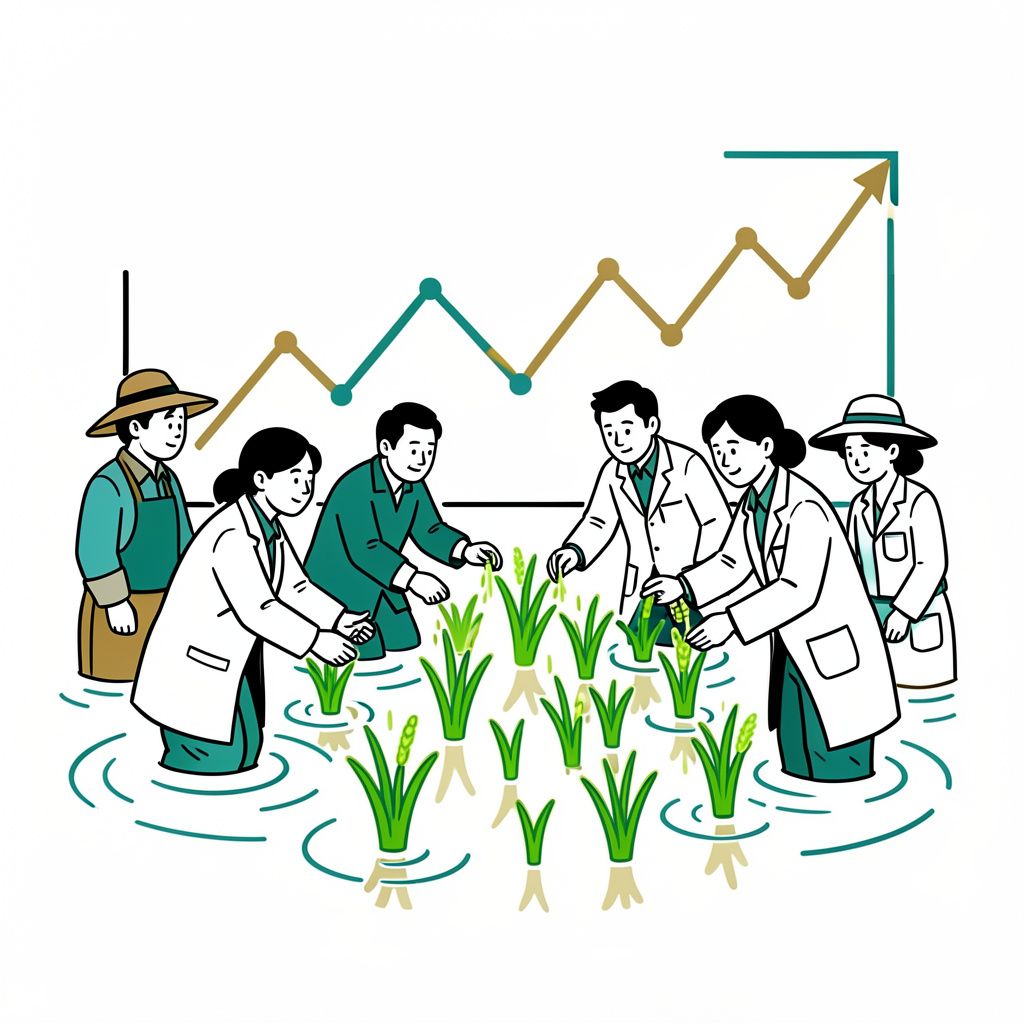
With flooded paddies driving up to 12% of human-made methane, a $100 million initiative establishes Asian research sites to cut emissions in half by 2040 without compromising vital food yields.
A $100 Million Bet on Asia’s Rice Fields
The Global Methane Hub has launched its $100 million Rice Methane Innovation Accelerator, a flagship initiative announced on 28 October 2026 during Singapore International Agrifood Week, with the ambitious goal of halving methane emissions from rice cultivation in Asia by 2040 [1]. This follows the Hub’s 2025 launch of the accelerator with an initial $30 million commitment [1]. The strategy prioritizes five critical research areas—agronomic practices, soil amendments, plant genetics, methane-reducing agents, and measurement tools—targeted at ‘Super Sites’ across South, Southeast, and East Asia, including major rice producers like China, India, Bangladesh, Vietnam, and Thailand [1]. These countries collectively account for nearly 80% of global rice methane emissions [1].
Why Rice is a Climate Flashpoint
Rice cultivation is a significant contributor to global methane emissions, representing 8% to 12% of total anthropogenic methane output [1]. Flooded paddies create anaerobic conditions that generate methane, a greenhouse gas with over 80 times the warming potency of carbon dioxide over a 20-year period [6]. Hayden Montgomery, Agriculture Program Director at the Global Methane Hub, underscored the urgency, stating, ‘Cutting methane is the fastest way to slow global warming, and rice is one of the biggest levers we have’ [1]. He added, ‘Rice feeds a fifth of the world, but flooded paddies are also one of agriculture’s biggest sources of methane’ [1].
The Science Behind the Strategy
The accelerator’s approach is rooted in systemic transformation, targeting paddy water management, soil chemistry, and seed genetics. Proven solutions like Alternate Wetting and Drying (AWD) practices can reduce methane emissions by 30–70%, while emerging technologies such as gypsum, biochar, methane-reducing agents, and low-emission rice genetic traits offer additional pathways [1]. Masa Iwanaga, a member of the Accelerator’s Science Oversight Committee, highlighted the promise of these solutions: ‘A number of promising solutions for reducing methane emissions from rice without compromising yields are on the horizon’ [1]. The strategy aims to validate and stack these solutions to make them practical and affordable for farmers [1].
Economic Ripples Across Agribusiness and Supply Chains
For institutional investors, agribusiness executives, and supply chain managers, the initiative signals escalating regulatory and financial pressure to decarbonize foundational agricultural commodities [1]. The World Bank estimates that agriculture occupies 20% of the world’s arable land, produces 40% of its food, and accounts for 70% of global freshwater withdrawals [3]. With rice feeding billions and rice production expected to decline in key regions due to climate pressures—such as the 17% drop in Philippine rice production forecasted for 2026 compared to 2025—climate-resilient agritech solutions are gaining urgency [1][4]. The Rockefeller Foundation’s Floor Overbeeke noted, ‘Methane reduction is the fastest lever we have to slow down global warming, and the rice sector presents one of the best opportunities to do so’ [1].
Funding and Collaboration: A Global Effort
The accelerator has garnered support from major philanthropic organizations, including the Gates Foundation, Philanthropy Asia Alliance, Quadrature Climate Foundation, Rockefeller Foundation, and Temasek Life Sciences Laboratory [1]. This collaborative model mirrors the Global Methane Hub’s previous flagship initiative, the Enteric Fermentation Accelerator, which raised over $200 million and deployed over $120 million in research projects [1]. The accelerator’s strategy also aligns with broader climate goals, including the World Bank Group’s Water Strategy Implementation Plan, which aims to improve water security for 400 million people, including 50 million through enhanced food production [3].
Climate Pressures and the Race Against Time
The initiative comes at a critical juncture, as greenhouse gas concentrations reached record highs in 2025, with methane levels exceeding 1,948 parts per billion—267% of pre-industrial levels [5]. The United Nations warned that the rise would lead to more long-term temperature increases, with methane accounting for approximately 16% of the warming effect on the climate [5]. Oksana Tarasova, a senior scientific officer at the World Meteorological Organization, emphasized the ongoing challenge: ‘A 2.8 ppm annual increase in carbon dioxide is still a substantial addition of carbon to the atmosphere from fossil fuel burning’ [5]. Meanwhile, public support for methane reduction is overwhelming, with 85% of respondents across 18 countries supporting action to reduce methane pollution, according to a 2026 poll commissioned by the Global Methane Hub and Yale Program on Climate Change Communication [6].
Thailand as a Case Study in Sustainable Rice Production
Thailand, the world’s second-largest rice exporter in 2024, exemplifies both the challenges and opportunities in sustainable rice production [9]. The country produced approximately 30 million metric tons of paddy rice across over 10 million hectares in 2024, with an average yield of 3 metric tons per hectare [9]. However, climate change—marked by droughts, floods, and temperature extremes—has led to declining yields, soil degradation, and reduced grain quality [9]. The International Rice Research Institute (IRRI) is working with Thailand’s Ministry of Agriculture to develop climate-smart national roadmaps, enhance Monitoring, Reporting, and Verification (MRV) systems, and establish policy frameworks for low-emission practices [9]. Initiatives include scaling Direct Seeded Rice (DSR), which saves 18–35% of water compared to transplanted rice and reduces methane emissions [3][9].
The Path Forward: Scaling Innovation Without Sacrificing Yields
The accelerator’s roadmap is designed to bridge the adoption gap in water-smart agriculture, which the World Bank defines as the distance between proven solutions and their widespread use due to immediate costs, uncertain returns, and risks of debt or lost income [3]. In Uttar Pradesh, India, the Water Forward coalition and World Bank-supported programs have already helped nearly 313,000 farmers adopt micro-irrigation across 377,000 hectares, with plans to expand to 1 million hectares [3]. Similarly, DSR coverage in Uttar Pradesh increased from 2,800 hectares in 2023 to 84,000 hectares in 2025 [3]. These efforts underscore the potential for scalable, cost-effective solutions that align with the Global Methane Hub’s 2040 target [1][3].
Sources
- www.einpresswire.com
- carbon-pulse.com
- blogs.worldbank.org
- carbon-pulse.com
- www.freemalaysiatoday.com
- www.globalmethanehub.org
- www.facebook.com
- www.irri.org