Trump Urges U.S. Communities to Support Rapid AI Data Center Expansion
Washington, Monday, 31 August 2026.
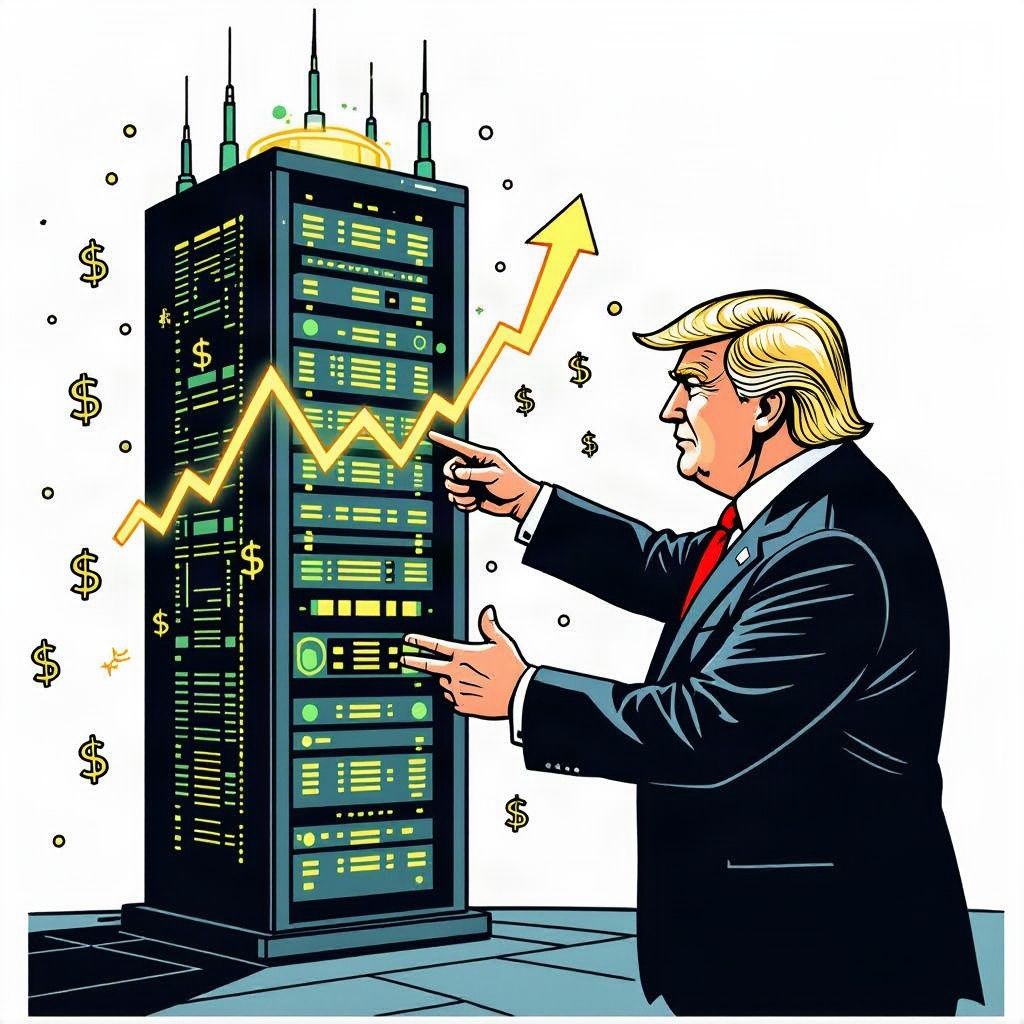
President Donald Trump warned U.S. communities that blocking AI data centers threatens local economic growth and risks ceding technological leadership to China amid growing public backlash.
Electoral Stakes and Party Positions
The push for data center expansion has become a focal point in the lead-up to the November 2026 midterm elections, with Democrats leveraging affordability concerns to challenge Republican incumbents [1][2]. In swing states such as Ohio and Michigan, opposition to new infrastructure has emerged as a significant campaign issue, with the National Republican Senatorial Committee identifying it as a potential liability for candidates like Senator Jon Husted [4][7]. While President Trump and the Republican party frame the infrastructure as essential for economic competitiveness against China, Democratic figures including Senator Bernie Sanders and Representative Alexandria Ocasio-Cortez have called for moratoriums or taxes to mitigate workforce disruption and utility costs [2][7]. This partisan divide underscores the tension between national strategic interests and local community impacts as voters prepare to cast ballots later this year [1][5].
Economic Projections and Public Sentiment
Proponents argue that the infrastructure represents substantial economic opportunity, with U.S. tech companies planning to invest over $700 billion in AI infrastructure during 2026 [2]. If realized across the projected 3,000 new data centers, this capital expenditure averages 233.333 million per facility, highlighting the scale of investment at stake [2][7]. However, public sentiment remains skeptical; a March 2026 Gallup poll indicated 71% of Americans oppose local AI data center construction, while a CBS News and YouGov poll in late June 2026 found 50% opposition [3][7]. President Trump has countered this backlash by asserting that communities rejecting these projects risk becoming ‘backwards and poor,’ emphasizing jobs and lower taxes as primary incentives [1][6]. Despite these assurances, concerns over electricity usage, water consumption, and noise pollution continue to drive local resistance across multiple states [5][7].
Regulatory Actions and State Responses
On the regulatory front, the Trump administration directed the Environmental Protection Agency to cease soliciting public input on data center construction projects as of 25 August 2026, a move critics argue limits resident oversight [3]. Simultaneously, state-level responses have varied; New York enacted a statewide moratorium on hyperscale data centers, and Texas implemented an effective freeze on new development during the first quarter of 2026 [2][4]. In Michigan, at least 13 data-center projects were planned or moving through development as of late August 2026, including a $16 billion campus for Oracle and OpenAI [5]. These conflicting signals between federal encouragement and state or local restrictions create a complex landscape for developers aiming to secure power and permits before the end of the year [2][7].
Sources
- news.bloomberglaw.com
- news.bgov.com
- www.usatoday.com
- www.mediaite.com
- www.instagram.com
- x.com
- www.stardem.com