Trump Pledges New Global Aerospace Stage in Florida to Drive Space Investment
Cape Canaveral, Saturday, 7 November 2026.
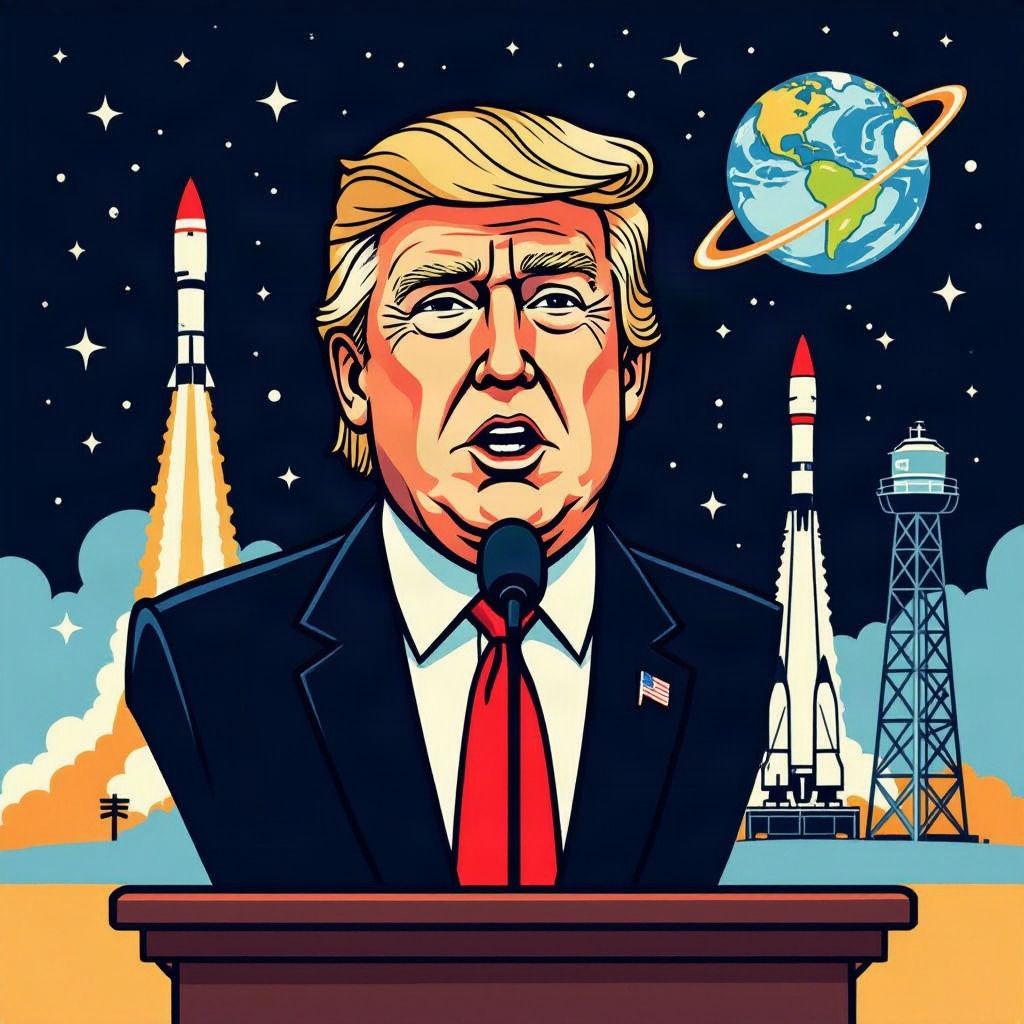
Addressing aerospace leaders at Kennedy Space Center yesterday, President Trump pledged a massive 2028 expo to rival Paris, alongside plans to launch a lunar nuclear reactor that same year.
A Historic Aerospace Vision Unfolds in Florida
President Donald J. Trump, addressing an invitation-only audience of aerospace executives, investors, and policymakers at NASA’s Kennedy Space Center on Friday, November 6, 2026, outlined a bold vision to position Florida as the global epicenter for space exploration and aerospace innovation [1][2][3][7][9]. Trump’s remarks, delivered during the UP.Summit—a key component of NASA’s MAX POWER aerospace expo—emphasized the United States’ leadership in space, framing commercial aerospace development as both a strategic and economic imperative. The event followed Trump’s midterm election campaign stop in Daytona Beach, where he rallied support for Republican candidates, including Florida Governor-elect Byron Donalds [8].
The 2028 Capeweek Pledge: A New Global Standard
Trump announced plans to host the world’s largest aerospace and technology expo in 2028 at Kennedy Space Center’s former shuttle landing facility, dubbing the initiative “Capeweek” [1][2][3]. The event is intended to surpass the scale and influence of international airshows such as the Paris Air Show and Farnborough International Airshow in the United Kingdom, which drew 141,580 attendees from 136 countries in July 2026 and facilitated over $84.7 billion in commercial deals [1][2]. The UP.Summit founder, Cyrus Sigari, underscored the logistical and security challenges of hosting a head of state, noting that the president’s attendance would elevate the event’s profile to unprecedented levels [3].
Lunar Ambitions: Nuclear Power and Artemis Missions
In addition to the 2028 expo announcement, Trump outlined two major scientific milestones for the coming years: the planned 2028 launch of a U.S. nuclear reactor to the moon from Cape Canaveral, and NASA’s Artemis program, which includes the Artemis III launch in 2027 to test docking with SpaceX and Blue Origin lunar landers, followed by the Artemis IV crewed moon landing in 2028 [1][2][3]. Deputy Secretary of Energy James Danly emphasized the significance of the lunar nuclear reactor project, stating, “President Trump is going to be the president who sends nuclear power to the moon” [1]. The Artemis program, which completed the Artemis II mission in April 2026, marks a pivotal moment in U.S. space exploration, with astronauts traveling farther around the moon than any previous crew [2].
Florida’s Role as the Launchpad for the Future
The UP.Summit and MAX POWER expo, held from November 6–8, 2026, served as a showcase for Florida’s ambitions to become a hub for aerospace manufacturing, research, and investment [1][2][3]. Florida Governor-elect Byron Donalds, who spoke at the event, pledged to prioritize aerospace and defense development in the state, advocating for the establishment of a U.S. Space Academy and emphasizing the need for workforce training programs to support the industry’s growth [1][2][9]. U.S. Representative Mike Haridopolos echoed this sentiment, comparing the potential of the new expo to established global events like Farnborough and Paris, and highlighting the economic opportunities for manufacturers and investors [1][2][3]. The event featured presentations from major aerospace companies, including Blue Origin, SpaceX, and Lockheed Martin, underscoring the sector’s collaborative and innovation-driven ecosystem [2].
Policy and Public Perception: A Strategic Shift
Trump’s visit to Kennedy Space Center followed his signing of a presidential proclamation on November 3, 2026, declaring outer space open to exploration, development, and use by American citizens, provided they adhere to U.S. and international law [4]. This policy statement aligns with the administration’s broader focus on technological innovation and commercial space ventures, as evidenced by the UP.Summit’s emphasis on drones, supersonic flights, and artificial intelligence [1]. The president’s remarks—such as “In America, the impossible is what we do best” and “Our destiny is to lead”—reflected a narrative of American exceptionalism in space, positioning the U.S. as the vanguard of a new era of exploration and industrialization beyond Earth [1][2].
Sources
- www.floridatoday.com
- mynews13.com
- www.floridatoday.com
- www.whitehouse.gov
- www.c-span.org
- www.youtube.com
- www.facebook.com
- www.wesh.com
- www.facebook.com