US Weighs Military Options as Iran Nuclear Talks Yield Mixed Results
Washington D.C., Wednesday, 18 February 2026.
Administration officials warn arguments now favor a strike on Iran despite diplomatic efforts, creating immediate risks for global energy markets as Tehran conducts naval drills in the Strait of Hormuz.
Escalation Following Naval Redeployments
Following the strategic redeployment of the USS Gerald R. Ford to the Persian Gulf—a move confirmed by President Donald Trump on February 13 to ramp up pressure on Tehran [5]—the standoff has entered a volatile new phase. As of Wednesday, February 18, 2026, the White House has markedly sharpened its rhetoric, with Press Secretary Karoline Leavitt stating there are now “many reasons and arguments” favoring a military strike against Iran [1]. This grim assessment comes despite a recent push for diplomacy in Geneva, where administration officials suggest Iranian leadership would be “wise to make a deal” to avert a conflict that intelligence sources warn could be imminent [1][3].
Diplomatic Impasse in Geneva
Indirect nuclear negotiations between the United States and Iran concluded in Geneva on February 16 without a concrete breakthrough, leaving the two nations at a dangerous impasse [7]. While Iranian Foreign Minister Abbas Araghchi characterized the discussions as making “good progress” toward establishing “guiding principles,” [2][7][8] U.S. officials offered a more sober view. Vice President JD Vance indicated that Tehran has not yet acknowledged all of Washington’s “red lines,” leading the administration to weigh whether to continue engagement or pursue alternative options [1][3]. The Iranian delegation is expected to present detailed proposals to address outstanding gaps within the next two weeks, setting a critical deadline of early March for a diplomatic resolution [5][7].
Military Readiness and Strategic Maneuvers
The divergence between diplomatic efforts and military reality is widening. While negotiators spoke in Switzerland, the U.S. military executed significant movements of hardware into the theater. Open-source flight tracking data from February 16 revealed the deployment of dozens of fighter jets, including F-22, F-35, and F-16 aircraft, toward the Middle East [3]. Administration insiders now estimate a 90% probability of a strike in the coming weeks [3], with Energy Secretary Chris Wright affirming the U.S. determination to stop Iran from acquiring nuclear weapons “one way or the other” [3]. Concurrently, Israeli officials have stated they are preparing for a potential war “within days,” aiming for an operation that could topple the Iranian regime [3].
Regional Volatility and Energy Risks
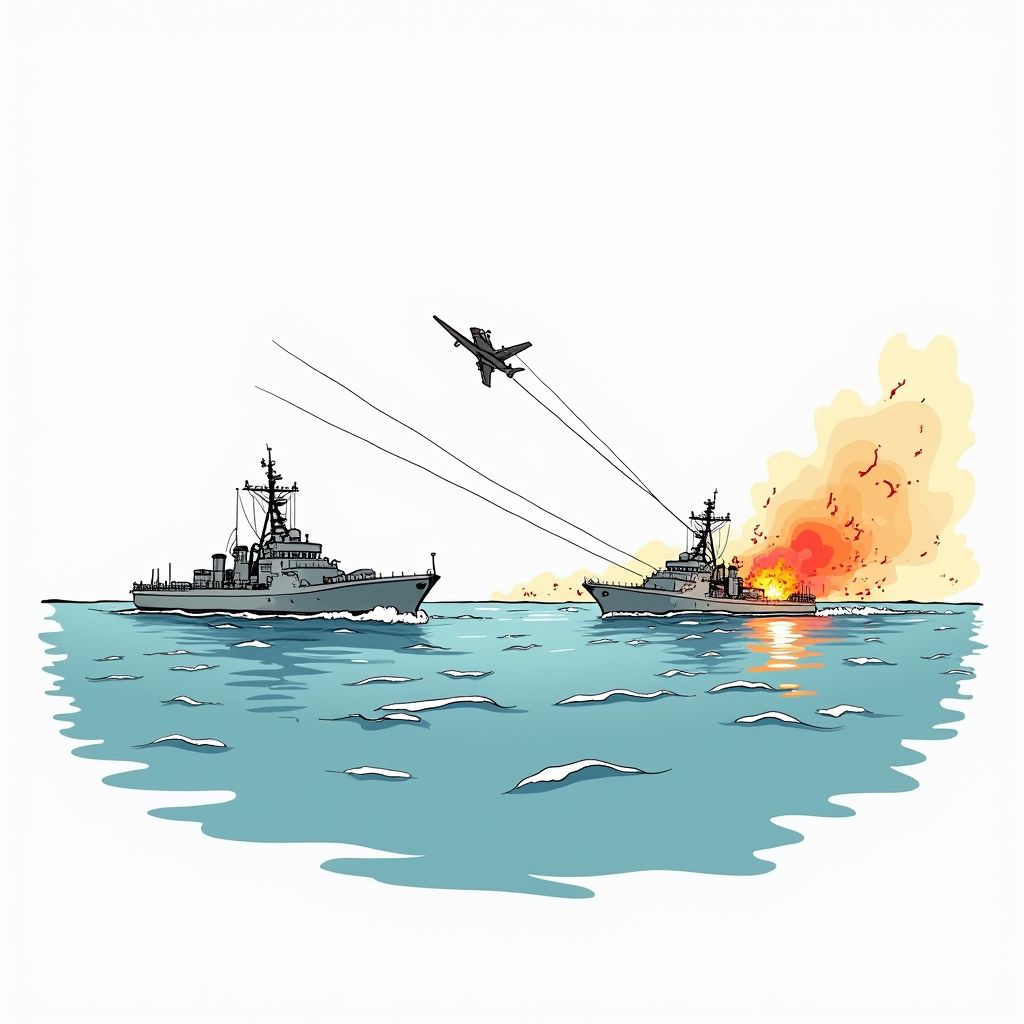
In a direct response to American pressure, Iran has intensified its own military posturing, creating immediate risks for global energy transit. The Islamic Revolutionary Guard Corps (IRGC) launched exercises in the Strait of Hormuz—a critical 55-kilometer-wide chokepoint for global oil [7]—and issued a NOTAM (Notice to Air Missions) regarding rocket launches across southern Iran scheduled for Thursday, February 19 [1]. Furthermore, Tehran announced a joint naval exercise with Russia to be held in the Sea of Oman on the same day [1][3]. These maneuvers, coupled with the potential for a multi-week conflict [3], signal a severe threat to regional stability and energy market continuity as the window for a peaceful accord narrows.
Sources
- www.timesofisrael.com
- theconversation.com
- www.timesofisrael.com
- www.aljazeera.com
- www.foxnews.com
- www.iranintl.com
- www.dw.com
- www.nytimes.com